• About PeterSIronwood

petersironwood

~ Finding, formulating and solving life's frustrations.

petersironwood

Author Archives: petersironwood

Ban Open Loops: Part Two – Sports

14 Friday Aug 2015

Posted by petersironwood in management, psychology, sports

≈ Leave a comment

Tags

AI, cognitive computing, Customer experience, customer service, education, learning

Sports and open loops.

Sports offers a joy that many jobs and occupations do not. A golfer putts the ball and it sinks into the cup — or not. A basket-baller springs up for a three pointer and —- swish — within seconds, the shooter knows whether he or she was successful. A baseball hitter slashes the bat through the air and send the ball over the fence —- or hears the ball smack into the catcher’s mitt behind. What sports offers then is the opportunity to find out results quickly and hence offers an excellent opportunity for learning. In the previousiPhoneDownloadJan152013 593 entry in this blog, I gave examples of situations in life which should include feedback loops for learning, but, alas, do not. I called those open loops.

Sports seem to be designed for closed loop learning. They seem to be. Yet, reality complicates matters even here. There are three main reasons why what appears to be obvious opportunities for learning in sports is not so obvious after all. Attributional complexity provides the first complication. If you miss a putt to the left, it is obvious that you have missed the putt to the left. But why you missed that putt left and what to do about it are not necessarily obvious at all. You might have aimed left. You might not have noticed how much the green sloped left (or over read the slant to the right). You may not have noticed the grain. You might not have hit the ball in the center of the putter. You might not have swung straight through your target. So, while putting provides nice unambiguous feedback about results, it does not diagnose your problem or tell you how to fix it. To continue with the golf example, you might be kicking yourself for missing half of your six foot putts and therefore three-putting many greens. Guess what? The pros on tour miss half of their six foot putts too! But they do not often three-putt greens. You might be able to improve your putting, but your underlying problems may be that your approach shots leave you too far from the pin and that your lag putts leave you too far from the hole. You should be within three feet of the hole, not six feet, when you hit your second putt.

A second issue with learning in sports is that changes tend to cascade. A change in one area tends to produce other changes in other areas. Your tennis instructor tells you that you are need to play more aggressively and charge the net after your serve. You try this, but find that you miss many volleys, especially those from mid-court. So, you spend a lot of time practicing volleys. Eventually, your volleys do improve. Then, they improve still more. But you find that, despite this, you are losing the majority of your service games whereas you used to win most of them. You decide to revert to your old style of hanging out at the baseline and only approaching the net when the opponent lands the ball short. Unfortunately, while you were spending all that time practicing volleys, you were not practicing your ground strokes. Now, what used to work for you, no longer works very well. This isn’t the fault of your instructor; nor is it your fault. It is just that changing one thing has ripple effects that cannot always be anticipated.

The third and most insidious reason why change is difficult in sports springs from the first two. Because it is hard to know how to change and every change has side-effects, many people fail to learn from their experience at all. There is opportunity for learning at every turn, but they turn a blind eye to it. They make the same mistakes over and over as though sports did not offer instant feedback. I think you will agree that this is really a very close cousin of what people in business do when they refuse to institute systems for gathering and analyzing useful feedback.

If learning is tricky —- and it is —- is there anything for it? Yes. There is. There is no way to make learning in sports —- or in business —- trivial. But there are steps you can take to enhance your learning process. First, be open-minded. Do not shut down and imagine that you are already playing your sport as well as can be expected for a forty year old, or a fifty year old, or someone slightly overweight or someone with a bad ankle. Take an experimental approach and don’t be afraid to try new things. Second, forget ego. Making mistakes are opportunities to learn, not proof that you are no good. Third, get professional help. A good coach can help you understand attributional complexity and they can help you anticipate the side-effects of making a change.

Soon, I suspect that the shrinking size and cost and weight of computational and sensing devices will mean that training aids will help people with attributional complexity. I see big data analytics and modeling helping people foresee what the ramifications of changes are likely to be. There are already useful mechanical training aids for various sports. For example, the trade-marked Medicus club enables golfers to get immediate feedback during their full swings.as to whether they are jerking the club. Dave Pelz developed a number of useful devices for helping people understand how they may be messing up their putting stroke.

It may take somewhat longer before there are small tracking devices that help you with your mental attitude and approach. We are still a long way from understanding how the human brain works in detail. But it is completely within the realm of possibility to sense and discover your optimal level of stress. If you are too stressed, you could be prompted to relax through self-talk, breathing exercises, visualization, etc. You do not need technology for that, but it could help. You may already notice that some of the top tennis players seem to turn their backs from play for a moment and talk to an “invisible friend” when they need to calm down. And why not? Nowhere is it law that only kids are allowed to have invisible friends.

“The mental game” and which kinds of adaptations to make over what time scales are dealt with in more detail in The Winning Weekend Warrior How to Succeed at Golf, Tennis, Baseball, Football, Basketball, Hockey, Volleyball, Business, Life, Etc. available at Amazon Kindle.

Ban the Open Loop

13 Thursday Aug 2015

Posted by petersironwood in Uncategorized

≈ Leave a comment

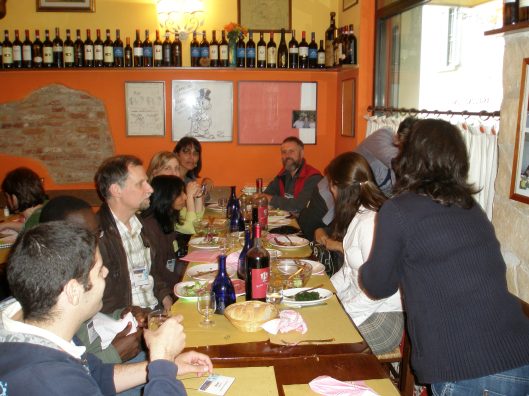
IMG_5372Soon after I began the Artificial Intelligence Lab at a major telecom company, we heard about an opportunity for an Expert System. The company wanted to improve the estimation of complex, large scale, inside wiring jobs. We sought someone who currently qualified as an expert. Not only could we not locate an expert; we discovered that the company (and the individual estimators) had no idea how good or bad they were. Estimators would go in, take a look at what would be involved in an inside wiring job, make their estimate, and then proceed to the next estimation job. Later, when the job completed, no mechanism existed to relate the estimate back the actual cost of the job. At the time, I found this astounding. I’m a little more jaded now, but I am still amazed at how many businesses, large and small, have what are essentially no-learning, zero feedback, open loops.

My wife and I arrive late and exhausted at a fairly nice hotel. Try as we might, we cannot get the air-conditioning to do anything but make the room hotter. When we check out, the cashier asks us how our stay was. We explain that we could not get the air conditioning to work. The cashier’s reaction? “Oh, yes. Everyone has that trouble. The box marked “air conditioning” doesn’t work at all. You have to turn the heater on set to a cold temperature.” “Everyone has that trouble”? Then, why hasn’t this been fixed? Clearly, the cashier has no mechanism or no motivation to report the trouble “upstream” or no-one upstream really cares. Moreover, this exchange reveals that when the cashier asks the obligatory question, “How was your stay?” what he or she really means is this: “We don’t really care what you have to say and we won’t do anything about it, but we want you to think that we actually care. That’s a lot cheaper and doesn’t require management to think.” Open Loop.

Lately, I have been posting a lot in a LinkedIn forum called “project management” because I find the topic fascinating and because I have a lot of experience with various projects in many different venues. According to some measure, I was marked as a “top contributor” to this forum. When I logged on the last time, a message surprised me that my contributions to discussions would no longer appear automatically because something I posted had been flagged as “spam” or a “promotion.” However, there is no feedback as to which post this was or why it was flagged or by whom or by what. So, I have no idea whether some post was flagged by an ineffectual natural language processing program or by someone with a grudge because they didn’t agree with something I said, or by one of the “moderators” of the forum. LinkedIn itself is singularly unhelpful in this regard. If you try to find out more, they simply (but with far more text) list all the possibilities I have outlined above. Although this particular forum is very popular, it seems to me that it is “moderated” by a group of people who actually are using the forum, at least in many cases, as rather thinly veiled promotions for their own set of seminars, ebooks, etc. So, one guess is that the moderators are reacting to my having simply posted too many legitimate postings that do not point people back to their own wares. Of course, there are many other possibilities. The point here is that I do not have, nor can I easily assess what the real situation is. I have discovered however, that many others are facing this same issue. Open loop rears its head again.

The final example comes from trying to re-order checks today. In my checkbook, I came to that point where there is a little insert warning me that I am about to run out and that I can re-order checks by phone. I called the 800 number and sure enough, a real audio menu system answered. It asked me to enter my routing number and my account number. Fine. Then, it invited me to press “1” if I wanted to re-order checks. I did. Then, it began to play some other message. But soon after the message began, it said, “I’m sorry; I cannot honor that request.” And hung up. Isn’t it bad enough when an actual human being hangs up on you for no reason. This mechanical critter had just wasted five minutes of my time and then hung up. Note that no reason was given; no clue was provided to me as to what went wrong. I called back and the same dialogue ensued. This time, however, it did not hang up after I pressed “1” to reorder checks. Instead, it started to verify my address. It said, “We sent your last checks to an address whose zip code is “97…I’m sorry I’m having trouble. I will transfer you to an agent. Note that you may have to provide your routing number and account number again.” And…then it hung up. Now, anyone can design a bad system. And, even a well designed system can sometimes mis-behave for all sorts of reasons. Notice however, that designers have provided no feedback mechanism. It could be that 1% of the potential users are having this problem. Or, it could be that 99% or even 100% of the users are having these kinds of issues. But the company lacks a way to find out. Of course, I could call my Credit Union and let them know. However, anyone that I get hold of at the Credit Union, I can guarantee, will have no possible way to fix this. Moreover, I am almost positive that they won’t even have a mechanism to report it. The check printing and ordering are outsourced to an entirely different company. Someone in corporate, many years ago, decided to outsource the check printing, ordering, and delivery function. So people in the Credit Union itself are unlikely to even have a friend, uncle or sister-in-law who works in that “department” (as may have been the case 20 years ago).So, not only does the overall system lack a formal feedback mechanism; it also lacks an informal feedback mechanism. Tellingly, the company that provides the automated “cannot order your checks system” provides no menu option for feedback about issues either. So, here we have a financial institution with a critical function malfunctioning and no real process to discover and fix it. Open loop.

Some folks these days wax eloquent about the up-coming “singularity.” This refers to the point in human history where an Artificial Intelligence (AI) system will be significantly smarter than a human being. In particular, such a system will be much smarter than human beings when it comes to designing ever-smarter systems. So, the story goes, before long, the AI will design an even better AI system for designing better AI systems, etc. I will soon have much to say about this, but for now, let me just say, that before we proceed to blow too many trumpets about “artificial intelligence systems,” can we please first at least design a few more systems that fail to exhibit “artificial stupidity”? Ban the Open Loop!

Notice that sometimes, there may be very long loops that are much like open loops due to the nature of the situation. We send out radio signals in the hopes that alien intelligences may send us an answer. But the likely time frame is so long that it seems open loop. That situation contrasts with those above in the following way. There is no reason that feedback cannot be obtained, and rather quickly, in the case of estimating inside wiring, fixing the air conditioning signs, providing feedback on why there is “moderation” or in the faulty voice response system. Sports must provide a wonderful venue that is devoid of open loops. In sports, you see or feel the results of what you do almost immediately. But you underestimate the cleverness with which human beings are able to avoid what could be learned by feedback. Next time, we will explore that in more detail.

Intra-Psychic Learning

08 Saturday Aug 2015

Posted by petersironwood in psychology

≈ Leave a comment

Tags

AI, cognitive computing, learning, sports

Intra-Psychic Learning plays a crucial yet largely unacknowledged role in human intelligence. It will also play a critical role in so-called “artificial intelligence” or “the singularity.” In general, the paradigm most talked about in learning, whether by psychology professors or the general public, focuses on the role of external experiences. Famous examples include Pavlov’s dogs who exhibited classical conditioning. A bell was rung whenever food was presented and eventually the bell sound alone caused the dog to salivate. This works for humans as well. Just watch someone cut open a fresh lemon and you will find yourself puckering up and salivating! In operant conditioning, a rat learns, probably through a shaping process, that some behavior, say, pressing a lever, results in a reward such as receiving a food pellet. Eventually, the rat presses the lever. Both of these kinds of mechanisms are important and play a part in animal learning as well as human learning. Both kinds of learning are useful for AI as well. In humans (and to some extent in other animals as well), you do not have to “be in the loop” in order for learning to take place. You can *observe* another person getting a reward doing X and you might immediately try that behavior for yourself. Indeed, human beings take this one step further and can be induced to try (or not try) something based on what someone *says* about a behavior leading to a consequence. You don’t *have* to touch a hot stove and get burned or even watch someone else get burned by touching a hot stove in order to fear touching a hot stove. For most people most of the time, you can be told about hot stoves and that is enough. All these forms of learning focus on personal, observed, or bespoken information that actually exists about consequences in the real world.

However, there is another important way that we learn and it is based on checking intermediate results against each other without the need for any ground truth observation in the real world. I first mentioned this in my dissertation. I was studying human problem solving and fascinated by the observation that human chess players, who have excellent memories for real chess positions, would often examine one branch of a move tree, study another branch and then return to study the first branch again. This is not likely because they forgot. Instead, I believe that looking at the second branch taught them fundamental things about what was true for this particular chess position, and they then used that information to re-evaluate what they saw during their re-examination of the first portion of the game tree. Notice that in all of this thought process, they had not actually made a move in the real world and not seen their opponent’s actual response. They certainly did not yet get feedback about the ultimate outcome of the game.

In chess, as in many if not most endeavors in life, one may learn a great deal by examining things from various mental angles and comparing the results without waiting for actual feedback from the external world. Consider the case of a playwright writing a script. As they are writing, they are imagining the action, the facial expressions, the tone of voice. They are “checking” how the various characters react to what is being done and said. If something doesn’t “ring true” they will alter what they are writing. Of course, this process is not perfect and they may well make additional changes based on a reading and based on rehearsals. But many of the potential paths are already examined, selected and modified based on imagination alone.

Consider another interesting case that was extremely common through most of our evolutionary history and is still somewhat common today. A person walks through a physical environment. As they walk, they see before them a host of objects in a hypothesized set of physical relationships. In many cases, the information that is presented is extremely minimal at first. It is hard to tell whether that is a stranger over there or your cousin Bill. That looks like an oak tree, but maybe not. Is that a painting of some cedar trees on the side of that building or are those actual cedar trees over there? The brain is making a huge number of perceptual hypotheses about what these objects are and how they are arranged. As you move forward, you gain more detailed information. Now, you can clearly see that that is not your cousin Bill. That tree is definitely a sugar maple. Those are just well executed paintings of cedar trees and so on. You can use the difference in hypothesis weights between every two physical steps to update the weighting functions on all these perceptual hypotheses! You need not wait until you actually get verification that that is a maple tree. You do not wait until you reach the Bill-like stranger to make a modification in your weighting functions. In fact, you will probably pay little more attention to this figure as you approach. You already have enough information to learn. If, indeed, as you approach still more closely and Uncle Bill calls out to you —- making you suddenly realize you have prematurely concluded this was not Bill — you will again update your recognition function weightings. This may even come to consciousness and you may remark, “Uncle Bill! I hardly recognized you without your beard!”

This type of learning also plays an important part in improving sports performance. As a person improves their skill in golf, basketball, tennis, baseball, etc., they begin to anticipate earlier and earlier whether they have “executed” the move properly. An experienced tennis server, for example, generally knows long before their serve is called “out” that they have made an error. This process is not infallible, of course, but it is statistically better than chance, and for very skilled athletes it is much better than chance. You can see it when a slugger hits a home run and they take a skip step and watch the ball go out of the park. (There can be a downside to this facility of intra-psychic learning in sports under certain circumstances as explained in chapter 23 of The Winning Weekend Warrior). This means that the skilled athlete gets “feedback” from their own mental model of what they did critical seconds before a beginner does who must wait for feedback from the real world.

These kinds of phenomena are not limited to sight, or indeed, any one sense. You hear a very faint noise. You imagine it to be a cardinal singing. As you walk closer to the bird, you get a better signal and are more certain it is a cardinal. You can use the difference in certainty to internally reward those neuronal paths who were shouting “cardinal! cardinal!” And, you demote those neuronal paths who were shouting, “car backfire” or “firecracker” or “church bell.” If you get close enough to see the cardinal, you do even more internal tuning based on the inter-sensory verification. Similarly, if you walk toward what appears to be an uneven patch in the terrain, you imagine what you must do to compensate for that variation in the terrain. As you step on the uneven spot, your tactile and kinesthetic senses give you feedback about the terrain. You use this panoply of information from various senses to tune all of them.

While it is vital that, at the end of the day, we obtain feedback about actual consequences, a huge amount of human learning takes place simply by comparing what we think we know based on scant evidence to what we think we know based on slightly less scant evidence. I believe we are doing this continually within and across all our senses and that it actually accounts for the majority of our learning.

The Winning Weekend Warrior

Learning by modeling; in this case by modeling something in the real world.

Learning by modeling; in this case by modeling something in the real world.

Ted Cruz Says Climate-Change Fears Falsified by Scientists and Politicians

05 Wednesday Aug 2015

Posted by petersironwood in Uncategorized

≈ Leave a comment

One issue with many of the would-be Republican nominees for President is not that they are not talented; it is simply that they have chosen the wrong profession. Ted Cruz, for example, with a little coaching and experience, might well make an excellent stand-up comic. He could pretty much give the same monologues and keep pretty much the same straight face as he spews errant non-sense. Audiences would pay and roll in the aisles. It would all be in good fun. Trump is already on board with a career in the media. For him, the so-called “Presidential race” offers a chance to boost ratings for his day job. I suspect as 2016 rolls around, many of these clowns will settle into lucrative careers once they realize what they are saying does not have to change. It just has to be said jokingly on SNL, e.g. Who would be left? I would like to see Hilary Clinton run as a quite moderate and reasonable Republican candidate and Bernie Sanders as a Democrat. Then, we could have a reasonable and reasoned debate in the mainstream of American politics. Win or lose, the Republican party would no longer be a joke.

No News, Good News

04 Tuesday Aug 2015

Posted by petersironwood in Uncategorized

≈ Leave a comment

A new poll revealed the startling data that Latino voters will not be big supporters of Donald Trump.

Meanwhile in other news, readers are saying good things about my new ebook on how to succeed at amateur athletics. E.g.,

“Dr. John Thomas is a deep thinker and deeply creative in his approach to various concepts. It’s not surprising that he can take a topic like sports and unpack it to present it from the point of view of a disciplined and an earnest participant and practitioner. He is a true enthusiast and naturally curious about human breakthroughs at any level.”

“An excellent Kindle book and a really fun read. I learned a lot from the author about my own perspective on work-life balance and what really matters in my mature years. This is an easy page turner Kindle Edition that I couldn’t put down. Great transition between chapters and suitable for all ages. The author is brilliant with his analogies and I learned about golf and tennis.”

“I’m halfway through your book and it’s terrific.  I’ve learned things that I have never thought about.  And, I believe that my tennis game has improved!”

I hope you enjoy it too!  Find out more on my author page:

my author page on Amazon Kindle

IMG_3802

Win, Lose, or Draw?

17 Sunday May 2015

Posted by petersironwood in Uncategorized

≈ Leave a comment

IMG_3802IMG_2012Perhaps that is a bit of a false trichotomy. Can one “win” and “lose” at the same time? Indeed. It’s easy. You can play a good game, play your best, learn, enjoy yourself, earn the respect of your opponents, improve your fitness and still end up with a lower score. You just “won” even though you “lost.”

You can also be obnoxious, anxious, angry, cheat, lie about your ability level and end up with a higher score…and still lose.

To find out more, you may want to see my new ebook, The Winning Weekend Warrior, now available for pre-order at Amazon Kindle. You can order from a link on my author page at https://www.amazon.com/author/truthtable

Meditation on Change

13 Tuesday Jan 2015

Posted by petersironwood in Uncategorized

≈ Leave a comment

IMG_4960

A meditation on change….

Change is obviously relative. In order to have change or to perceive change, something must also remain the same. Otherwise, it is just chaos without any sense of change.

Change occurs at many different scales.

In order to explore change, I played the piano for a time. Playing different notes obviously makes for quite a different experience. But I also played exactly the same notes and changed the timing. I played the scales up and down, exploring variations in the timing and loudness. I played staccato and legato. I was reminded that the theme to “Joy to the World” is just the scale played down (with proper timing). I played the scale in a higher octave. I played the scale transposed into c#. These were all external changes.

Then, I decided to make “internal” changes. I listened to the quality of the notes. I felt the feeling of the keys on my fingertips. I listened to the spaces between the notes. Of course, to return to the theme of change at different scales, so to speak, sound itself is a dynamic change at several scales. Any give note is vibration but it also diminishes in loudness over time. But this does not seem to happen in a steady fashion. Even one note played seems to have a complex dynamic over time.

I decided to go for a walk. I mainly concentrated on internal changes. That is, I walked and played with changing the way I walked. I pushed off more with my toes. I pumped my arms more vigorously. I turned my body or my hips slightly with the steps. I turned my attention to the sensation of my feet on the ground; to my muscles making the movements; to the smells in the air; to the sounds of my steps; the traffic; mourning doves taking off; a tennis player bouncing the ball against a wall. For a time, I could hear the echo of his hits from a house across the street. I noticed that there was a change in the sound of the ball hitting the wall and hitting his racquet.

I walked by a fountain. The water was coming down in a pattern which, at some level, was unchanged but of course, in minute ways it was changing constantly. From the perspective of the individual water molecules, it was constant change. Some may have stayed for quite a time in the pool. Some might have had more exciting lives for a time.

I watched golfers on the driving range. All were obviously changing the position of the club through space as they attempted to hit the ball. None had mastered the dynamics of change. That is, none of them had the smooth and effortless acceleration of the accomplished golfer. Every swing had one or more glitches resulting from the golfer trying to “make it happen” rather than being one with the flow that is the happening of a great golf swing.

There were dead leaves on the ground. This made me think of the changing seasons. An old woman walked by and, like Yeats, I saw her as the young child she once was. I noticed how the branches of a tree “change” as one looks from the trunk to the branchlets and leaves. I thought of how there is an ever changing pattern of branch overlap as I walked by. These changes help me understand the structure of the tree. I recall that what I see is not the tree, but only the part that is above the ground. It is only the part that is alive right now; I do not see its ancestors or descendants. I do not even see the tree as a seedling or a crushed and fallen stump. I see a snapshot of the tree’s life; a fleeting glimpse only. Even that glimpse, though intricate and beautiful, is only the merest shadow onto the senses I myself possess.

To be alive requires the acceptance of a fatal disease called life. Of course, Life, with a capital “L” goes on and on. Change. Change. Like the song about Bingo the dog.

Change is ubiquitous and inevitable. The only question is which changes to encourage, initiate or try to stem. Typically, it seems to me, it is more powerful to encourage changes you like than to try to stem the inexorable tides of change you abhor.

The Fault is in Defaults

25 Friday Jul 2014

Posted by petersironwood in Uncategorized

≈ Leave a comment

Tags

Customer experience, defaults, google maps, HCI, printer, scanner, user experience, UX

“The fault, dear Brutus, is not in our stars,
But in ourselves, that we are underlings.”

So Cassius says to Brutus in Shakespeare’s play, Julius Caesar Cassius was trying to convince Brutus to join the plot to assassinate Caesar. As I recall, things did not turn out well for Julius Caesar. Or for Brutus. Or for Cassius. Or, ultimately, for Mark Anthony either, but that’s another story. The point is that there is always an interesting tension between imagining that we ourselves are the masters of our fate. It is our ability, or attitude, or grit, or whatever that determines how much money or happiness or health we have. Or, on the other hand, there is the view that things are pretty much beyond our conscious control and due to our heredity, our environment, our upbringing, etc. Both views are partly true and both have their place. If you are a user of a product and you want to get something accomplished, blaming the stupid product will not help you accomplish your goals. On the other hand, if you are a product developer, it will not help you to blame your user. You need to design thoughtfully.

I was reminded of this debate today by trying to scan a document. In general, I am amazed how excellentscanners and printers are today, not to mention CHEAP! I was born in an era of expensive, heavy, noisy, dot matrix printers or teletypes. You’ve come a long way, baby! But the software that actually lets us use these marvelous machines. Hmmm. Here there is a lot of room for improvement. Today, I repeatedly tried to scan a one page document to no avail. I thinkI finally diagnosed what the problem was. The scan screen came up with a default that said “custom size” and the defaulted “custom dimensions” were 0 by 0. Because, obviously, the development team had done a thorough study of users and found, I suppose somewhat surprisingly, that the most common size of image people wanted to scan was 0 by 0. I suppose such images have the advantage that you can store many more of them on your hard drive than images that are 8.5 by 11 inches or 3 inches by 5 inches, say.

But this is not an isolated example. Often there are “defaults” which seem to me to be rather odd, to say the least. Right now, my google map application, for no discernible reason, has decided that a good default location for me is the geographical center of the continental United States. It was not “born” with this default but somewhere along the line “developed” it. Why? I have never travelled (knowingly) to the geographical center of the United States. I have never wanted to “find” the geographical center of the United States. Yet, for some mysterious reason, whenever I do try to find a route to say, the dentist who is ten miles away, the map app tries to send me from Southern California to the geographic center of the US and then back again. I can eventually get around this, but next time I open up the app, there we are again. Of course, I am tempted every time to just to see the place (near the corners of Oklahoma, Kansas, Arkansas and Missouri. And, “with no traffic”, it only takes a little over 22 hours to get there. The phrase, “with no traffic” in Southern California is equivalent to “when pigs fly.” So, tempting as it is to drive 22 hours to the geographical center of the US and then 22 hours back (provided the sky if filled with flying pigs) in order to go to the dentist who is a few minutes away, I haven’t yet actually taken the trip.

I am tempted to rant about the absolute ludicrosity of “sponsored links” (which cheeringly informs me that I could take a side trip to a gynecologist on the way to the dentist) but I’ll try to stay on topic. Where do these defaults come from? Is this just a nerd’s nerd free choice as a perk of the job? Do they seriously conceptualize size in terms of a two dimensional grid with an origin at zero zero and therefore this is a “logical” default for paper size? Are they trying to do the user a favor by saving space?

I am hoping there is a product manager out there who can answer these questions. I am hoping things will turn out better than they did for Caesar and Brutus and Cassius.

the “RULES” of CreaTIVity

15 Tuesday Jul 2014

Posted by petersironwood in Uncategorized

≈ 2 Comments

Tags

BHAGs, cats, creativity, innovation

Last week, I finished the on-line course: 5 Habits of the Highly Creative Teacher, and I still keep thinking about it. It strikes me that everyone hasto be creative pretty much all day long just to live. For example, if you move through your physical environment by walking, you have to readjust your balance as you go. If you live with six cats, you have to be ready for one of them (in this case, Jones) to burst into the path of where you are about to plant your foot. What I have to do is try to keep from spilling my breakfast all over the carpet. I am convinced that cats do this, not to annoy, but to destroy. The chances of bringing down such a large beast as I am are slim, but if they succeed, they figure they will be able to feast for days on my carcass. It is, in management-speak a BHAG (Big Hairy Audacious Goal) for a housecat. I am reasonably sure that none of my cats have actually read any books on management theory, but they seem to grasp many of the concepts instinctively. Any way, the point is not about Jones and his ilk but about me and my ilk — namely human beings. We have to adjust our plans and our behavior constantly in response to external events. Sure, we have skills (walking, driving, talking, listening — well, okay not listening) but these are not pre-programmed sequences of actions. We may have plans but we constantly adjust these without endless committee meetings or e-mail chains. If I had had to get my spleen and liver on board with my sudden change of direction, I’d be lying on the floor dead and Jones would be feasting.

As I pointed out some time ago, when people communicate they are always designing and interpreting, not coding and decoding. People use language in endless new and creative ways all the time. Let us even imagine you are telling a joke you have told scores of times before. As you tell it, a train roars by and you either pause or raise your voice till the train goes by. This, in essence, is creativity. You are using what you know in order to create a new twist on the delivery of your joke appropriate to the circumstances.

What is also interesting is this: Almost all people are creative almost all the time BUT they do not “count” what they do as creative. They imagine themselves as in the large majority of “non-creative” people because they have been told they lack skill in writing poetry or painting. For that reason, their mental model of themselves is that they are not capable of creativity when in actuality they express themselves creatively every time they move; every time they speak.

So, here is the challenge I am wondering about. Is there a way to show people that they are actually being creative in many areas of life all the time; getting them thereby to alter their self-concept and their self-talk so that they see themselves as creative people and therefore take it as “okay” to be creative in every other area of their life as well? Would they be willing to run full tilt at a weighty problem and try to time their actions so as to topple that problem? If my cat can, can you?

Journey

08 Tuesday Jul 2014

Posted by petersironwood in Uncategorized

≈ Leave a comment

Journey.001

← Older posts
Newer posts →

Subscribe

  • Entries (RSS)
  • Comments (RSS)

Archives

  • April 2026
  • March 2026
  • February 2026
  • January 2026
  • December 2025
  • November 2025
  • October 2025
  • September 2025
  • August 2025
  • July 2025
  • June 2025
  • May 2025
  • April 2025
  • March 2025
  • February 2025
  • January 2025
  • December 2024
  • November 2024
  • October 2024
  • September 2024
  • July 2024
  • April 2024
  • March 2024
  • February 2024
  • January 2024
  • December 2023
  • August 2023
  • July 2023
  • May 2023
  • April 2023
  • March 2023
  • February 2023
  • January 2023
  • December 2022
  • November 2022
  • October 2022
  • September 2022
  • August 2022
  • July 2022
  • June 2022
  • May 2022
  • April 2022
  • March 2022
  • February 2022
  • January 2022
  • December 2021
  • November 2021
  • October 2021
  • September 2021
  • August 2021
  • July 2021
  • June 2021
  • May 2021
  • April 2021
  • March 2021
  • February 2021
  • January 2021
  • December 2020
  • November 2020
  • October 2020
  • September 2020
  • August 2020
  • July 2020
  • June 2020
  • May 2020
  • April 2020
  • March 2020
  • February 2020
  • January 2020
  • December 2019
  • November 2019
  • October 2019
  • September 2019
  • August 2019
  • July 2019
  • June 2019
  • May 2019
  • April 2019
  • March 2019
  • February 2019
  • January 2019
  • December 2018
  • November 2018
  • October 2018
  • September 2018
  • August 2018
  • July 2018
  • June 2018
  • May 2018
  • April 2018
  • March 2018
  • February 2018
  • January 2018
  • December 2017
  • November 2017
  • October 2017
  • September 2017
  • August 2017
  • July 2017
  • June 2017
  • May 2017
  • April 2017
  • March 2017
  • February 2017
  • January 2017
  • December 2016
  • November 2016
  • October 2016
  • September 2016
  • August 2016
  • July 2016
  • June 2016
  • May 2016
  • April 2016
  • March 2016
  • February 2016
  • January 2016
  • December 2015
  • November 2015
  • October 2015
  • September 2015
  • August 2015
  • May 2015
  • January 2015
  • July 2014
  • January 2014
  • December 2013
  • November 2013

Categories

  • AI
  • America
  • apocalypse
  • cats
  • COVID-19
  • creativity
  • design rationale
  • dogs
  • driverless cars
  • essay
  • family
  • fantasy
  • fiction
  • HCI
  • health
  • management
  • nature
  • pets
  • poetry
  • politics
  • psychology
  • Sadie
  • satire
  • science
  • sports
  • story
  • The Singularity
  • Travel
  • Uncategorized
  • user experience
  • Veritas
  • Walkabout Diaries

Meta

  • Create account
  • Log in

Blog at WordPress.com.

  • Subscribe Subscribed
    • petersironwood
    • Join 662 other subscribers
    • Already have a WordPress.com account? Log in now.
    • petersironwood
    • Subscribe Subscribed
    • Sign up
    • Log in
    • Report this content
    • View site in Reader
    • Manage subscriptions
    • Collapse this bar
 

Loading Comments...