
Did you ever read “Travels with Charley” by Steinbeck? “Charley” is the name of Steinbeck’s dog who travels with him on a car trip across America, or at least the first 48 states thereof. My wife and I—and our dog Sadie— recently met up with my cousin-in-law (is that a word? I guess it is now). Cousin-in-law Timm loves dogs too and suggested I should do a similar journal called “Travels with Sadie” and this is, indeed, the first chapter of “Travels with Charley.”

I chose this topic while reflecting, as I often do, on what the world is like for Sadie and her kin. Sadie, like most, is thrilled to meet other dogs. If she can’t meet them in person, the next best thing is to sniff the spots where they peed. Although she hasn’t yet reached estrous, in the last few months, she’s been behaving differently with respect to the pee residue of female dogs on the ground and male dogs, which are on bushes, trees, lampposts, sign poles, and fire hydrants.
It seems that the males inordinately prefer lampposts, sign poles, and fire hydrants over trees. That, to me, at first seemed curious. After all, trees have been in the picture for dogs and their ancestors for millions of years. These manufactured artifacts are brand new.
Here’s my hypothesis. In the long-ago days of dogs, some dogs took it upon themselves to signal their presence by peeing on manufactured posts while others preferred trees. A post has fewer distractions—visual, aural, and most importantly, the olfactory sense. Thus, the post-preferring peers had a more impressive social presence resulting in more mating and more envy—higher ranking in the pack. Over time, the post-preferring peers proliferated and prospered.
Over time, and perhaps even initially, the individual dog itself could “learn” that it had left a more salient and more lasting impression. How? Because they go back to the spot they themselves peed in, often repeatedly. Thus, they would learn that make a splash in the dog world, you’re better off with a human artifact. The fact that it smells like a human when it is first put into place may well “seed” the site as a place to exchange messages—perhaps a kind of canine Facebook—only not really the face.
It also turns out that lampposts, sign poles, and fire hydrants signify three essential functions of a society. Lampposts are to shine light on reality. Medical research, science research, education, public service announcements, and books. To some extent, our laws are also a kind of lamppost. “Look people, we’ve learned the hard way, that it’s not good to steal. Don’t do it.”
Well, if that’s not clear enough, fine, we’ll write 100,000 pages of clarification.
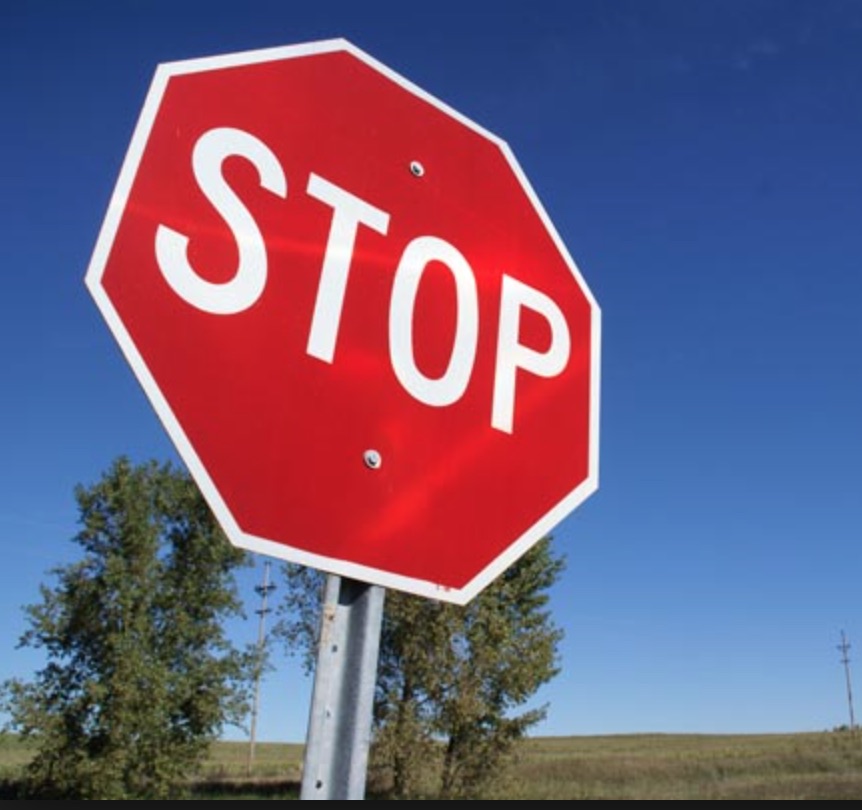
Sign posts include, to me, norms and customs, as well as directions of various sorts. There’s often a tension between lampposts and sign poles. The sign poles take work to design, manufacture, transport, and erect. That stop sign down the street didn’t just fall off the coconut tree. Similarly, customs, for instance, separating the work of men and women so that all nurses were women and all men were doctors, take work to implement and to enforce. People will not always stop at a stop sign and especially if they are never ticketed. Similarly, there will be individual women who desire to become a doctor and men who want to be nurses. There will always be tension in such customs between the norm and the individual desires.

Imagine after a lot of work has gone into putting up the stop sign, the lamppost function of government sponsors a study that shows it would be much better to put in a traffic circle (roundabout) rather than the four stop signs. More traffic gets through faster and there are fewer accidents. You can easily imagine some resistance. The people who profit from making the stop signs, for instance, and the police officers who ticket those who only come to a “rolling stop.” The drivers may also object. Many of them aren’t used to traffic circles. Some initial awkwardness is predictable.
To me, the fire hydrant represents the protective aspects of government. There are many! There are agencies, like the FDA, that ensure the cleanliness of our food and water. (Believe it or not, there are some providers who are so greedy, that they would actually sell you tainted food or drink if it would make them richer.) There are the Armed Forces, the Fire Departments, the Police Forces. In a way, Social Security and Medicare also fall into this region. It is a protective function of government.

Sadie, meanwhile, is sacked out on the couch across from me. She’s had an active day; two long walks, zoomies, swimming, and ball playing. Our dog, like many, is very loving. She’s wary of anything new. But soon, she’ll be head over heels in love with another person.
The very greedy people who would have you kowtow to them while they steal the fruits of your labor love to use the rationalization that it’s a “Dog eat dog world out there.” It isn’t actually. Neither humans (for the most part) nor dogs (for the most part) are out there eating others of their own species. We are both pack animals. We both love and protect our families. Is there competition? Sure. But it’s all done in the scope of a cooperative society.
The natural tension between conservatives and liberals has a lot to do with how quickly one wants to see lamppost findings supplant existing psychic and physical infrastructure. And it is a very legitimate debate to have. Most do not want the extreme that every new finding in, say, medical research should instantaneously turn traditions and practices on their heads. Also, most do not want to ignore all new science and discovery and keep everything static forever.

What is not a legitimate debate is for one side, like a spoiled toddler, to insist that if they don’t get their way, they’ll burn our civilization to the ground. Sadie wouldn’t do that. Nor would I. Nor would most Americans.
 petersironwood
Pingback: Travels With Sadie 8 – Singing of the Rain | petersironwood
Pingback: Travels with Sadie 9: Joint Problem Solving | petersironwood
Pingback: Where is the door? | petersironwood
Pingback: I made a mistake; here’s what you can do to fix it! | petersironwood
Pingback: The Fault is in Defaults | petersironwood
Pingback: Ban the Open Loop | petersironwood
Pingback: Travels with Sadie 10: The Best Laid Plans | petersironwood
Pingback: The Ninja Cat Manual | petersironwood
Pingback: Turing’s Nightmares: Axes to Grind | petersironwood
Pingback: Travels With Sadie 11: Teamwork | petersironwood
Pingback: Travels with Sadie: 12 Taking Turns | petersironwood
Pingback: Turing’s Nightmares: A Thoroughly Modern Family | petersironwood
Pingback: Systems Thinking: Positive Feedback Loops | petersironwood
Pingback: Travels with Sadie 13: Dog Parks | petersironwood
Pingback: Travels With Sadie 14: Stick With It | petersironwood