• About PeterSIronwood

petersironwood

~ Finding, formulating and solving life's frustrations.

petersironwood

Tag Archives: science

You Know

02 Monday Oct 2017

Posted by petersironwood in America, family, psychology, story, Uncategorized

≈ 18 Comments

Tags

character, ecology, environment, ethics, Native American, resonsibility, science


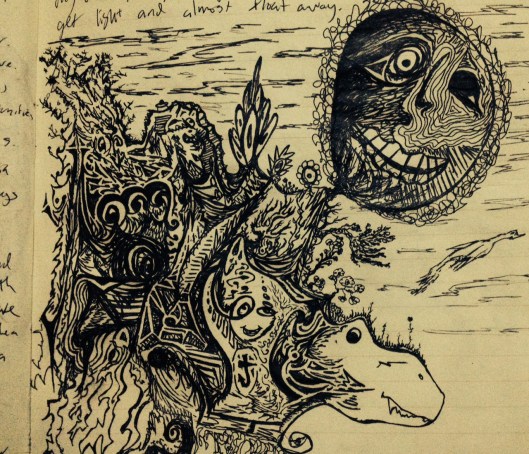
David's DreamDeeply


You know perhaps of various versions of the story of the “two wolves” that live within us. I have heard it various ascribed to Native Americans of the Dakota tribe as well as the Cherokees. Basically, a grandfather, or other such wise person tells his grandson that there are two wolves inside him: a good wolf who is kind and generous and a bad wolf who is mean, spiteful and selfish. These wolves are in a constant battle with each other. The grandson asks which wolf will win and the grandfather replies “whichever one you feed.”

http://www.firstpeople.us/FP-Html-Legends/TwoWolves-Cherokee.html

We have probably all seen cartoons in which an angel perches on one shoulder of a cartoon character inspiring them toward good actions and a devil slouching on the other shoulder whispering rationalizations for bad actions. I suspect that variants of this story exist in many cultures. It seems to me that there is more than a speck of truth in it.

I would love to report that I was born without any bad wolves and that I never had such a struggle myself. That, however, would be a lie. To lie about it would be feeding the bad wolf. In fact, I have experienced the bad wolf as well as the good wolf. I also find the that the bad wolf has weakened considerably over my life-time though he is far from completely dead.

IMG_4087

At boy scout camp, for example, when I was about 10 or 11, three of us sat around a campfire, getting ready to make some simple biscuits. So far as I can recall, I have always loved being outdoors and especially in forests, wood, fields, mountainsides. I don’t even recall feeling any conflict whatever about this. I suppose both the “good wolf” and the “bad wolf” must love the outdoors. On the other hand, I don’t love everything about the outdoors equally. Trees, flowers, clouds, streams, deer, rabbits — always my friends. Spiders, ticks, mosquitoes and deer flies — not so much. I never understood why on earth a person would pick a tarantula for a pet, for instance. On the other hand, I realize that most spiders are harmless to humans and even helpful because most of them catch things like mosquitoes that are much more harmful. Your chances of getting a lethal spider bite are nearly non-existent. Even at eleven, I could not really say I “hated” spiders although having one fall unexpectedly onto my body caused me to jump and try frantically to brush it off. I didn’t really care if I killed it in the process.

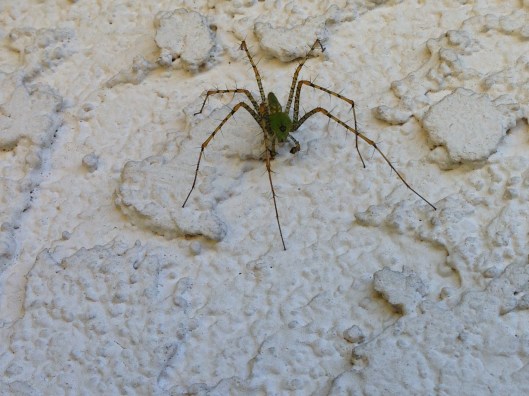
While we waited for the fire to heat up enough to cook our primitive trail biscuits however, one of my companions found a spider on a stick and placed it on the hot pan atop the grill. He shook the stick until the spider fell onto the hot pan. For a moment, the spider sprung into action, jumping and hopping excitedly. When he made it to the edge of the pan, my pack mate pushed him back to the middle with the stick. The spider didn’t last long after that. He collapsed and died.
IMG_4429

This simple scene did not last long, but it certainly stirred a tornado of emotions inside me. I thought about objecting but didn’t. I really wanted to see what would happen to a spider subjected to that kind of environment. In other words, I was curious. At the same time, I felt a strange kind of gratitude that the spider was on the hot grill and not me. I had already gotten a rather nasty burn so I knew that burns were horrifically painful. I felt a kinship to the other two guys in this. We were humans after all, and therefore more powerful and clever than a mere spider. I was superior to the spider as were they. We could control the life of the spider more than it could control us. And though I had never actually been bitten by a spider of any kind, let alone been seriously injured, I had been frightened when they dropped on my arm or hair. So, I also felt a kind of vindication; I told myself the creepy spider deserved to die for being so creepy and — well, spidery. Yet, despite all this, I kind of hoped the spider would make it off the hot grill and just learn their lesson (which was what exactly? I guess not to be a spider?) and go on with their life being a more enlightened spider. Anyway, my camp companion prevented any of that from happening by pushing the spider back onto the middle of the grill.

While there had been a whole dark rainbow of emotions in that twisting tornado, I didn’t have any doubt that this was feeding the evil wolf. This was an evil deed and I knew it. When my body is attacked, I am going to defend it. I would defend my life and those of my family by killing any attacker, whether it be an attack from a virus, a bacterium, a spider or an actual wolf. But this spider had not actually attacked anyone. We had gone out of our way to kill it. Not only that, we had killed it in a way that, to all appearances, pained the spider considerably. We hadn’t exactly laughed at the spider’s plight but we had certainly enjoyed it and exclaimed about how he bounced around so vigorously. I did not go home and brag about this incident to my parents or grandparents. Killing unnecessarily, and especially killing another creature in a painful way, is not something anyone in my family would have praised me for.

Of course, considerations of when killing is “necessary” versus “unnecessary” could be the topic of an entire book. <grin> That book might conclude that killing is never really necessary; it’s only convenient. As for pain, I have largely been trained as a scientist and in that training, we were always told to employ parsimony and avoid “anthropomorphism” — that is, to hold to the simplest explanation and not to assume that mammals and birds (let alone spiders) have consciousness and feelings like humans do.

For example, many years later in college biology class, we dissected a surprisingly large live crayfish and this mantra was repeated. So, for example, we were reassured that the crayfish would feel no actual pain because its nervous system was too primitive. First on the agenda: badly injure one of its arms by crush-crunching it with pliers. The crayfish hesitated a few moments and then reached over with one of his major claws, clamped on to his injured arm and yanked it hard. This caused the arm to snap off at one of the joints. The crayfish could then re-grow its arm from that point. The jerking of its own arm was termed as a “reflex.” This “reflex” serve the crayfish well in the wild because the crayfish will grow back a complete arm. This particular crayfish, however, never had that opportunity because the next little trick on the agenda was to remove its beating heart.

So, I cut out the heart and put it in a separate little dish that had some small dosage of adrenaline in it. Immediately, the teeny heart started beating faster. Meanwhile, the heartless crayfish continued to totter about its cramped living quarters. Perhaps it was searching for its missing heart.

OLYMPUS DIGITAL CAMERA

OLYMPUS DIGITAL CAMERA

I accepted the explanations given as to why the crayfish felt no pain. (And, by the way, while I did feel some curiosity as I did all this, I did not have any of those earlier feelings of the crayfish “deserving this” or of my being “superior to it.”) The Teaching Assistant explained, that after all, the crayfish’s nervous system was “primitive” compared with a human’s. We have these enormous brains, you know. It also made a lot of sense to me to take the most “parsimonious” explanation. I believed that then and I believe it now. However, my assumptions about what constitutes “parsimonious” have evolved quite a bit.

You know, I’ve always been something of a pain to my parents, teachers, and probably many others. Starting that tradition early, my mother was in labor for 72 hours before I was born. As best I can recall (which is not at all) I must have been reluctant to enter some new environment head first. By the way, in movies people are always diving head first into ponds, rivers, lakes and so on without the slightest knowledge of how deep the water is or what is in that body of water (such as a submerged log, for instance). So, generally, it is a much better idea, if you have to enter such a body of water, to enter feet first. You might twist your ankle or even break your leg, but you are unlikely to spend the rest of your life paralyzed from the neck down. So, the strategy of “feet first” is a good one.

Except it isn’t a good strategy at all, while you are being born. Anyway, in the various gymnastics I performed to get into the right position, no doubt, with plenty of encouragement and prodding of the doctor, I managed to get a hernia. I was born with a hernia and operated on at about six months and the hernia was fixed. I later discovered, to my great surprise, that this operation had almost certainly been performed with no anesthesia whatsoever. Why? Because a baby’s nervous system was thought too primitive to feel pain. Sure, babies cried and writhed, but those actions were just reflexes, according to accepted medical doctrine at the time.

Of course, if you’ve ever been in close contact with a baby, your own opinion, like mine, is likely that this is utter non-sense! Of course, babies feel pain. You may also be surprised to learn that about that time, the medical profession also believed that babies could not see until they were about six months old. Professor Robert Fantz conducted some of the initial research on this question while I was studying psychology at Case-Western Reserve. Though I wasn’t personally involved in the experiments, I was personally involved in the idea because I had a newborn daughter at home. The work of Fantz was cool and showed that infants preferred human faces and a moderate level of complexity. Infant research is amazing in its own right. Researchers use gaze direction, heart rate deceleration and other clever measures to find out what babies perceive. But how on earth could doctors have ever believed that babies couldn’t really see until they were six months old? As a new father, I found that completely preposterous. My daughter could most certainly see from day one.

iPhoneDownloadJan152013 1150

My brother is eleven years younger than I am. When he was an infant, I used to carry him around and show him various things in the house and later, in the yard. Of course, he could see from day one. But how could the medical profession have thought otherwise, even before Fantz’s work at Case-Western?

The next year, I moved on to grad school in Ann Arbor and delved more deeply into infant development and perception. That is when I discovered that those bastards had almost undoubtedly operated on me without giving me any pain killers or anesthetic. No, I kid, of course. No hard feelings. They were no doubt just doing what they thought best. For them.

Therein lies the problem. I now think the most parsimonious explanation is that every living thing feels pain. While the precise quality of the pain may differ among crayfish, spiders, and humans, I see no reason whatever to believe that our human pain is more excruciating because we have bigger brains. In fact, it seems equally plausible, that because of our much bigger brains, our experience is more removed from actual pain than is that of a crayfish. I believe that people define away consciousness and pain for others because it is more convenient for them in making decisions and living with themselves without guilt.

Saying that the crayfish’s nervous system is more primitive doesn’t really cut it either. That firstly implies a doctrine disavowed by most scientists that the “point” of evolution is to make humans and that other branches are necessarily more “primitive” if they have been here longer. For instance, horseshoe crabs have been around for 500 million years, basically unchanged so far as we can tell. Humans have been around for a much shorter time. Of course, if you measure how advanced a species is by how quickly it can destroy things for its own convenience (not just survival) then, yes, humans win hands down. Congrats to all.

Humans have several kinds of sensory nerve fibers on the periphery. We have, for example, A fibers. These are myelinated, and this allows nerve conduction to go much faster than impulses travel in their slower cousins, the C fibers.  So, when a human touches the proverbial hot stove, the A fibers go right into a quick feedback loop to get you to jerk your hand away. A noticeable time lag and you actually feel the pain. The C fibers take longer. It is thought that one way acupuncture might work is to stimulate A fibers to that they inhibit the C fibers.

It turns out that these C fibers have been around a long time and they are the types of fibers in our friend the crayfish. In over-simple terms, “advanced species” have fast and slow fibers while “primitive species” only have the slow pain fibers. Well, if that’s true, and particularly in consideration that the fast fibers may actually serve to dull pain under certain conditions, how on earth does it make any sense to say the crayfish cannot feel pain because its nervous system is too primitive? No. It makes more sense to say that the crayfish cannot help but feel pain. It is the only signal coming in.

twinsthreemonthbirthday

It seems the same thing applies developmentally within an individual. Indeed, if you look at the behavior of babies without any preconceptions to the contrary, I think a normal reading of the reality would conclude that babies are feeling way more completely and overwhelmingly than are adults. It seems to me much more likely that babies feel pain more intensely than do adults.

One could argue that, despite the pain of the crayfish, it’s worth it because the doctors being trained (most of the class was pre-med) will certainly end up saving way more pain among their human brothers and sisters than they will cause this crayfish. I think that’s probably valid. But it does require thinking about a conscious tradeoff among species which is a weird kind of decision that we’ve never had to consciously make before in our history.

Our ancestors may or may not have measured the pain of their prey against their own hunger. Now, however, we literally have to ask ourselves whether it is worth saving one human life through economic growth if it means obliterating an entire species of whales? Of fish? Of plankton? How about saving one human a trip to the grocery every week? Is it worth killing off a species for that? How about twelve? How about 1000?

I feel a little out of joint now with much of society because I’ve been feeding the wolf that says to me: “Those living things all have lives and those lives are just as precious to them as yours is to you. Keep that in mind. Oh, and by the way, you bet they feel pain just as you do. Don’t tell yourself some bullshit that they don’t feel pain because they are too primitive. We all feel pain: wolf, rabbit, fish, bird.” Meanwhile, I feel as though many parts of our society, because of the nature of our economy, has been listening to a different wolf.

That wolf says, “Humans are special. They deserve special treatment. And just as the human species is the just ruler of every other species which is only put here for your pleasure, so too, there are some humans who are above and superior to others. And those humans deserve special things. And those humans who are above deserve special favors, sexual and otherwise. And those “up there” humans, who are more evolved, deserve to inconvenience you if it serves their pleasure. But don’t worry about feeling spat upon and made to feel small. There’s a whole lot of things inferior to you and you can take your hate out on them! Kick the dog! Stomp on the ant! Trash the environment! You’re human! You can do whatever you want to destroy earth. It’s your earth after all.”

A few months ago, I found a rather large grand-daddy longlegs in the house. I did consider simply crushing it in a paper towel. Instead I used a paper plate and a cup to take him outside and deposit him intact onto our pathetic brown-leafed gardenia bush. Guess what? That gardenia bush now has wonderful looking leaves. No curling. No browning. Coincidence? Perhaps. What do you think?

I’m pretty sure the following is not coincidence. For a time, I rented a house in Woburn Massachusetts. It had a basement with windows at the top. At one point those windows all became covered with spider webs. I took down all the spider webs. Yay for me. Mission accomplished. The next day, our basement was infested with wasps. It can’t always be “follow the butterflies,” you know. So which wolf will you be feeding? Only you know.

IMG_9722

Author Page on Amazon

Seeing Seeing Double Double

03 Saturday Dec 2016

Posted by petersironwood in Uncategorized

≈ Leave a comment

Tags

education, perception, radiation, religion, science

OLYMPUS DIGITAL CAMERA

As I recall, a bunch of us first-graders were waiting for to take our turns in some kind of race. While we waited on the edge of the playground to be called, I looked at and then through the hurricane fence in front of us. I discovered that I could look through the fence and see another fence. This second fence was gigantic and far away. Yet, it was also quite close! Indeed, it seemed as though this was no ordinary fence, but a magic fence that I could place where I liked just by changing something in my head. I know I tried to share this information about the magic fence with the other kids waiting with me but I failed to get them to see the magic fence. I didn’t have long. It was my turn to race.

And race I did — but rather badly. I was amazed to discover that I was not the fastest kid in first grade. It had always seemed to me that I ran extremely fast!  That’s how I felt inside. But many kids in my class ran faster than I did. Even many girls ran faster than I did which seemed at the time absolutely impossible. How could I feel so fast running and yet be slower than so many other kids? Even the fattest kid in the class ran faster!

Later in first grade, upon returning from ten days at the hospital, my parents bought me bunk beds and the bunk beds were covered with a green bedspread which had a repeating pattern of identical and quite stylized white flowers. I could lay on the bedspread, look at the pattern and then look through the bedspread to another larger bedspread father away. In fact, I could find several bedspreads at various distances. I experimented by getting closer or father away from the bedspread and by fooling with my eyes. I did not understand exactly what was happening, but one thing was clear. The world that I had thought was “out there” proved very changeable under my own actions and volitions. I could “change” the world out there — or at least how it appeared — by what I did in my own head.

My grandmother supervised the Sunday School at the Methodist church my family attended. Sunday School proved fairly neat. For instance, I memorized the most verses from the Bible and as a result, won a glow-in-the-dark cross. I was supposed to look at this at night and derive comfort from it. I don’t recall that working but what I did discover, which was really cool was this: if I put my eye right up to that cross in total darkness, I could see tiny flashes of light. The cross, like so many “glow in the dark” items back then included both phosphorescent paint and radium laced paint. Same with my “glow in the dark” watch. When the lights first went out, these items would glow quite brightly from the phosphorescence. But even hours later, when that effect had completely vanished, there was still a faint glow from the radium paint. When placed directly on the eye, however, there was an effect like looking at a blurry bout of heat lightening.

Our Sunday School teacher told us that when we prayed, we went to heaven! That certainly seemed kind of cool. I wasn’t exactly sure what heaven was like, but in at least some of the pictures, there were some beautiful angels and it would certainly be fun to meet them. So, I decided to test out our Sunday School’s promise. I would sit in the pews, close my eyes, and pray just as sincerely as I possibly could. When I was praying up a storm, I would suddenly snap my eyes open! And there I was! In Sunday School. I hadn’t even moved to a different seat. No clouds. No heaven. And worst of all, no angels. I would try it again. Same result. I wondered whether opening my eyes could somehow instantly bring me back from heaven to Akron, Ohio. That seemed unlikely. But I tried a few experiments where I would pray hard and then not open my eyes, but just notice whether I still felt the hard wooden pew, and smell the same musty curtain smell and hear the same kids breathing and fidgeting around me. Well, in case you are wondering, it didn’t matter which sense or senses I used, I never got the slightest hint that I had gone to heaven. It not only didn’t look like heaven; it didn’t sound like it, smell like it or feel like it either. This was disappointing because one of the angels pictured in my “Red Letter Testament” Bible Study book looked out of that book right at me! Her beautiful eyes seemed to invite me to join her in heaven. But how? I don’t think I had quite figured out that this was an “artist’s conception” of what a beautiful angel might look like (e.g., a girl and just my age!). No, I knew she was there and I wanted to meet her.

About this time, I began to notice that my grandfather never joined us at Church. This seemed odd. At last I asked about it and he said he didn’t go because he didn’t believe in God! What? This seemed pretty inconceivable to me because everyone else around me kept talking about God as though He were real and definite. The way people talked gave not the slightest hint that God was something only some people believed in. God was portrayed as definitely there. There were paintings of God, for instance. Some of the illustrations in my books looked almost photographic in their realism. It made no sense that people would treat God as real if He were not.

My next door neighbor on Johnson Street played all sorts of games with me. I don’t recall her name; she was cute though occasionally mean. She liked to tie up people or put tape over their moths. But I really didn’t have that many choices of people to play with. One day, on the way to Sunday School, my parents and I ran into her and her parents. We were all dressed, as they say, in our “Sunday finest.” So, I did the polite thing and greeted her warmly, “Hello, little S*** A**.” All at once everyone’s faces including the little girl’s exploded into horrified expressions. I just used one of the main greetings that she used. I had no idea what the phrase meant or even the individual words. Later, after I was punished, I still persisted to try to find out how these words could possibly have so much power. My parents couldn’t even bring themselves to tell me. My mother delegated this task to my grandfather. Perhaps looking back on it, his being an atheist meant he could say words like this or at least explain them.

He took me with him into the landing area in the stairway to the basement. Grandpa’s house had some of the coolest features including a “Root Cellar”, a “Coal Cellar” and a “Disappearing Stairway.” In addition, Grandpa had a rock garden, a vegetable garden, a staircase and the house had three doors. There was a front door into a small entry off the living room. The back door went directly into the kitchen from a passageway near the garage. And, there was a third door that led off the basement stairs onto the patio near the apple tree that my mom had planted as a kid. My grandfather kept that door locked and no-one was allowed to use it. And that seemed a shame because our house only had two doors. It seemed to me, if you had a house with three doors, you would want to use all three! Anyway, it was near that door as he was emptying some trash that he explained what those magic words referred to.

He did not explain why they were powerful. He did not explain why my companion acted shocked when I used the words when I had learned them from her and she often referred to me and other playmates with this phrase. He did not explain why everyone had been upset. Once he explained what it referred to, I could kind of understand why she might not want to be called that although that was what she called everyone else. But why had her parents been so upset and why had my parents been so upset? It was one of those “explanations” that only explained the surface of a complex tangle of issues.

With a longer perspective, I can say that most so-called explanations are like that. They tell you  why someone picked a particular color to paint their car. They don’t explain how cars work or why we have so many cars in this country and such limited public transportation. When it comes to religion, most explanations seem very much about the color of the paint. It’s very hard to dig beneath that to find out how people really relate to their religion. And, this too always struck me as odd, especially for people who claim that their religion is a central part of who they are. Perhaps, it is not so much that people are unwilling to explain how religion works for them as they are unable to explain it.

After all, I was able to alter my perception of the hurricane fence and the repeating pattern bedspread long before I understood how I was doing it. In fact, I never found anyone else who either could or wanted to use this technique until much much later. In college, I read a book (I think by John Dewey but I’m not sure) and discovered that this author had also learned this same trick at an early age. Indeed, I still find it a useful skill many years later. For example, if I am sitting somewhere across from people at a table, I can “merge” the images of their heads to make a composite image. That’s kind of fun. In grad school, before “COMP” functions, I found it useful to compare hexadecimal disk dumps by putting them side to side and crossing my eyes until the two dumps overlapped character by character. Anything that changed from one disk dump to another popped out instantly. While I thought it might be a useful skill for others and explained how to do it when asked, I never felt the slightest urge to make everyone learn this skill. I never claimed it was the only way to look at the world or even the best way to look at the world.

I never seemed to get into an argument with people about forming clear double images. If I decided to see two apples — one image with each eye — instead of converging my views to see one image, it never seemed much of a big deal to me or to anyone else. If I said, “It looks to me right now like there are two apples” and someone said, “Yes, but there is really only one” then I would just say, “Yeah, I know. But it’s kind of fun to see double sometimes.” If they didn’t feel like doing that, why would that bother me?

Of course, one could argue that seeing double is just a private exercise but that religion comes into play when it comes to cooperative endeavors. For example, in a complex society like ours, there are laws, rules, customs, taxes, and all sorts of systems that require cooperation. If there are going to be taxes, there have to be some rules about the taxes. If some people believe that cigarettes and booze are “evil”, then they might argue to tax these things more heavily than say, a health club membership. This makes a certain amount of sense in the abstract, but specifically, it does not seem to explain much. For example, though America has never been nor is it a “Christian” nation in the sense of a state sponsored religion, 70% of the population identify themselves as “Christian.”  Although I have forgotten the many Bible verses that won me my radium painted glow in the dark cross, I still know that a main message of the New Testament is to love your neighbor as yourself; to turn the other cheek; to do unto others as you would have them do unto you. Yet, the United States has more billionaires than any other country. And the highest incarceration rate. Odd. Meanwhile, China purports to be a “Communist” country and one of the main tenets of Communism is “from each according to their abilities and to each according to their needs.” And China has the second highest number of billionaires. So, in the very places where coordination is necessary, there is a huge disconnect between what people claim are central principles guiding their lives and what they actually chose to do.

The mystery behind seeing double clearly is basically this. Our eyes adapt as we look at something near or far. When we look at something far away, our eyes are pointed at infinity. At the same time, we allow our lens to “thin” and the eyes are also focused at infinity. (There isn’t much difference in either of these beyond forty feet. When I look out my office window at the ocean, I can tell the ocean is father away than the palm trees because of other cues such as interposition (the palm trees partly obscure my view of the ocean so they are closer than the ocean) and aerial perspective (the ocean is slightly “fuzzier” than the palm trees because there is more distortion due to the air). If we look at something close, normally our eyes converge (point inward slightly toward the object) and we focus at the same time; that is, we make the lens thicker. However, it is possible to “train” oneself to separate these two actions. For example, I can converge (“cross”)  my eyes to look at my nose but accommodate (to the extent I still can) to distance so that objects in the distance look “sharp” — it’s just that there are two of them. Even though I am capable of seeing double, I don’t walk around seeing double all the time. It would be very impractical and inconvenient.

So, perhaps religion is like that for some people. Looking at things from a “Christian” perspective is, for some, something one learns to do at church, but it is too inconvenient or too impractical to keep doing it when it comes to actually interacting with other people. When you meet someone dressed in their “Sunday Finest” and they call you a S*** A**, you act really offended and shocked. But that doesn’t mean you can’t call them that the other six days of the week. And, if you own a factory where you hire young girls to paint the dials on glow in the dark watches, you encourage them to use their tongue and lips to repoint the little camel hair brushes that they use. And after a few years, they may not look much like angels any more. But you can still deny that your radioactive paint had anything to do with it. Because, apparently, although Jesus may have said, “Do unto others as you would have them do unto you,” that has nothing to do with killing actual human beings in order to maximize profit. After all, “Business is business” trumps the Golden Rule. If you’re having trouble understanding that, maybe it will help if you learn to cross your eyes. Don’t learn to see too clearly though. No, we wouldn’t want that.

——————————————————————————

Radium Girls (in Wikipedia)

Author Page on Amazon


Newer posts →

Subscribe

  • Entries (RSS)
  • Comments (RSS)

Archives

  • June 2026
  • May 2026
  • April 2026
  • March 2026
  • February 2026
  • January 2026
  • December 2025
  • November 2025
  • October 2025
  • September 2025
  • August 2025
  • July 2025
  • June 2025
  • May 2025
  • April 2025
  • March 2025
  • February 2025
  • January 2025
  • December 2024
  • November 2024
  • October 2024
  • September 2024
  • July 2024
  • April 2024
  • March 2024
  • February 2024
  • January 2024
  • December 2023
  • August 2023
  • July 2023
  • May 2023
  • April 2023
  • March 2023
  • February 2023
  • January 2023
  • December 2022
  • November 2022
  • October 2022
  • September 2022
  • August 2022
  • July 2022
  • June 2022
  • May 2022
  • April 2022
  • March 2022
  • February 2022
  • January 2022
  • December 2021
  • November 2021
  • October 2021
  • September 2021
  • August 2021
  • July 2021
  • June 2021
  • May 2021
  • April 2021
  • March 2021
  • February 2021
  • January 2021
  • December 2020
  • November 2020
  • October 2020
  • September 2020
  • August 2020
  • July 2020
  • June 2020
  • May 2020
  • April 2020
  • March 2020
  • February 2020
  • January 2020
  • December 2019
  • November 2019
  • October 2019
  • September 2019
  • August 2019
  • July 2019
  • June 2019
  • May 2019
  • April 2019
  • March 2019
  • February 2019
  • January 2019
  • December 2018
  • November 2018
  • October 2018
  • September 2018
  • August 2018
  • July 2018
  • June 2018
  • May 2018
  • April 2018
  • March 2018
  • February 2018
  • January 2018
  • December 2017
  • November 2017
  • October 2017
  • September 2017
  • August 2017
  • July 2017
  • June 2017
  • May 2017
  • April 2017
  • March 2017
  • February 2017
  • January 2017
  • December 2016
  • November 2016
  • October 2016
  • September 2016
  • August 2016
  • July 2016
  • June 2016
  • May 2016
  • April 2016
  • March 2016
  • February 2016
  • January 2016
  • December 2015
  • November 2015
  • October 2015
  • September 2015
  • August 2015
  • May 2015
  • January 2015
  • July 2014
  • January 2014
  • December 2013
  • November 2013

Categories

  • AI
  • America
  • apocalypse
  • cats
  • COVID-19
  • creativity
  • design rationale
  • dogs
  • driverless cars
  • essay
  • family
  • fantasy
  • fiction
  • HCI
  • health
  • leadership
  • management
  • nature
  • pets
  • poetry
  • politics
  • psychology
  • Sadie
  • satire
  • science
  • sports
  • story
  • The Singularity
  • Travel
  • Uncategorized
  • user experience
  • Veritas
  • Walkabout Diaries

Meta

  • Create account
  • Log in

Blog at WordPress.com.

  • Subscribe Subscribed
    • petersironwood
    • Join 648 other subscribers
    • Already have a WordPress.com account? Log in now.
    • petersironwood
    • Subscribe Subscribed
    • Sign up
    • Log in
    • Report this content
    • View site in Reader
    • Manage subscriptions
    • Collapse this bar

Loading Comments...