
Roughness
Materials and organisms in the natural world such as wood, rock, clouds, reeds, water, animals, and plants exhibit a degree of roughness. By contrast, mass production ideally produces items that are identical and “sharp” or “smooth” at the boundaries.
Think of the difference between a hand-thrown pot and a cup that is mass produced. Think of the difference between a cottage made of stone and a house made of prefabricated walls. Think of a path with flagstones and gravel versus a “sidewalk.”

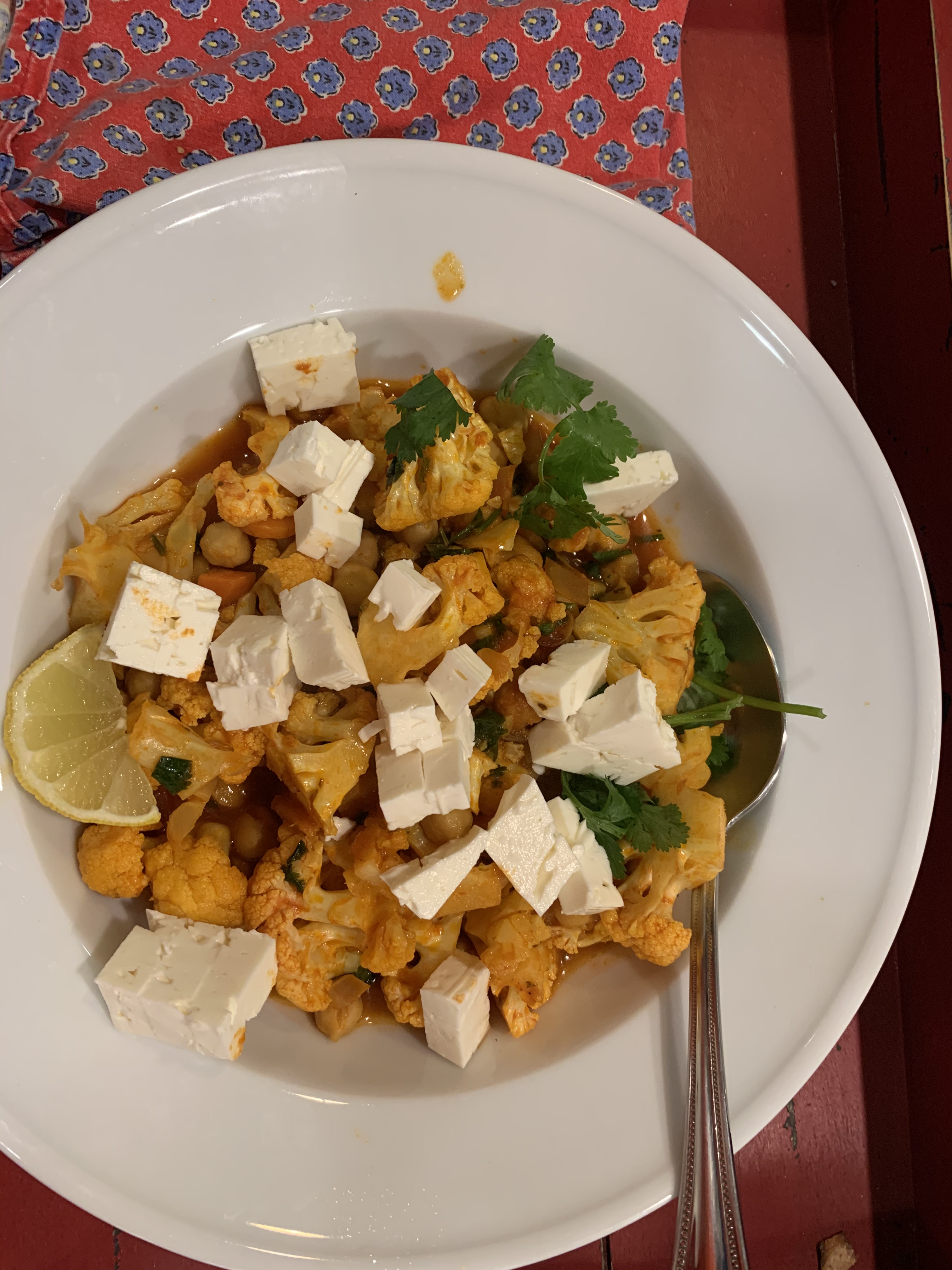
Perhaps because our ancestors evolved in a natural world for billions of years, we sense that roughness connotes something natural. To me, the property of “roughness” evokes beauty and comfort while perfectly straight lines and rectangles makes me feel as though I am in a purposefully constructed space. Someone who builds a tower of stones or wooden blocks must be mindful of the whole. Tiny to moderate variations in size, angle and texture mean the constructor must pay careful attention. No two constructions are identical. By contrast, if you and I were to build a plastic rectangular lego tower of a specified size out of specified blocks, the results would be indistinguishable. It is much like cursive script versus printing. It is much like making a stew from scratch versus heating up a TV dinner.
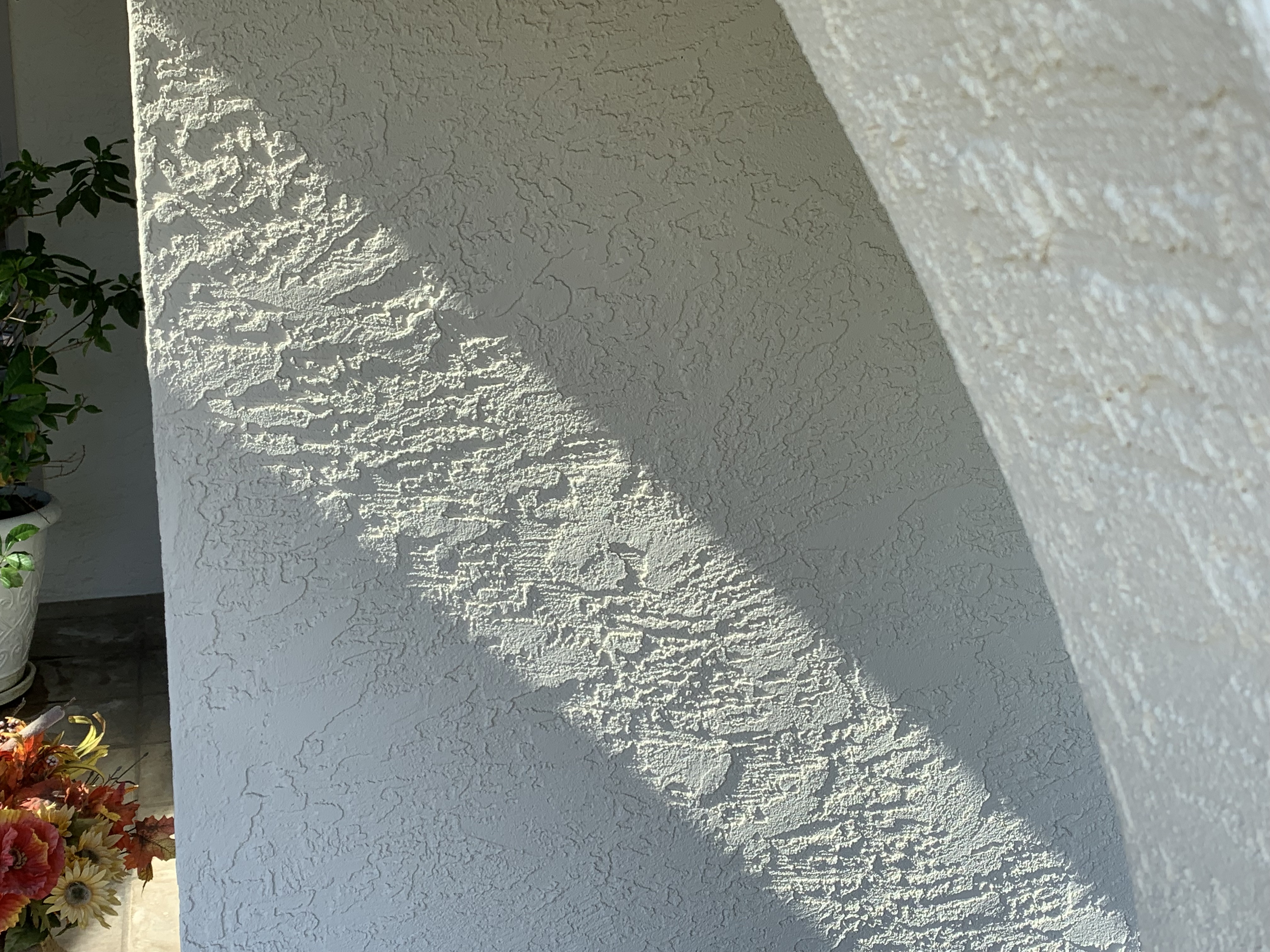
An old house is prone to crumbling, leaks, misalignments, idiosyncrasies, and cracks. If we allow the house to go completely to ruin, it becomes impractical or at least quite inconvenient to live in. On the other hand, a little bit of roughness gives the abode more character. Since glass is actually a fluid, old windows begin to “flow” slightly introducing irregularities in the glass and therefore in what is seen through the glass. A new window, on the other hand, it typically “perfect” and therefore somewhat boring.
As a driveway ages, the effect of nearby life and natural forces begins to produce small cracks. These make the surface more interesting visually. It also requires someone walking to pay more attention to where they are stepping; that is, to be more in the moment. Such cracks encourage further incursions by living forms.

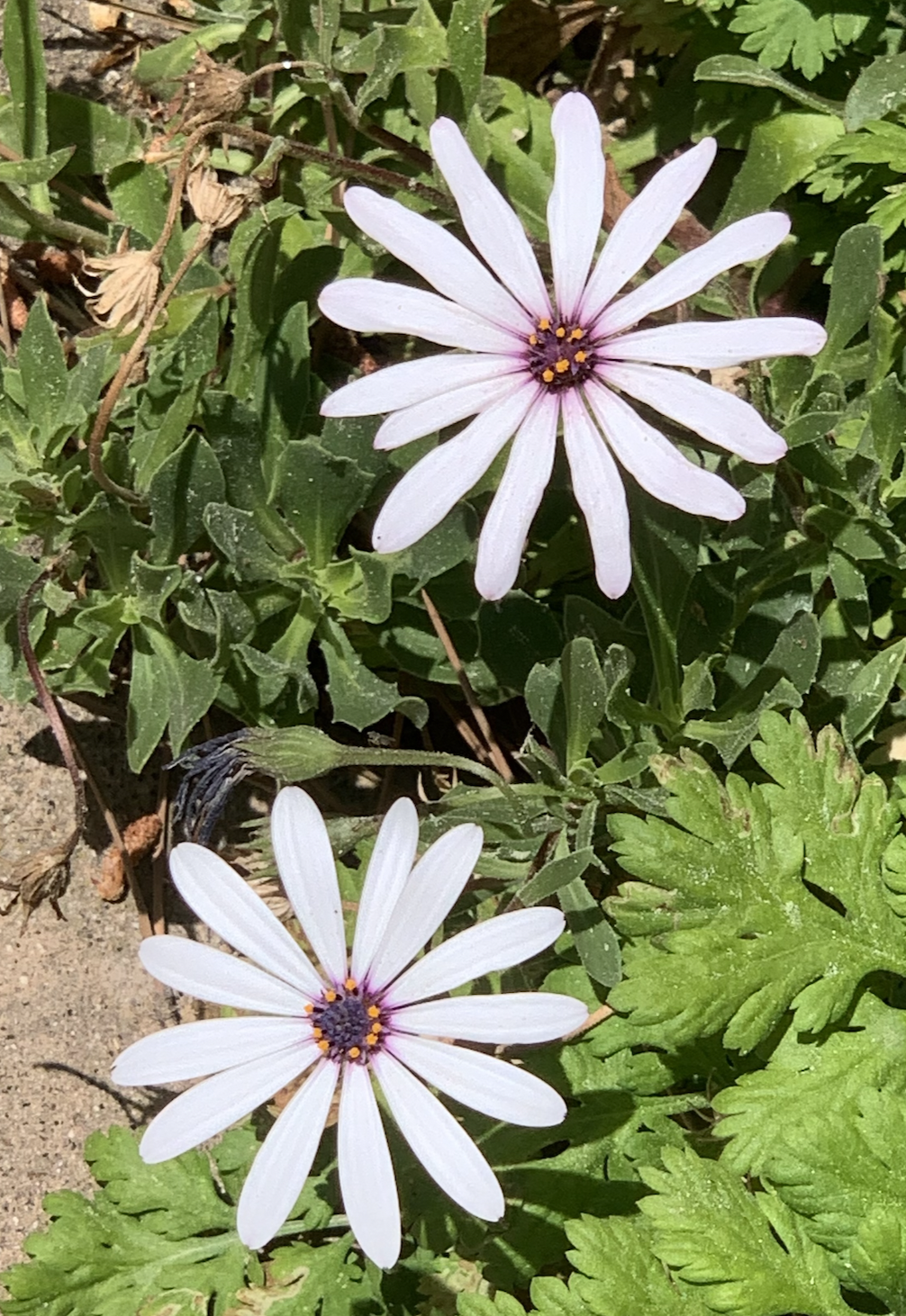
Flowers often exhibit beautiful symmetry. The symmetry, to me, is made more beautiful because of slight variations in the size, angle and color of the individual petals. If instead, you imagine a mathematically perfect flower in which there is zero perceptible difference in the size, angle and color of the petals, do you feel that is more beautiful? Does it make you feel more comfortable?

I don’t mind that your keyboard may be identical to mine. I use the computer as a tool. Sometimes, it is used to produce art of one sort or another. But if the art that everyone produced were as much the same as the keyboards, it would seem sterile, non-living, mechanical. A brand new chair will hopefully be evenly painted and the upholstery will be unworn. Over time, the paint will begin to chip and the upholstery will be threadbare and potentially stained in places.

We have been taught to see such things as flaws, defects, and imperfections. But are they? At some point, the “ravages of time” (or, more accurately, perhaps, the “ravages of entropy”) can make things less than ideally functional. For instance, your tires wear over time and, while they may look more interesting, worn tires are a safety hazard for you, for your passengers, and for everyone else on the road.
Similarly, if you must undergo surgery, there’s a good reason for your surgeon to use a machine-tooled scalpel with a “perfect” edge. Railroad cars and railroad tracks that were too diverse from each other might look more interesting, but they would be less safe.
In many cases, however, roughness does not negatively impact functionality. It looks better without negatively impacting functionality. A chair, baseball glove, or pair of shoes that is slightly worn still works. Perhaps it even works better.
Roughness in the body of a living things often allows local adaptation. The muscles in your body, for example, are not of a “pre-specified” and precise size. If you exercise a muscle, it will get stronger and grow larger. That allows you to adapt to your circumstances. Your skin is also capable of growing stronger in places where it needs to be. Your bones grow stronger if they are required to bear a greater load.
Roughness also exists across individuals within a species. Unlike items that come off the assembly line, items that come from life have slight variations from each other. Some seeds are smaller; some are larger; some are stickier; some are smoother. In some cases, these differences will have no impact on the viability of the seed. But sometimes they might. Life is always trying little “experiments” of small variations to see whether one might be better than another. And, by the way, that is not some minor feature of life: in many ways, that is life: the balance between repetition and variation.
It’s ironic that our minds, which sprung from this balance, often strive for imbalance. To make things “simpler” we like to over-regularize and over-specify. Sometimes, you can go a rather long ways in one particular direction if you take such a drastic step. But if you’ve miscalculated in any way, or if your data were inaccurate, or if conditions changed after your data were collected, you’ll be stuck speeding down a railroad track toward what is now obvious disaster. Trying to impose an absolute pre-specification of action for every set of circumstances is impossible. To achieve something like it, people sometimes ignore the complexities (the roughness) in real life, and throw things into a small number of buckets. Making decisions on the basis of what bucket something is in, is a lot like judging a book by its cover. Such a process takes things which are, in fact, rough and treats them as though they were mathematically perfect.
Because of the “roughness” of circumstances, many societies have found that putting in place the human judgement of many with countervailing interests often works best. In America, for instance, there are three branches of federal government. The judge conducts a trial, with different people advocating for the two sides. In many cases, a jury of twelve decides guilt or innocence.
Living systems are robust to various changes in circumstances. A conventional car engine, for instance, is designed to use gasoline or diesel. Put in the wrong fuel and you might ruin the engine. But what about a human being? You can use a tremendous number of different kinds of fuel in the form of food. Once actually working inside your body, it’s actually one of a much smaller number of types of fuels: carbohydrates, sugars, proteins, fats. This is just one of the many millions of ways that various life forms show resilience and robustness. Because life endlessly plays; because it exhibits roughness; because it is diverse; because of this, it adapts and it evolves.
Meanwhile, as we look at things, we feel intuitively that “Roughness” is conducive to life and is also one of the quintessential aspects of life.
“One could do worse than be a swinger of birches.” — Robert Frost, Birches
If you have ever swung on birches, or tried to climb any other kind of tree, you know that each is shaped and branched a little differently. From the ground, it’s easy to glance at a tree and think the branches are all basically the same. They are not. And if you are a kid who actually spends a lot of time climbing trees, you pay attention to the peculiarities of specific trees and specific branches on those trees. Why? So as not to kill yourself, or worse, hear your parents say “I told you so!” after you break your arm swinging from a tree, say. But the miracle is that, although you are not immortal, you can heal your broken arm. In order for that to happen, obviously, some parts of your body have to do things differently than they have been doing. The “Roughness” of life isn’t only a visual characteristic. It’s also a characteristic of the processes of life. It’s also characteristic of a the processes of a healthy organization.

When it comes to the elements of a User Interface, in most cases, the elements are modeled after machines, not natural phenomena or living things. Is that necessary? Perhaps designs that project “Roughness” would be harder to program, harder to maintain, and may be even confusing to users? What do you think?

In physical objects, usage often creates or exacerbates “Roughness.” Could it be advantageous for this to happen with UI elements as well? Would window edges that looked “handmade” or “rough hewn” be more beautiful? More comforting? More usable? Less usable? Right now, conventional systems would make it harder to “calculate” the edges of a rough window than a conventional, straight-edged window. Must it be so? Or, could different architectures make roughness easier to calculate and require fewer resources?
When I think about the broader User Experience in terms of Roughness, what I imagine is that a system that has “Roughness” might mean that there is flexibility in the order in which subtasks are carried out. Perhaps, it means that you offer the user of a word processing application different options in terms of font, style, documents. etc. Perhaps it even means that the user can design their own font or create their own document type. What do you think “Roughness” means in terms of User Experience?

———————————
A short story about the lack of “Roughness.”
A short story illustrating that likely things are not the only things that happen in life.
Categories are useful. But to guide such a horse effectively, hold the reins loosely.
 petersironwood