
Tags
analogy, Democracy, elections, Feedback, government, life, love, mental-health, metaphor, politics, problem solving, programming, sense-making, thinking, thought, writing
Metaphors We Live By and Die By

I love metaphors. I always have. I admit it. I think every youngster does, at least until they are exposed to poetry in English class. I was lucky to have an awesome English teacher who deepened rather than destroyed my natural love of metaphors. There are plenty in my own poems. but in this post, I am not focusing on metaphors for poetry so much as metaphors that we use in our thinking. Metaphors impact the way we approach situations at work and at home. I was influenced to see this by two main sources. First, Lakoff & Johnson’s book, Metaphors we Live By was first published in 1980. This book greatly influenced, among other things, our IBM Research team’s study of human-computer interaction. At this point in the history of human-computer interaction and user experience, researchers and practitioners began to explore how various metaphors (e.g.,desktop, trash can, windows, drag and drop) could be used to help users understand the capabilities of computers and how to invoke them. (See, e.g., Carroll, J. and Thomas, J.C. (1982). Metaphor and the cognitive representation of computer systems. IEEE Transactions on Man, Systems, and Cybernetics., SMC-12 (2), pp. 107-116).
Consider the error messages “Illegal Syntax” and “User Error.” They both put the responsibility for an undesirable state of affairs squarely on the shoulders of the user. “Hey you! User! You did something dastardly! You used illegal syntax.”

Photo by Brett Sayles on Pexels.com
Generally, the term “illegal” implies that you did something that was against the law. It usually implies you did something unethical too. Gerry Weinberg, one of the pioneers of UX/HCI (a keynote speaker at the Gaithersburg Conference), pointed out that the “legal” syntax of languages often has arbitrary restrictions. It might be more accurate to have an error message that says, “Our programmers were unable to take the time to allow dates to be entered in European or Chinese format. Please enter dates as MM/DD/YYYY as in 08/04/1961 for August 4th, 1961.” This longer message tells the user what was “wrong” with their input and how to correct it as well as conveying the very real truth that the limitation is with the software, not with the user. Similarly, what is called “User Error” actually comes up as a message when the user does something that seemed reasonable to the user and would most likely be interpretable by another human being but was not anticipated or could not be dealt with by the programming team. Suppose it said instead, “Software error. We did not anticipate this kind of input so we can’t deal with it.” Or, in many cases, a more honest message might be: “Software error. We knew people would want to do this, but we didn’t have budget to program properly.”

Photo by Pixabay on Pexels.com
At the same time I was thinking about metaphors and Human Factors in Computing Systems, I was also conducting therapy as a Fellow at the Institute for Rational Living. I was learning and supervising cognitive behavioral therapy under the direction of Albert Ellis. Here I observed how people used metaphors to help make sense of their lives and make decisions about their lives. For example, as pointed out by Lakoff & Johnson, people often viewed romantic love as a sickness! It is also common to view romantic love as a journey over which you have little or no control. It is understandable why it sometimes feels that way, but such a metaphor is not empowering. It does little to lead you to make reasonable decisions about love or about those whom you love. Think instead of love as a collaborative work of art.

Photo by Agung Pandit Wiguna on Pexels.com
The “Love is a collaborative work of art” metaphor encourages you to realize that you must collaborate with your partner to make a relationship work over time. You can’t really collaborate very well unless you communicate. It also encourages you to realize that work is involved. It encourages you to realize that it is a creative endeavor. While you can certainly learn from the successes and mistakes of others, in the end, your relationship is unique. It will take creativity to make your relationship work. It puts the responsibility for the relationship on you and your partner, not on forces beyond your control.
It isn’t only love about which people often use inappropriate metaphors. For example, when it comes to overcoming addiction, overeating, under-exercising, people often use sin as their over-arching metaphor. “I was bad last night. I had two pieces of pumpkin pie.” “I was horrible all week. I had those evil donuts every morning.” The metaphor that “eating is evil” is inaccurate. After all, you have to eat to live. Furthermore, that metaphor doesn’t lead to any solutions except to try harder to be “good.” Worse than that, if often subverts a person’s efforts. “I didn’t want to have any ice cream but I did. Oh, well, the night is blown. I may as well eat the whole quart.” (Now that I’ve sinned, I may as well enjoy it). Weight is best thought of in purely physical terms. If you ingest more calories than you burn you will gain weight. If you burn more calories than you consume, you will lose weight. That’s it! (That accounts for almost everything. Intaking more fiber and fluid can have an impact as well as doing *some* light exercise after eating, but it’s mainly just a physics issue). Making it about good and evil does not help and, in my experience, is completely counter-productive.

Photo by Igor Ovsyannykov on Pexels.com
Speaking of counter-productive metaphors, I have been annoyed and concerned for decades that the media have largely (though not wholly) reported on political matters as they report on sporting events. During election season, you will hear relatively little about the candidates, their positions, their backgrounds or their ethics. You will hear a lot about strategy and where they stand in the polls. Often you will literally hear nothing more than a sound bite per day about major candidates. Then, pundits will unendingly discuss and debate how this or that sound bite will work or not work with various voter groups. No matter how outrageous, unethical, or disgusting a candidate’s behavior is, the media will spend most of their coverage on how it will affect the “score.”
Metaphors have consequences.
We now find ourselves in an extremely weird position, at least in America. One candidate has “won” the “World Series” of elections (American Presidency). Many of the people who voted for him think of themselves as his “fans” and “supporters.” They believe their guy “won” so they want to continue to support “their team.” After all, imagine that you are a Yankees fan and the Yankees won the World Series. You get to have bragging rights until the next World Series. If one of the Yankees turns out to be a tax evader, you’re still going to be a Yankees fan. If one of the Yankee pitchers turns out to have cheated during the games, say, by putting illegal substances on the baseball, you’ll still be a Yankees fan. Another Yankee might be a wife beater. But, hey, they won the World Series! So you’re still a loyal Yankees fan.

Photo by Oleksandr Pidvalnyi on Pexels.com
Here’s the thing. It doesn’t make a whole lot of real difference in your life who won the World Series. It doesn’t matter materially to your kids. It doesn’t matter materially to your grandkids. Don’t get me wrong. It will make some difference in how you feel. You and your whole family might be happy they won. But it won’t make the air you breathe cleaner or dirtier. It won’t make the water you and your family drink pure or contaminated with carcinogenic toxins. It won’t make or break the economy. Having the Yankees or Boston Red Sox win the World Series will have zero impact on global climate change. Even if Chicago wins the World Series, it won’t start an atomic war. If the Phillies win, it won’t mean you will lose your health care. Stay loyal to those Yankees! Or to the Green Bay Packers. Or to Manchester United. Or to the India National Cricket Team. Or whoever your favorite team is. Why not?
Politics though, regardless of how it is reported by the news media, is vastly and vitally different from a sporting event! Who is in office can have a huge influence on what happens in the lives of people. In the case of an American President, who is in office can have a huge influence on the lives of people around the globe, not only today and tomorrow, but also for decades to come.
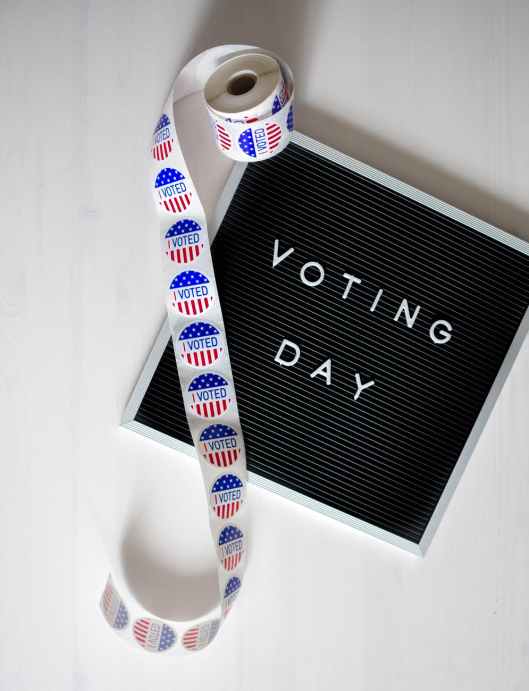
Photo by Element5 Digital on Pexels.com
Collectively, those Americans who voted (about 137.5 million) in the last Presidential election hired someone for a job. (Actually, nearly 63 million voted to hire him while nearly 66 million voted to hire Hilary Clinton). POTUS is an important job and how that person does that job impacts your life in a very real way. It impacts the lives of your friends and your family. It impacts the lives of people around the world. Every action that person takes, every speech they give, every statement they tweet has an impact. You or I might send out a nasty tweet about people. But our nasty tweets are very unlikely to cause someone to construct and send pipe bombs to the people we tweeted about. We have hired someone to do a very important job. It isn’t a sporting event.

Imagine instead of rooting for your favorite sports team that you hired a guy to take care of your kids. To you, that is certainly an important job. After you hire him, you discover that the person you hired lied to get the job. He lies to you every single day. He steals from you! Not only that. Every day, he trashes your house a little more. He has parties at your house and the people he invites include known criminals. Worst of all, this guy you hired is a child molester! That’s obviously a nightmare scenario. What makes it worse is that many people knew that the person you hired was a crook and a child molester.
What do you do when there is a mountain of evidence that he is lying to you; stealing from you; trashing your house; consorting with known criminals; and is a child molester?


Do you keep him on to watch your kids anyway out of a sense of loyalty?
Do you feel so guilty about hiring him that you insist to all your friends and relatives that this guy is doing a great job? (Because, after all, that’s what he keeps saying).
Do you keep him on until he is convicted in a court of law?
Of course you don’t! You fire him immediately.
You have the power to choose the metaphors you use. You don’t have to stick with a metaphor just because it was the first one to occur to you.
Metaphors have consequences. Whether in your personal life, work life, or political life, choose your metaphors with care. Don’t latch on to one simply because it’s the one the mainstream media discovered rakes in the most ad revenue.
Since I first wrote this post about metaphors, there has been a COVID epidemic. According to the respected British medical journal, Lancet, the mishandling of the COVID epidemic in America cost at least 200,000 unnecessary deaths. Treating a pandemic as though it’s just a cosmetic problem that will “magically disappear” like a prom pimple turns out not to be very effective after all.
Elections are not sporting events. You are not simply a “fan.” If democracy and the rule of law in America are to survive, you must be an active participant. Cheering and jeering are not enough.

We Won the War! We Won the War!
 petersironwood