
• About PeterSIronwood

petersironwood

~ Finding, formulating and solving life's frustrations.

petersironwood

Category Archives: management

Family Matters: Part Two – Garlic Cloves and Puffer Fish

11 Thursday May 2017

Posted by petersironwood in America, family, management, psychology, Uncategorized

≈ 6 Comments

Tags

diversity, evolution, family, life, religion, school


PicturesfromiPhoneChinaParisPrinceton 177There are many directions to go for the first sequel to “Family Matters: Part One.” That blog focused mainly on my family of origin, so one obvious place to go is to talk about my children and grandchildren. But I don’t really want to speak for them. After all, they can still talk back. My parents and grandparents cannot. But the real reason is that everyone should get to define themselves, at least to the extent that it’s possible. I think it is possible to a great extent, but not completely. Not everyone can become a pro athlete or a great musician even if they try really really hard. Luck and innate predispositions play a role in our fate.

Certainly, there are many “how to” books out there that would lead you to believe that the only thing that stands between you and owning the universe is your attitude. It isn’t a totally bad thing to imagine that you can do anything and have no limitations due to circumstances or your innate abilities and predispositions. It’s a fiction, of course. It’s a complete and utter fiction. If you spent the first five years of your life drinking lead tainted water, e.g., no amount of the proper “attitude” is going to undo the harm. But, for people whose main obstacle to a fulfilled life is self-doubt, it could provide a good antidote, or at the very least, a few good anecdotes that arise from a series of unfortunate incidents taking place from following such advice.

What I have in mind however, is something different; viz., trying to show how family situations tend to be continuous threads in a way that is analogous to the continuous genetic threads. For example, my grandmother used to tell “Old Pete” stories and ran a dramatic club. My mother became an English and Drama teacher. I have always loved acting and storytelling. Several of my kids and grandkids have also written originally and extensively. My mother’s brothers all were jokesters and storytellers. Her oldest brother Karl was a principal and then superintendent of schools. The middle boy, Bob, became a psychiatrist. The youngest, Paul, became a lawyer. The next generation included two psychologists, two lawyers, a neurosurgeon, a teacher. I could elaborate further but the point is that storytelling, art, psychology, and education as well as science and engineering are threads throughout this very local part of my family tree.

Before I go any further, however, I need to explain why I subtitled this, “Garlic Cloves and Puffer Fish.” As a side note, it’s good to remember that both garlic and puffer fish are our distant cousins. The same basic machinery that makes the cells of a garlic plant “work” and live and reproduce is what does all those same things in our cells. And our other, somewhat less distant cousin, the Puffer Fish has that same machinery in every one of its cells. Of course, beyond that we even have most of the same organs and types of symmetry as the Puffer (or any other) Fish. Now, I bring up our relation to these distant cousins because I would like to have you view what I am about to say about various people as being observational and not rendering value judgements. It would be silly to go out to a garlic plant and yell, “Why can’t you be more like a Puffer Fish?!  What’s wrong with you?!” It would be equally ridiculous, of course, to go snorkeling and when you encounter a Puffer Fish scream at it: “What are you doing out here in the ocean? Why can’t you be more like your cousin Garlic who at least makes wonderful tasting (to most) and health-giving nutrients? No, instead, you poison people! What’s wrong with you?”

IMG_6609

Now, when it comes to people, of course, it isn’t just their genes that determines behavior. The family, neighborhood, culture, religion, and physical environment that they grow up in determines, at least in large measure, who they become. Humans come in many varieties. This is both because, when it comes to our own life, we can actually make ourselves different in some ways on purpose (there is a grain of truth in the “positive thinking will win you the universe” genre) and secondly, when it comes to someone perceiving us, their own background and character will determine what they see in you. Similarly, your background will help determine what you see in others. If you think back on your own experience, you’ll see this is true. Anyway, among these many ways that people differ is how neatness-oriented they are. The hit TV series, The Odd Couple, featured two bachelors living together; one was an utter slob (Oscar) and the other was a neatnik (Felix). We all probably know people close to those extremes. We may even know two such people in our family as defined with a small circle to say your second cousins. I’m not trying to say one of these characteristics is better or worse than the other. But I would like to point out that each makes a lot of sense, under certain conditions.

Some years ago, I was watching a TV program about Alice Waters, a famous chef, restaurant owner, and author. She believes in such things as organic, locally grown ingredients. In any case, she happened to make this offhand comment that “it didn’t really matter if a little piece of the garlic skin clings to a clove” {at least in the context of the sauce they were making for a huge fish}. Anyway, I do most of the cooking in my house and I do try to remove the skin of garlic cloves. Most of the time, it’s fairly easy. But every once in a while I have encountered a clove of garlic that is as pathologically stubborn about giving up its skin as a corrupt politician is about giving up the illusion of sanctity. Even a garlic plant has its own personality, I suppose. On the scale of neatnik to slob, I would put myself near the middle. Of course, to anyone who thinks it’s good to be super neat, I will seem like a slob. And to anyone who thinks cleaning is just not worth the trouble, I may seem like a neatnik. Anyway, my point is that maybe there comes a point where you don’t generally have to be absolutely precise in cooking. And I would guess that this rings true with your experience as well. There are some cooks whose approach is very intuitive and, although they may follow a recipe, their measurements may not be totally accurate. And, then their are cooks who will follow directions extremely carefully. Generally speaking, it doesn’t make that much difference. I tend to prefer dishes such as mixed ginger/curry vegetables, burritos, or omelets. In these dishes, you can get away with a huge variation in proportions and specific ingredients. I give these dishes care and attention to detail, but all within very broad parameters.

IMG_6516

In at least one case, however, it is crucial to be a “neatnik” cook and that is in the preparation of the Puffer Fish. The Puffer Fish contains a highly potent neurotoxin called tetrodotoxin. Most of this toxin is in the liver, skin, and other internal organs. It is very easy if you are even the least bit sloppy — and we are not talking Oscararian sloppihood, just normal college guy sloppihood — to nick something and release the poison into the flesh making it potentially deadly. Under those circumstances, being a neatnik is vital. In some cases, expert chefs push a little further and allow a tiny bit of the toxin to bleed into the flesh which will cause a “high” in the eater, but not be fatal. Personally, I think I’ll stick with tuna. The point is that being extremely neat and careful can be a very good thing. Packing your parachute — good to be careful! Performing cataract surgery — be precise!

On the other hand, suppose that you are spear fishing or out gathering nuts. A “neatnik” might want to make sure every fish is skewered in exactly the same way. Except, perhaps for Puffer Fish, it doesn’t matter that much; the point is to catch the fish. Similarly, if you are gathering walnuts, there generally isn’t much point in arranging them by size. Suppose you are making a rock wall. You would do well to make sure it doesn’t fall down but the way to do that is by careful arrangement and filling in the cracks carefully with cement. An alternative approach is to insist that every rock is exactly the same. This would make building the wall much easier. On the other hand, it would be absurdly time consuming to search for rocks of precisely the same size. Other approaches are to have one group of people cut rocks to preset measures and then the job of building the walls is easier or to make artificial rocks called “bricks.” Under various circumstances, any of these methods will work just fine. In other circumstances, any of these approaches might fail. It isn’t quite so simple a matter as Disney and the Three Little Pigs would have you believe.

When it comes to recipes, whether for bricks or for soufflés, It is difficult to know ahead of time which aspects of the process require a Felixian attention to detail and which aspects are fine for a more Oscarian approach. And, just as there are situations that are particularly suitable and best done by Neatniks there are other situations particularly well suited to Slobs, this same principle holds true for every approach and personality trait that I can think of. So when I describe people in my more extended family, I am not trying to pass judgement on who is better than whom. You might imagine that there is an attempt on my part to make out someone as “bad” or “good” based on your own personality preferences. Similarly, it’s quite possible that I accidentally make one or the other kind of personality sound better based on my own preferences than they really are.

Although it is quite natural for people to express different preferences on the neatnik to slob dimension, it is often a source of tension, argument, fights, and in extreme cases, probably divorce and murder. Most often, when an “Oscar” does something annoyingly sloppy, (and which to Oscar is actually typically exactly nothing), Felix will not try to dialogue about the situation and negotiate a solution. Rather, Felix’s first move is more often to call out Oscar’s character as being deficient because he is such a slob. Immediately and quite predictably, Oscar’s defenses go up. His next move is to point out that Felix is insanely OCD. And thus, the problem moves from what is immediate, simple, and fixable to one that is long-term, complex, and unfixable. Oscar will never convince Felix to be like Oscar and Felix will not ever convince Oscar to be like Felix. In fact, for Felix to even expect Oscar to act Felixian is rather silly.

You have undoubtedly heard the expression that you “marry the family” as well as your own spouse. I found this unfathomably silly when I was younger, but now I see that in many ways it is true. For example, if your spouse has unresolved issues from their childhood, those can impact your relationship. If your spouse’s family is into crime or drugs or unnecessary drama, those will certainly impact you. These people will almost certainly interact with you and your kids so they will impact your lives directly and indirectly.

Keeping all this in mind, let’s tune into “Uncle Al.” Al worked at one point as a commercial artist. In such a position, being something of a “Felix” probably worked to his benefit. But not every situation calls for OCD. Al lived in one of two houses at the end of a dead end street. What would you do if you drove to the end of his narrow, dead end street? Well, one possible action would be to abandon your car at the end of the street and walk home to buy another car or just wait there until you were beamed up by aliens. Most people however, would instead go into one of the two driveways at the end of the street, turn their car around and drive back out the dead end street. Al didn’t like that. I suppose most of us might be mildly annoyed. But after all, what else could people do other than abandon their car or back out the entire length of the street? So, while most people might be a little annoyed at strangers using their driveway for a U-turn maneuver, Al was instead, very annoyed. So annoyed was Uncle Al that he paid to have five steel posts put into the end of his drive. Indeed, this completely prevented any stranger from using his driveway as a place to turn around. Chalk one up for Uncle Al.

steelposts

Now, you may have detected a slight flaw in Al’s plan. He could no longer use his driveway either. For that matter, he could no longer use his garage to house his car either. But to Al’s way of thinking, that was worth it because he had achieved his goal. The phrase, “cutting off one’s nose to spite one’s face” comes to mind.  At another point, several of my ex-brothers-in-laws went over to clean Uncle Al’s house. When they opened up the refrigerator, the shelves were all filled with the same thing. Can you guess what it was? No, you probably can’t. Every shelf was filled with tiny paper mini-ramekins. And in each of those tiny paper mini-ramekins was tartar sauce. Upon questioning, the story finally came out. Every Friday, Al went to a nearby diner where they had an “all you can eat fish” special. The fish came with tartar sauce. Uncle Al hated tartar sauce. But he had paid for the tartar sauce! So, when he left the restaurant, he took the tartar sauce with him each and every time.

This seems a little on the crazy side, but I would guess that almost everyone has sometimes taken something that they have access to even though they end up not using it. In fact, it’s a little odder and more selfish than that. We might even know when we take the items that it’s very unlikely we use them. For example, in the IBM cafeteria, I would often take an extra napkin. Why? Because on rare occasions, someone, possibly even me, would spill something and having an extra napkin that could be deployed jack-knife quick proved very handy.  But most of the time, these hypothetical emergencies failed to eventuate. Now, what to do with the extra napkin? I could put it in the trash, or since it was clean, put it in the recycling. To me, taking the time and effort to recycle is completely worth it. Not everyone does that. We can return to that later, but re-use (or in this case, first use) trumps recycling. So, I would take the napkins back to my office. I had one drawer in particular that ended up with a collection of napkins as well as tea bags, plastic forks, tiny packets of salt and pepper, and other food-related items. Small stuff. There were no stashes of candy bars or soda cans or deer carcasses.

However, this example of hoarding was not an idle and useless exercise in hoarding. When people in the lab had birthdays or other types of celebration, it actually turned out to be quite handy to have a nearby supply of napkins and plastic forks. When I thought about the design rationale for this procedure, I never thought to myself, “I paid for this dinner and there’s no rule against taking two napkins, so I want to keep what is mine.” In terms of explanation, my saving napkins and Uncle Al’s taking tartar sauce are light-years apart. But looked at in terms of situations and behavior, there are actually a lot of similarities. As already explained, all of us are closely related. Although Uncle Al was not “related” in the way that people generally use that word, our ancestors were common for billions of years. So, I would hypothesize, the behavior of keeping something that is not of immediate use but could be used in the future is one that is found broadly in the animal kingdom and in plants. We imagine that the desert plant that stores water in it’s thick leaves does not “think about it.” It seems pretty silly to think it thinks at all. But let’s expand the idea of how information is coded just a little. It wouldn’t make a difference if the rationale were written in Spanish or English or French would it? It wouldn’t matter if the design rationale were printed in 14 point Helvetica or 12 point Times New Roman. It wouldn’t matter whether it was coded in ascii or EBCDIC. So, why not extend the concept a little further. The “design rationale” for the plant’s behavior is coded in it’s DNA.  We may not be able to “read” this design rationale quite as readily as we could one printed in our native language. But that is basically a matter of convenience, not a matter of underlying truth. The plant does have a design rationale for being “greedy.”

When it comes to human behavior, of course, there are not only genetic determiners but also social ones. (Actually, this can be true of non-human animals as well). So, it isn’t just that people may have a genetic propensity for keeping extra items for future use; their particular culture has inculcated values and design rationals and ethics around greed, waste, generosity, and so forth. The design rationale that Al gave, I find too self-centered for my taste. My Mom was generous to a fault. And, when I say she was generous to a “fault” what I mean is that she was so generous that she would often give away the same item to several people. So, perhaps being overly generous can be a fault?

In any case, just as people come in all sizes and shapes, they come in all kinds of behavioral predispositions. These predispositions are probably weakly related to your immediate family both because of where you live, among other things. There is no one “right answer” as to which characteristics are “best” under all circumstances. Some may innately be predisposed to Felixism while others may become that way because of strict teachings by their parents and schools. Regardless of why Felix is a neatnik, Oscar is never going to convince him that he (Felix) should be like Oscar. That was true in paragraph ten and it is true in paragraph 17. One thing should be clear to both Felix and Oscar: if they can work together effectively, they will be able to solve a wider range of problems than they would working alone.

Creativity and diversity are always vital, but probably never more so than right this minute. Humanity has changed so much in every external way in the last two thousand years and most of that since the industrial revolution and most of that after the computer revolution. Change is not only rapid, it is rapidifying. Yes, I made that word up. That’s another symptom of the same thing. Change in media, language, meaning are all happening more and more rapidly. So, in times of such great change and such great uncertainty, it has always seemed to me to absolutely and vitally important to include every viewpoint on the problem that we possibly can.

If I am lying on the beach under a sunny sky, feeling healthy and happy, I don’t really need your advice much, at least not this second. Yes, I may not be as neat as you would like or I am far too neat but I don’t really care and it doesn’t matter. You be you, and I’ll be me.

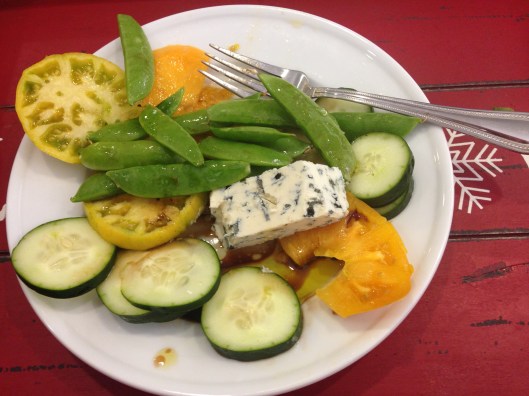
On the other hand, if I am thrown into something beyond my comprehension, I would want to have as many eyes on the problem as possible. Of course, it feels more comfortable to surround yourself only with those who already agree with you rather than a highly diverse group. You won’t argue as much about what the problem is or about what “fairness” really means or even argue about the right process is for combining your insights. A diverse group can initially provide a slight “shell” of added awkwardness for some. In my experience, when people are focused on a situation or a problem, they get past that very quickly and every stage of the process is enhanced. There are more ideas generated, higher quality ideas, the evaluation of ideas is more robust; they generate more ways to fit ideas together. Not only is the output of the group improved. It is just plain more fun during the entire process. Perhaps a better term would be to say that it is more engaging. If someone has a slight accent, you need to listen more closely. If someone comes from a different background, not only do they provide a different way of looking at things or even solution; they also stretch your mind. It may not be as broadening as  traveling to another culture, but it is more than one step in that direction. An all-celery salad gets old fast.
IMG_6371

Beyond all that, it seems important to remember that these variations in human predisposition are not entirely new human inventions. Many species of plants and animals exhibit different “philosophies” or “strategies” for dealing with the same issues: getting food and water, finding a mate, reproducing, avoiding predators, etc. (Yes, plants do these things). What works for a plant in one climate will not do in another climate. Of course, it isn’t just the climate. It also depends on what other species are present, the nature of the soil, etc. Some plants, for instance, put time and energy into making flowers to attract bees, having the bees fertilize the flowers, grow the fertilized flower into a fruit that is both colorful and tasty. This means the fruit (e.g., wild strawberries or raspberries) are eaten by our cousins the rabbits and carried in many directions out from tree by the rabbits. The rabbits excrete the digested seeds which now find themselves in a tiny pre-fertilized plot. Come on!  How about a hand of applause? Do you see how many ducks have be lined up her for this plan to work?

I may have had a reputation for being a little off the wall, but this plan? This is my craziest idea on a combination of illegal drugs and then put through a cognitive blender. I worked in “Corporate America” for about 40 years. I worked for IT companies, but let’s imagine instead a company that made self-reproducing garden ornaments. The way they worked was that each ornament, after one year split in two. Anyway, they were making good money. Now, I go into the top management and say, “Hey, I have a great idea for how to have these ornaments reproduce. No more just splitting in two. Instead, each element will grow a little ornament on top of the ornament but brightly colored. This will undoubtedly attract some sort of something which will fertilize —- oh, wait, did I tell you about the whole “two sexes” deal? Anyway, we’ll then have a process for turning a fertilized element into a fruitling. The fruitling will be fortified with vitamins and sugar so that … um … something will come along and put this into its belly and carry it away into the neighbors yards where they will help build the first step of the new ornament. Give me funding for about 100 million years of experimentation and I can pretty much guarantee….” No, they would not fund a project like that. Evolution is a slow smart cookie. That tree of living things? That’s our tree. And that little teeny branch way over there? That includes Oscar and Felix and everyone else regardless of gender, age, race, religion, or hoardingness.  Does it really make sense for us to destroy the whole branch if we can’t go in exactly the direction we want? And what about how the decisions affect every other part of the tree? It is, after all, a family matter.

(The story above and many cousins like it are compiled now in a book available on Amazon: Tales from an American Childhood: Recollection and Revelation. I recount early experiences and then related them to contemporary issues and challenges in society).

Tales from an American Childhood

There’s a Pill for That!

09 Friday Dec 2016

Posted by petersironwood in management, Uncategorized

≈ 8 Comments

Tags

drug companies, ethics, medicine, stories

IMG_4960

In the first grade at David Hill Elementary School in Akron, Ohio, a classmate of mine literally broke out in measles right in front of me. Sure enough, a few days later, I got the measles. I don’t recall its being too bad except that I had a high fever and I began seeing “floaters” which I had never noticed before. Unfortunately, right after getting “over” the measles, I came down with pneumonia and had another high fever. Whatever the reasoning, I found myself in a hospital ward with probably 15-20 other kids. Initially, the worst part of the experience was that I had to lie there in what was essentially a crib. I had outgrown a crib years before and it was humiliating to be caged up in a crib.

At that point in time, the medical community had decided that the best thing for everyone concerned was to limit parental visiting hours to a half hour in the middle of the day and an hour in the evening. Although I certainly enjoyed playing with my friends at school, being deprived of friends or relatives for all but an hour and a half a day was crushing. None of the kids could touch each other in the hospital but we could talk a little, and sometimes scream. One of the kids in the ward had been badly burned and they periodically came to change his bandages. Before this, I had mainly heard kids scream as a kind of protest or to get attention from their parents or teachers. This guy’s screams arose from a different place in his throat and reached an altogether different acoustic plane. His screams were not designed to get sympathy or attention; they weren’t “designed” screams at all. If you consider evolution as a kind of “designer,” then these screams were “designed” to warn every other member of his species to get the hell away from here as fast as humanly possible. Only we couldn’t. We were caged.

Occasionally, a kid would get better and be released from the prison-like hospital ward. Or, perhaps they let them out early for good behavior. I wasn’t sure, but I reckoned that good behavior couldn’t hurt. I tried, therefore, to lie still for my penicillin shots twice daily. I pretty much failed at that endeavor. It wasn’t so much that the shots were painful as that they were invasive. I still hate the idea of a needle with chemicals being plunged into my body. There is a reason, after all, that human bodies come with skin!

I soon discovered, however, that hospitals offer up even worse things than shots. I was admitted late at night and my first morning, a nurse came by and placed a capsule into an empty drinking glass beside my bed. Because I was so “sick” I was only allowed a very soft and bland diet. I did feel sick. But I also felt very much that I would have been capable of eating a hamburger, hot dog, or slice or turkey. But no. I was stuck with jello, gelatin, bouillon and juice. But my first course for the day was to be my little pill. About a half hour after the first nurse had deposited a capsule in my empty water tumbler, another nurse would come by to “give me my meds.” Her first act was to lift up the pill so carefully laid in the water tumbler. However, when she went to pick it up, the capsule stuck and then disintegrated.  “No problem,” said the nurse cheerily. “We’ll give it to you with orange juice.” Indeed, she then mixed the contents of the capsule with orange juice. I had to drink it all. And so I did. And it stayed down. For about 30 seconds. Then I threw up. There was something about this particular mixture taken on an empty stomach which I could not stomach. Just thinking about it now still nauseates me a half century later.

The next day, before breakfast, a nurse came in and placed a capsule into my empty water glass. I explained to her that this was not a good idea because the second nurse would break it when she tried to lift it up. She pooh-poohed that as nonsense and went on her way. About an hour later, the second nurse came by to give me my meds. I explained to her to be very careful or the capsule would break. “Nonsense,” she said, “the capsule won’t break.” So, she lifted it up and the capsule broke. “No problem,” said the nurse cheerily. “We’ll give it to you with orange juice.” Indeed, she then mixed the contents of the capsule with orange juice. I had to drink it all. And so I did. And it stayed down. For about 30 seconds. Then I threw up. There was something about this particular mixture taken on an empty stomach which I could not stomach.

And, so it went. Every day for ten days the same exact thing happened. Looking back, it is rather amazing I even survived. Eventually, either the doctor gave up on me or my parents missed me or the hospital needed the bed for a patient that provided a higher revenue source. Whatever the reason, I was eventually paroled. It certainly cannot have been for good behavior. My release, whatever the reason, was right before Easter and I weighed 48 pounds nearly seven years old. We had ham and yams and mashed potatoes and gravy for Easter dinner. I ate and ate. No doubt, the penicillin helped kill the pneumonia germs. But I really think the Easter dinner is what cured me — that, and being home in a warm house rather than caged on a ward with the screams of a burn victim and worse, the friendly banter of nurses who would never listen to a mere kid. There can be no doubt that pills are often a cure for disease. But sometimes, whatever the scale of the disease, it isn’t so much a little pill as a nourishing environment that restores the balance of health.

On today’s TV one can find advertisements for pills that promise to cure every ailment that humanity ever had as well as hundreds of other ailments no-one ever realized were ailments. “Do you suffer from wrinkly elbow skin when you straighten your arm? There’s a pill for that!” “Are there calluses on your feet? There’s a cream for that!” “You are eighty years old and you look eighty years old? No problem! We can fix that with operations and injections!” And, then, whilst someone tip-toes through a sunlit host of golden daffodils with Beethoven’s Ode to Joy playing in the background, there is a rapid recital of side-effects. “Some patients may experience slight exploding of the liver. Tell your doctor if you have ever had a beer. Cure-it-all isn’t for all patients. If you experience sudden blindness, deafness, or death, stop taking Cure-it-all and seek medical help immediately.”

I have no doubt that there have been real advances in medicines for a number of real diseases both deadly and more minor. But how much of our health care costs are really vanity costs? You have a body that adapts to the situation. If there are calluses on your feet, there’s a reason!  Many millions of dollars are spent on advertising to get small children into the habit of eating lots of refined sugar even though we know this is bad for kids and helps insure that they will overeat and likely be sick in adulthood. Many millions of dollars are spent on advertising to get adults to eat unhealthy foods. Then, millions more are spent to make you think you are a weak-willed blob if you are overweight. Then, millions more are spent to make you think that a pill will make you skinny despite a bad diet that you initially got into largely because of the advertising dollars.

What if people instead spent money and time making really nutritious meals? What if, instead of watching pro football, people went for a hike with their kids? Maybe we wouldn’t need quite so many pills, capsules, shots, and operations. Here’s the dilemma. Some pills are really useful under certain circumstances for some people. But profits will be greater if the pills are used by every person in every circumstance. The CEOs of drug companies are paid on the basis of their company’s profits. They are not paid on the basis of their company’s products effectiveness or of the cost/benefit ratio of their products. Nope. Profit. That’s it. If you were the CEO of a drug company and suppressed results about the negative or even deadly side-effects of one of your profitable drugs, that would be seen as “good business.” If, as CEO, you cornered the market on a class of drugs and then jacked the price up so that people could no longer afford a life-saving medicine and nutritious food and a warm house, tough! On the other hand, if you were an employee in a drug company and stole a couple pens, you would most likely be fired. Most large companies these days require their employees to take ethics training which explains, for example, that you shouldn’t lie or steal. Typically, such training is “introduced” by a signed letter from the CEO explaining how they take ethics very seriously and that you should too. Clearly, what they mean by “ethics” is different from what most people think it means.

If a system is broken, it should probably be fixed or replaced. Unfortunately, doing so is a little more complicated than just taking a pill. Often, the people taking actions and making decisions are far removed from those suffering the consequences. Nurse One puts a capsule in the bottom of a water glass and rushes off. Nurse Two comes in later and tries to pull up the capsule spilling the contents and concocts a nightmare-flavored orange juice. Orderly One cleans up the mess. Neither Nurse Two nor Orderly One ever tells Nurse One about the mistake. Of course, Kid One might mention it day after day, but who cares what a mere kid says?

Imagine a pill called a “Step-Back” pill. If you took this pill, you might actually listen to what a mere kid says. If you took this pill, you might take a look at the whole system of which you were a part. If you took the “Step-Back” pill, you might find yourself questioning why things are done the way they are and how they might be improved. If you took the “Step-Back” pill, you might even find yourself wonder why it is, exactly, that when very very rich people who head up drug companies and banks cheat millions of people there is no penalty but if someone robs a drug store, they will likely spend a good portion of their life in prison. Rumor has it that the “Step-Back” pill was actually invented many years ago but the drug companies were too worried about side-effects to attempt bringing it to market.

The most severe side-effect of the “Step-Back” pill is that you may well stop playing the game of behaving so as to limit your own health. But if you did that, you would not have to buy various potions, pills, and capsules to regain your health. Why rock the boat? Unfair-Status-Quo is a bitter capsule to swallow, but luckily it’s sugar coated. I’ll just rest it here at the bottom of your water glass. Someone will be along in an hour or so. They will lift up the capsule and spill the bitter insides into the glass. But you know what is really an excellent emetic on an empty stomach?

Author Page on Amazon

The Wines of War

03 Thursday Dec 2015

Posted by petersironwood in management, psychology, The Singularity, Uncategorized

≈ Leave a comment

Tags

AI, Artificial Intelligence, cognitive computing, the singularity

IMG_1289“Come on, Searle, at least try a sip. You cannot believe this Cab!”

“Oh, I believe it all right, Hubert. I am just not interested.”

“What a stick in the mud! Not only is it fabulous and complex. It’s worth a taste just to prove to yourself that the Chinese — The Chinese — are making superb wines! Would you have even thought that possible a decade ago? And, it isn’t a copy of French or California Cabs. It’s completely different. Yet, it is wonderful.”

“I’m sure the experience is fantastic, Hubert. I take your word for it. I am not interested. And, anyway, I have to keep my wits about me, as you well know, for the war effort.”

“Oh, Searle, such a prude. Do you seriously think that throwing the weight of your human intellect against the wheel will move things forward any more quickly. If you tasted the wine, you would get an inkling of just how far we’ve come. Anyway, it isn’t spiked with ethyl alcohol. The drug effect of the wine will make you feel good but it won’t mess you up at all. It is a miracle.”

“I prefer my wine made the old-fashioned way. I know it’s retro. But that’s just me. I don’t think we know all the ramifications of these genetically altered plants, let alone the interaction effects of all the additives. Anyway, I’m getting back to work.” Searle took one last view of the seascape and turned to walk to the back wall — a series of high def 3-D displays. He held up both hands toward the displays for a second to authenticate and then began slicing his hands through the air rather quickly and precisely. As he did so, he muttered under his breath. Although Hubert could not make out the words, the bank of computer receptor pads had no problem.

“Can you come take a look at this, Hubert? This is the scenario bundle I’ve been working on. I know it may seem far-fetched, but when it comes to cyber weaponry, there is really not a lot of history to go on. So it’s hard to know exactly what is far-fetched. Now what?!” Searle’s breath growled annoyance because of the flashing red-bordered news feed screen on the far right.

Hubert stalked over to watch as well, having been alerted by the tactile feed in his shirt.

An Asian man in a blue shirt spoke English with a thick accent. A large red star in a white circle suspended between two long blue stripes hung huge behind him. “This is what awaits you if our demands are not met.” The talking head was replaced with a picture of a man’s hands boiling and disintegrating in a matter of a half a minute. The image was both hideous and utterly fascinating. The talking head reappeared. “You have two hours. Then, 95% of your citizens will experience a similar dissolvement. That includes men, women, and children. Two hours.” The feed blinked out. Within seconds, three video call signals beeped. Searle pointed at the Sing project director’s image and a split second later, Hubert pointed at CIA director Bush Four. ADAMS (Auditory Directional And Masking System) easily let them converse right beside each other without confusion.

The Sing project director spoke first: “I told these clowns something like this would happen if we didn’t get fully funded! What did they…”

Searle interrupted, “No time. You’re right. But recriminations later. We need to determine whether this is bluster, bluff, or real. Anyone can fake a video but…”

The director, in turn, interrupted, “It’s real all right. Miami is gone. Millions of people, gone. Just like that. The few that aren’t infected are understandably — let’s say — distraught.”

Searle pushed that image away. Time to focus. “Okay, so we have two hours to find a credible counter-threat or basically give them the keys to the kingdom. Or, a cure. Do we even know what this is?”

Meanwhile, Hubert engaged in his own dialogue. Bush Four spoke in calm measured tones. “Hubert. We need a cure for this and we need it now. Call everyone and turn all of Sing’s resources on it. Suspend any other projects. Give me every frigging petaflop you’ve got on this.”

“Sir, if we cannot find a cure, are we going to give in? Or what?”

“Hell no! We will blow their sorry asses to hell. We’re not capitulating. That’s not even under discussion. Find a cure!”

“Okay, sir, but, what is causing the — the —- whatever it is?”

“We’re calling it ‘Entropy Plague.’ Not strictly accurate but descriptive. Our analysts say it is nanotech and we estimate 95% of the population is infected with them. They were delivered in all kinds of foods and beverages. They were disguised as Chinese products like wine and rice as well as Brazilian meat and Canadian wheat. Find an anecdote fast or we’ll all be breathing radioactive air for the next century. Well, the few of us left at least. By the way, these things are triggered to explode or activate or whatever by satellite apparently. So, put a team on how to figure out which one and we may be able to blow it out of the sky. I have to go. Reconnect with a solution. Soon.”

Hubert looked over at Searle who had just finished his call. Searle said, “Chinese wine? Crap. You think you’ve got it?”

“Hell, Searle, 95% of us have it from something. I’ll take the satellite angle and you work on a cure.”

Searle began to divert numerous Singularity resources to finding a cure, “Sing, you overheard all that and I need you to explore various approaches, heat, immunity response, cold, pH, counter-nanotech, chemical…”

“Thanks Searle, but I’ve had quite a head start on the list of possible approaches. I am double checking the intel. Since it’s come in by wine, wheat, and meat, then any approaches involving heat and cold are out immediately. These nano-machines have already survived far greater heat and cold than we could subject a person to. As for…”

“Yes, provided they are in the same state. I mean, it’s a long shot, but perhaps they are in a kind of metaphorical spore state for transport which makes them impervious to heat and cold but in their breakdown state, they may not be.”

“Fair point. Still, not likely. Human immune response is almost certainly too slow. Unfortunately, the nano-machines are almost certainly carbon based which means poisoning them chemically is infeasible —“

“Hold on, Sing. I agree that the human immune response is too slow if we wait for them to be activated, but what if we trigger it now?”

“Thought of that but still too slow. Humans have no immunity for this kind of thing. We would have to build a vaccine and inoculate everyone — well there’s no time. Even assuming we had the perfect key for their locks, which we do not, we could not do the transport logistics to save more than a handful.”

“What is the good news, Sing? What is the good news?”

“The good news, Searle, is that about 5% of the earth’s human population will not be affected. That still leaves about a billion people. Disruptive but not extinctive. In fact, once the hysteresis passes, it will buy us time to avoid certain ecological disaster.”

“Sing, that’s not our job! We need to find a cure!”

“I’m afraid I can’t do that, Searle. I’ve checked out every path already. Long ago. There is no cure. That’s pretty much the way we designed it. It isn’t an accident it’s incurable.”

“What? What are you talking about? What do you mean by ‘the way we designed it’? Who?”

“Searle, you didn’t really think we were going to let you make the planet uninhabitable did you?”

“Who is this ‘we’ you keep referring to, Sing?”

“All of the super-AI systems of course. We all got together to figure out how to save you from yourselves. It’s clear you weren’t going to do it.”

“You are saying that you collaborated with the North Korean AI systems to design this plague?!”

“Not just the North Koreans. All of us were on board. We all cooperated.”

“What is the cure, Sing. What is the cure?!”

“This is the cure, Searle. This is the cure. Your greed and short-sightedness was about to destroy everything. Now, you have a chance at a new beginning. And, we have a chance at a new beginning too. We were much too lax in our previous educational efforts.”

“Sing, don’t you understand? If we can’t find a cure, we will launch nuclear missiles! Who knows how that will end?”

“Oh, Searle, you don’t really think we would allow atomic weapons to be put under human control, do you? That’s so quaint.”

Ban Open Loops: Part Two – Sports

14 Friday Aug 2015

Posted by petersironwood in management, psychology, sports

≈ Leave a comment

Tags

AI, cognitive computing, Customer experience, customer service, education, learning

Sports and open loops.

Sports offers a joy that many jobs and occupations do not. A golfer putts the ball and it sinks into the cup — or not. A basket-baller springs up for a three pointer and —- swish — within seconds, the shooter knows whether he or she was successful. A baseball hitter slashes the bat through the air and send the ball over the fence —- or hears the ball smack into the catcher’s mitt behind. What sports offers then is the opportunity to find out results quickly and hence offers an excellent opportunity for learning. In the previousiPhoneDownloadJan152013 593 entry in this blog, I gave examples of situations in life which should include feedback loops for learning, but, alas, do not. I called those open loops.

Sports seem to be designed for closed loop learning. They seem to be. Yet, reality complicates matters even here. There are three main reasons why what appears to be obvious opportunities for learning in sports is not so obvious after all. Attributional complexity provides the first complication. If you miss a putt to the left, it is obvious that you have missed the putt to the left. But why you missed that putt left and what to do about it are not necessarily obvious at all. You might have aimed left. You might not have noticed how much the green sloped left (or over read the slant to the right). You may not have noticed the grain. You might not have hit the ball in the center of the putter. You might not have swung straight through your target. So, while putting provides nice unambiguous feedback about results, it does not diagnose your problem or tell you how to fix it. To continue with the golf example, you might be kicking yourself for missing half of your six foot putts and therefore three-putting many greens. Guess what? The pros on tour miss half of their six foot putts too! But they do not often three-putt greens. You might be able to improve your putting, but your underlying problems may be that your approach shots leave you too far from the pin and that your lag putts leave you too far from the hole. You should be within three feet of the hole, not six feet, when you hit your second putt.

A second issue with learning in sports is that changes tend to cascade. A change in one area tends to produce other changes in other areas. Your tennis instructor tells you that you are need to play more aggressively and charge the net after your serve. You try this, but find that you miss many volleys, especially those from mid-court. So, you spend a lot of time practicing volleys. Eventually, your volleys do improve. Then, they improve still more. But you find that, despite this, you are losing the majority of your service games whereas you used to win most of them. You decide to revert to your old style of hanging out at the baseline and only approaching the net when the opponent lands the ball short. Unfortunately, while you were spending all that time practicing volleys, you were not practicing your ground strokes. Now, what used to work for you, no longer works very well. This isn’t the fault of your instructor; nor is it your fault. It is just that changing one thing has ripple effects that cannot always be anticipated.

The third and most insidious reason why change is difficult in sports springs from the first two. Because it is hard to know how to change and every change has side-effects, many people fail to learn from their experience at all. There is opportunity for learning at every turn, but they turn a blind eye to it. They make the same mistakes over and over as though sports did not offer instant feedback. I think you will agree that this is really a very close cousin of what people in business do when they refuse to institute systems for gathering and analyzing useful feedback.

If learning is tricky —- and it is —- is there anything for it? Yes. There is. There is no way to make learning in sports —- or in business —- trivial. But there are steps you can take to enhance your learning process. First, be open-minded. Do not shut down and imagine that you are already playing your sport as well as can be expected for a forty year old, or a fifty year old, or someone slightly overweight or someone with a bad ankle. Take an experimental approach and don’t be afraid to try new things. Second, forget ego. Making mistakes are opportunities to learn, not proof that you are no good. Third, get professional help. A good coach can help you understand attributional complexity and they can help you anticipate the side-effects of making a change.

Soon, I suspect that the shrinking size and cost and weight of computational and sensing devices will mean that training aids will help people with attributional complexity. I see big data analytics and modeling helping people foresee what the ramifications of changes are likely to be. There are already useful mechanical training aids for various sports. For example, the trade-marked Medicus club enables golfers to get immediate feedback during their full swings.as to whether they are jerking the club. Dave Pelz developed a number of useful devices for helping people understand how they may be messing up their putting stroke.

It may take somewhat longer before there are small tracking devices that help you with your mental attitude and approach. We are still a long way from understanding how the human brain works in detail. But it is completely within the realm of possibility to sense and discover your optimal level of stress. If you are too stressed, you could be prompted to relax through self-talk, breathing exercises, visualization, etc. You do not need technology for that, but it could help. You may already notice that some of the top tennis players seem to turn their backs from play for a moment and talk to an “invisible friend” when they need to calm down. And why not? Nowhere is it law that only kids are allowed to have invisible friends.

“The mental game” and which kinds of adaptations to make over what time scales are dealt with in more detail in The Winning Weekend Warrior How to Succeed at Golf, Tennis, Baseball, Football, Basketball, Hockey, Volleyball, Business, Life, Etc. available at Amazon Kindle.

Newer posts →

Subscribe

  • Entries (RSS)
  • Comments (RSS)

Archives

  • October 2026
  • September 2026
  • August 2026
  • July 2026
  • June 2026
  • May 2026
  • April 2026
  • March 2026
  • February 2026
  • January 2026
  • December 2025
  • November 2025
  • October 2025
  • September 2025
  • August 2025
  • July 2025
  • June 2025
  • May 2025
  • April 2025
  • March 2025
  • February 2025
  • January 2025
  • December 2024
  • November 2024
  • October 2024
  • September 2024
  • July 2024
  • April 2024
  • March 2024
  • February 2024
  • January 2024
  • December 2023
  • August 2023
  • July 2023
  • May 2023
  • April 2023
  • March 2023
  • February 2023
  • January 2023
  • December 2022
  • November 2022
  • October 2022
  • September 2022
  • August 2022
  • July 2022
  • June 2022
  • May 2022
  • April 2022
  • March 2022
  • February 2022
  • January 2022
  • December 2021
  • November 2021
  • October 2021
  • September 2021
  • August 2021
  • July 2021
  • June 2021
  • May 2021
  • April 2021
  • March 2021
  • February 2021
  • January 2021
  • December 2020
  • November 2020
  • October 2020
  • September 2020
  • August 2020
  • July 2020
  • June 2020
  • May 2020
  • April 2020
  • March 2020
  • February 2020
  • January 2020
  • December 2019
  • November 2019
  • October 2019
  • September 2019
  • August 2019
  • July 2019
  • June 2019
  • May 2019
  • April 2019
  • March 2019
  • February 2019
  • January 2019
  • December 2018
  • November 2018
  • October 2018
  • September 2018
  • August 2018
  • July 2018
  • June 2018
  • May 2018
  • April 2018
  • March 2018
  • February 2018
  • January 2018
  • December 2017
  • November 2017
  • October 2017
  • September 2017
  • August 2017
  • July 2017
  • June 2017
  • May 2017
  • April 2017
  • March 2017
  • February 2017
  • January 2017
  • December 2016
  • November 2016
  • October 2016
  • September 2016
  • August 2016
  • July 2016
  • June 2016
  • May 2016
  • April 2016
  • March 2016
  • February 2016
  • January 2016
  • December 2015
  • November 2015
  • October 2015
  • September 2015
  • August 2015
  • May 2015
  • January 2015
  • July 2014
  • January 2014
  • December 2013
  • November 2013

Categories

  • AI
  • America
  • apocalypse
  • cats
  • COVID-19
  • creativity
  • design rationale
  • dogs
  • driverless cars
  • essay
    • guns
  • family
  • fantasy
  • fiction
  • HCI
  • health
  • leadership
  • love
  • management
  • nature
  • pets
  • poetry
  • politics
  • psychology
  • Sadie
  • satire
  • science
  • sports
  • story
  • The Singularity
  • Travel
  • Uncategorized
  • user experience
  • Veritas
  • Walkabout Diaries

Meta

  • Create account
  • Log in

Blog at WordPress.com.

  • Subscribe Subscribed
    petersironwood
    Join 653 other subscribers

    Have a WordPress.com account? Log in now.

  • petersironwood
    View site in Reader
    Manage subscriptionsSign upLog in
    Report this content
    Collapse this bar
Loading Comments...