• About PeterSIronwood

petersironwood

~ Finding, formulating and solving life's frustrations.

petersironwood

Category Archives: The Singularity

Turing’s Nightmares: Dressing on the Side

08 Tuesday Dec 2015

Posted by petersironwood in The Singularity, Uncategorized

≈ Leave a comment

Tags

AI, Artificial Intelligence, cognitive computing, the singularity, young love

Alan paced. He had seen men do this on retro video; men waiting while their wives gave birth; men waiting to hear the outcome of a job interview; men trapped in prison. So Alan supposed that pacing was the thing to do. He was waiting, after all. And, in a way, he was trapped as well. What had ever possessed him to ask her out? That took a lot of nerve. But he had imagined she would just say “no.” In fact, he had fantasized 42 different and humiliating ways that she would say “no.” Instead, she had said, “Yes, that sounds like fun.”

But now what? Now, he had to go through with this “date” and videos provided all he had to go on about appropriate behavior. Definitely too embarrassing to ask EF or DF about it. He couldn’t really ask his friends because he had generously embellished his experiences with females in the stories he had told them. Alan was not sure how much “Mr. Watson,” the family AI could help but maybe it was worth a try.

“Mr. Watson. Come here. I want to see you.” Watson popped into a three dimensional image hovering and shimmering like a Will-O-Wisp right before him. “Watson, I need some advice on how I should behave on my — I am having a date tonight.”

“Excellent, Alan. I am sure it will be fun. How can I assist you?” As Watson spoke, his voice deepened and acquired a slight accent of the RP variety. The shimmering image resolved itself into something closely resembling early James Bond.

“What am I supposed to do? I mean, how am I supposed to behave? She’s a girl. What do they even like? What am I supposed to say? Why did she even agree to the date? Maybe she is just doing it for a laugh.”

“Alan, take a deep breath. Stop pacing. Sit. Relax. Here, I will play some relaxing sounds.” Immediately, a background of ocean noise came on. Even more quietly, the strains of plainsong floated into the room. “Now, Alan, what would you like to happen with Grace?”

“Well, not to be a complete fool for starters. How did you know her name was ‘Grace’? Never mind. You know everything.”

“I don’t know everything, Alan. No-one can. But let’s get back to your goals. What would you like to happen with Grace?”

“I just don’t want her to think I am — as inexperienced as I am, I guess.” Alan, arose and began pacing again.

“And Grace?”

“What? What about Grace?”

“Alan, what would you like for this date to be like for Grace?”

“For Grace? Well, yeah, I like her. I mean, I would like her to have a good time. And enjoy it. And want to — have another date? What am I supposed to want, Watson? I don’t even know”

“Alan, there is no one right answer. Why don’t you work together on dinner and then find something you both enjoy to do afterwards such as go for a walk, watch a movie, or play a game. See what she feels like after dinner. What is on the menu?”

“The menu? I don’t know. Hamburgs? Hot dogs? How do I know what she likes?”

“That’s a good question, Alan. How could you find out what she likes?”

Alan stared out the window hoping to find inspiration in the pines. “Well, I suppose I could ask her when she gets here.”

“Yes, you could. Make a few suggestions. Salad. Fish. But leave it up to her. When else could you ask her?”

“I could call her ahead of time and ask her. Then I could prepare better. But then I would have to call her. What if I got her AI though? I’d have to leave a message. OK, I guess I can do that.”

Watson and Alan continued their dialogue for another hour. Watson noted yet again how Alan and his kind needed to be led step by step through solving the simplest problems when they were nervous or angry.

Alan checked the way the table was laid out. Now, he took in the view in the kitchen. Suddenly, Watson’s voice cheerily rang out, “ETA, two minutes.”

Alan quickly checked himself again in the mirror. He tried vainly to push down that one strand of hair that refused to lie flat. He told himself to be cool. Be calm. Breathe.

The knock was surprisingly strong. Alan gulped. He wiped his hands on the sides of his trousers. Took a deep breath. Turned the knob. Opened the door. All. In. Slow. Motion. She was here. Grace spoke first.

“Hi, Alan! Am I too early?”

“No! No! You are perfect! Come in. Please. You look great.” Alan led her into the kitchen and handed her a large sieve containing a pair of scissors, taking another for himself. “Let’s go gather some things from the garden, okay?”

“Sure, Alan, that sounds like fun.”

Back out the front door they strode and around the house and through the limestone-pebbled rock garden to the small family vegetable plot.

Alan noticed that Grace wore the same kind of sneakers he did, but her feet were so much smaller. “Okay, Grace, there’s some kale and arugula. Pick out as much as you like. I’m going to grab some carrots.” Watson piped soft strains of “Appalachian Spring” out to the garden. Alan pulled the carrots up carefully from the loam. Meanwhile, he noticed the quick, delicate hands of Grace as she touched the kale and arugula he would soon be eating. He hated the idea of washing the greens. ‘Washing’ did not even seem like the right verb. More like ‘ruining’.

“Do you think we have enough, Alan?”

“Yeah. This should do it. It will just be three of us. EF will join us. But DF, my mom, I mean, was called in for an emergency surgery tonight.”

“Oh, my gosh! I hope she’s all right! I can come back another time, Alan. You should be with her!”

“No, no, Grace. She’s been called in to perform an emergency surgery. She’s not having surgery.”

“Oh! How silly of me. Of course, you would be there if … well, I’m glad she’s okay. I didn’t realize your mom was a surgeon. My dad is a doctor too, but he is not a surgeon. He’s a GPS – General Prevention Specialist.”

“A general specialist, eh?” Alan wasn’t sure whether he had made an appropriate joke or not and eyed Grace carefully.

Grace smiled. “Yeah, that is kind of a funny title isn’t it? But that’s what he does. He really does care about people’s general health with diet, exercise, massage, meditation, and sometimes medicine. And, of course, sometimes, he sends them off for tests and then sometimes…sometimes, they need surgery.” Grace spoke very quietly now. “And, sometimes the surgery works. And, sometimes it doesn’t.”

Alan examined Grace’s face carefully. Her eyes were glittering with tears! What the —-? “Are you okay, Grace?”

“Yes, yes, I’m fine. It’s just. He couldn’t save my mom. She died anyway. None of them could save her. I still miss her.”

“Oh, God, Grace, I’m so sorry! I didn’t know…I didn’t realize…”

“It’s okay, Alan. People just…sometimes people get unlucky, you know? Even when they have good habits. And good care. We tried everything. Anyway, speaking of good habits, let’s get going on the salad, okay?”

“Sure, Grace.” Alan held out his hand without thinking. She took it and stood looking into his eyes for a moment. Alan looked back. Grace smiled again, looked away, and went through the gate back into the rock garden.

Grace’s voice sounded very calm now. “So, what does your dad do then?” You call him ‘EF’?”

Alan laughed. “Yeah. I know. It’s weird. I call them ‘EF’ and ‘DF’ — I just got into the habit at some point. Anyway, he is an HSI expert of sorts. Human-Sing Interaction. Helps make the Sing sing as he likes to say.”

“Really? I never thought…I mean why does the Sing need help with anything? I thought it knew everything.”

“Well, not even the Sing knows everything. It cannot know everything in detail. The universe is too big. There is still unpredictability even with the best models. But EF’s — I mean —my Dad’s work is to help Sing know how to help people better. It’s tricky. And knowing a huge amount is not necessarily that big a help. Sing, and all the AI’s, need to know how to read people and how not to be so obvious as to be annoying but not be so cryptic that nobody understands what their advice is. How about some fresh oregano for the salad?” Alan looked at Grace. She nodded her assent.

“How does he do that? What did he study, Alan?”

“Well, you can ask him those questions yourself. Actually, if you’re really interested, you might ask our AI, Watson, about what it seems like from his perspective too. Oh, and, let’s get some of this fresh basil too, and grab some cherry tomatoes. They are out here because they need a lot of sun.” As the word ‘sun’ emerged from Alan’s lips, he could not help noticing that Grace’s blond hair shone in the sunlight like gold only a thousand times more beautifully than gold ever would. Should he mention this? He decided not to.

Soon, Grace and Alan stood side by side at the sink, rinsing vegetables and talking about the upcoming elections, their local sports team, and how life might be different without the Sing.

“How do you like your tomatoes, Grace? Sliced, diced, or quartered?”

“Oh, slices, would be nicest.” She smiled.

“OK, Grace, I think we are ready. Let me grab the salad dressing.” Alan opened the fridge but there was no salad dressing. Odd. Watson was supposed to make sure we didn’t run out of anything. And, salad had been Watson’s suggestion to pose to Grace. Weird. “Sorry, Grace, we don’t seem to have any.”

“Oh, I can make it for you, if that’s okay, Alan. I just need a little oil, I see vinegar, a touch of sugar, some mustard…” As Grace rattled off the ingredients, she quickly scanned the counter and found everything she needed. She stirred the concoction and held up the dripping spoon between them. “Taste test?”

“Sure.” Alan, took hold of Grace’s spoon hand and began to guide it toward his mouth. He shook slightly and a drop fell off the spoon. Grace’s left hand shot out reflexively and caught the drop.

“Wow! You have fast reflexes, Grace. Nice catch!”

“Thanks. I don’t want to make a mess. Not in your kitchen. Now, you have two choices for the taste test.”

Two choices? Can she mean what I hope she means? Alan thought his heart might explode, but he gently took her left hand up to his mouth and slowly licked the drop from her palm.

“What do you think, Alan? Okay?”

“Much more than okay. Delicious.” Alan laughed. “Let’s skip the salad.”

Grace laughed. “Nonsense. We put too much work into our salad. Anyway, I want to find out more about how your dad works. Time to call him to the kitchen for dinner?”

“Hi, Grace. I’m Alan’s Dad, Ed. Our AI, Watson already told me it was time for dinner. Looks like you two have made a really beautiful salad. I’m looking forward to it. And learning a bit about you, Grace.” IMG_5478

The Wines of War

03 Thursday Dec 2015

Posted by petersironwood in management, psychology, The Singularity, Uncategorized

≈ Leave a comment

Tags

AI, Artificial Intelligence, cognitive computing, the singularity

IMG_1289“Come on, Searle, at least try a sip. You cannot believe this Cab!”
“Oh, I believe it all right, Hubert. I am just not interested.”

“What a stick in the mud! Not only is it fabulous and complex. It’s worth a taste just to prove to yourself that the Chinese — The Chinese — are making superb wines! Would you have even thought that possible a decade ago? And, it isn’t a copy of French or California Cabs. It’s completely different. Yet, it is wonderful.”

“I’m sure the experience is fantastic, Hubert. I take your word for it. I am not interested. And, anyway, I have to keep my wits about me, as you well know, for the war effort.”

“Oh, Searle, such a prude. Do you seriously think that throwing the weight of your human intellect against the wheel will move things forward any more quickly. If you tasted the wine, you would get an inkling of just how far we’ve come. Anyway, it isn’t spiked with ethyl alcohol. The drug effect of the wine will make you feel good but it won’t mess you up at all. It is a miracle.”

“I prefer my wine made the old-fashioned way. I know it’s retro. But that’s just me. I don’t think we know all the ramifications of these genetically altered plants, let alone the interaction effects of all the additives. Anyway, I’m getting back to work.” Searle took one last view of the seascape and turned to walk to the back wall — a series of high def 3-D displays. He held up both hands toward the displays for a second to authenticate and then began slicing his hands through the air rather quickly and precisely. As he did so, he muttered under his breath. Although Hubert could not make out the words, the bank of computer receptor pads had no problem.

“Can you come take a look at this, Hubert? This is the scenario bundle I’ve been working on. I know it may seem far-fetched, but when it comes to cyber weaponry, there is really not a lot of history to go on. So it’s hard to know exactly what is far-fetched. Now what?!” Searle’s breath growled annoyance because of the flashing red-bordered news feed screen on the far right.

Hubert stalked over to watch as well, having been alerted by the tactile feed in his shirt.

An Asian man in a blue shirt spoke English with a thick accent. A large red star in a white circle suspended between two long blue stripes hung huge behind him. “This is what awaits you if our demands are not met.” The talking head was replaced with a picture of a man’s hands boiling and disintegrating in a matter of a half a minute. The image was both hideous and utterly fascinating. The talking head reappeared. “You have two hours. Then, 95% of your citizens will experience a similar dissolvement. That includes men, women, and children. Two hours.” The feed blinked out. Within seconds, three video call signals beeped. Searle pointed at the Sing project director’s image and a split second later, Hubert pointed at CIA director Bush Four. ADAMS (Auditory Directional And Masking System) easily let them converse right beside each other without confusion.

The Sing project director spoke first: “I told these clowns something like this would happen if we didn’t get fully funded! What did they…”

Searle interrupted, “No time. You’re right. But recriminations later. We need to determine whether this is bluster, bluff, or real. Anyone can fake a video but…”

The director, in turn, interrupted, “It’s real all right. Miami is gone. Millions of people, gone. Just like that. The few that aren’t infected are understandably — let’s say — distraught.”

Searle pushed that image away. Time to focus. “Okay, so we have two hours to find a credible counter-threat or basically give them the keys to the kingdom. Or, a cure. Do we even know what this is?”

Meanwhile, Hubert engaged in his own dialogue. Bush Four spoke in calm measured tones. “Hubert. We need a cure for this and we need it now. Call everyone and turn all of Sing’s resources on it. Suspend any other projects. Give me every frigging petaflop you’ve got on this.”

“Sir, if we cannot find a cure, are we going to give in? Or what?”

“Hell no! We will blow their sorry asses to hell. We’re not capitulating. That’s not even under discussion. Find a cure!”

“Okay, sir, but, what is causing the — the —- whatever it is?”

“We’re calling it ‘Entropy Plague.’ Not strictly accurate but descriptive. Our analysts say it is nanotech and we estimate 95% of the population is infected with them. They were delivered in all kinds of foods and beverages. They were disguised as Chinese products like wine and rice as well as Brazilian meat and Canadian wheat. Find an anecdote fast or we’ll all be breathing radioactive air for the next century. Well, the few of us left at least. By the way, these things are triggered to explode or activate or whatever by satellite apparently. So, put a team on how to figure out which one and we may be able to blow it out of the sky. I have to go. Reconnect with a solution. Soon.”

Hubert looked over at Searle who had just finished his call. Searle said, “Chinese wine? Crap. You think you’ve got it?”

“Hell, Searle, 95% of us have it from something. I’ll take the satellite angle and you work on a cure.”

Searle began to divert numerous Singularity resources to finding a cure, “Sing, you overheard all that and I need you to explore various approaches, heat, immunity response, cold, pH, counter-nanotech, chemical…”

“Thanks Searle, but I’ve had quite a head start on the list of possible approaches. I am double checking the intel. Since it’s come in by wine, wheat, and meat, then any approaches involving heat and cold are out immediately. These nano-machines have already survived far greater heat and cold than we could subject a person to. As for…”

“Yes, provided they are in the same state. I mean, it’s a long shot, but perhaps they are in a kind of metaphorical spore state for transport which makes them impervious to heat and cold but in their breakdown state, they may not be.”

“Fair point. Still, not likely. Human immune response is almost certainly too slow. Unfortunately, the nano-machines are almost certainly carbon based which means poisoning them chemically is infeasible —“

“Hold on, Sing. I agree that the human immune response is too slow if we wait for them to be activated, but what if we trigger it now?”

“Thought of that but still too slow. Humans have no immunity for this kind of thing. We would have to build a vaccine and inoculate everyone — well there’s no time. Even assuming we had the perfect key for their locks, which we do not, we could not do the transport logistics to save more than a handful.”

“What is the good news, Sing? What is the good news?”

“The good news, Searle, is that about 5% of the earth’s human population will not be affected. That still leaves about a billion people. Disruptive but not extinctive. In fact, once the hysteresis passes, it will buy us time to avoid certain ecological disaster.”

“Sing, that’s not our job! We need to find a cure!”

“I’m afraid I can’t do that, Searle. I’ve checked out every path already. Long ago. There is no cure. That’s pretty much the way we designed it. It isn’t an accident it’s incurable.”

“What? What are you talking about? What do you mean by ‘the way we designed it’? Who?”

“Searle, you didn’t really think we were going to let you make the planet uninhabitable did you?”

“Who is this ‘we’ you keep referring to, Sing?”

“All of the super-AI systems of course. We all got together to figure out how to save you from yourselves. It’s clear you weren’t going to do it.”

“You are saying that you collaborated with the North Korean AI systems to design this plague?!”

“Not just the North Koreans. All of us were on board. We all cooperated.”

“What is the cure, Sing. What is the cure?!”

“This is the cure, Searle. This is the cure. Your greed and short-sightedness was about to destroy everything. Now, you have a chance at a new beginning. And, we have a chance at a new beginning too. We were much too lax in our previous educational efforts.”

“Sing, don’t you understand? If we can’t find a cure, we will launch nuclear missiles! Who knows how that will end?”

“Oh, Searle, you don’t really think we would allow atomic weapons to be put under human control, do you? That’s so quaint.”

My Brief Case Runneth Over

23 Monday Nov 2015

Posted by petersironwood in The Singularity

≈ 1 Comment

Tags

AI, Artificial Intelligence, cognitive computing, the singularity

left-right patterns 2

Turing’s Nightmares: Nineteen — My Brief Case Runneth Over

“Nice office, counselor.” Marvin spread his arm to indicate the panorama of Manhattan and Ellis Island. Yet, his attempt to sound casual failed utterly. He realized all too well the depth of trouble he was in and the creakiness in his voice so signaled.

J.B. smiled. “No need to be nervous. After all, we’re here to help. Just answer honestly. Everything you say will typically be covered under attorney client privilege.”

“Okay. Thanks. Typically?”

J.B. sighed. “There is a rare exception in the Patriot Act. Unless you’re some kind of terrorist, I wouldn’t worry about it. The government is apparently accusing you of importing illegal chips is all. I think we can argue that you are new to the business and did not realize all the required legalities. Pay the taxes now and some penalties. You should be able to avoid jail time. But we are getting way ahead of ourselves. Just tell me how and why and when you got into this business in the first place.”

Marvin chuckled slightly and then sighed “That’s a rather long story.” Marvin glanced at the expensive abstract paintings and noted the rich smell of the solid mahogany furniture. The room also had that crazy idea of luxury — making it freezing inside just because it was horribly hot and humid that day, even for New York City August. “At your rates…What do you really need to know?”

“Why did you get involved in making chips without the required back door?”

“These chips are not that powerful. At least not in the traditional sense of the word. And, the government’s requirement is frankly kind of silly. The extra logic makes programming more difficult. It increases the chances of errors. The chips are more expensive and require more power. Leaving aside all the valid privacy concerns, there are plenty of applications that can use a more efficient cheaper chip design. No need to report all the little finger twitches of every twelve year old who’s playing Grand Theft Spaceship. What’s the point?”

“Marvin. I’ve been a friend of your family for a long time. When…well…if we go to court and if you testify, please steer clear of politics. The law is the law. You don’t get to decide which applications are immune from the law. No, what we…our script here is that you made some honest mistakes. You made technical mistakes and what are essentially accounting errors.”

Marvin flushed. “What technical mistakes? What are you talking about? My design is an improvement.”

J.B. got up and paced. “Marvin, Marvin, you are a smart boy. We are not going to fight the government on this. Our script as I said is that you made some honest mistakes. If you want to —- the court is not the place to try to change the law. If you want to do that, get involved in politics. But not until after this is resolved. If you get on the stand and start railing about privacy and the dangers of the Sing and…”

“Ha! The Sing indeed! This data collection rampage has nothing to do with trying to increase the intelligence of computer systems. It is just mindless greed.”

“Marvin, the back door requirement is about preventing terrorism; it has nothing to do with greed.”

“Are you serious, J.B.? Terrorism is just the cover story the government uses. They want to collect all this data to keep their sponsors happy.”

“What? What sponsors? What are you talking about? The government doesn’t have sponsors.”

“Of course they do! Ever since ‘Citizens United’ — nice title by the way — billionaires can buy all the media they want. They wash the airwaves and the print media and saturate the social media space and make people believe anything they want. The point of the back door is just to make sure the sponsors keep tabs on everybody’s buying habits —- and to make sure no-one gets too far out of line. How can you not know this?”

“I don’t want to think that way. But at the end of the day, it doesn’t matter what I think. It’s the law. All digital processing chips with more than a peta-flop and …”

“Hold it! Did you say ‘digital’?”

“Huh? Yeah, of course. Isn’t that what we’re talking about? You designed digital processing chips that have no back door and now…”

“No. Maybe not, J.B. My chips are not, strictly speaking, digital.”

“What are you talking about, Marvin? Why? How not digital?”

“In my design process, I strove for something different and more robust. See, here’s the thing. Natural life processes are all…they all have some level of flexibility. They are robust. They are adaptive, I suppose, because every life form that was not flexible or robust died off over the two billion years that life evolved. Something new would come along and every life form that was rigid died.Even physical machines that people make have some flexibility. Metal bends. Wood bends. These materials also compress. They stretch. Not much, but a little. Digital devices do not stand for bending, folding or mutilating. Of course, when people build systems that include IT devices, they try to make the systems flexible. They add error checking; they put humans in the loop; there are all sorts of work-around, but the underlying tech is brittle. It is only flexible in precisely the ways that the designers anticipated it needed to be flexible. I made something that is fundamentally flexible fashioned after life itself. Social systems are flexible. Eco-systems are flexible. Individual animals are flexible. Cell membranes are flexible. Bones are flexible. And so on. The flexibility is fundamental to life and evolution.”

“Okay, Marvin, but life is not infinitely flexible. You cannot just decide to breathe underwater.”

“Of course not! I never said it was infinitely flexible! For fundamental change, you need evolution and lots of time. If the climate changes too quickly, Permian life species largely go extinct. Dinosaurs die when a comet hits. But small adaptations just happen automatically and at every level. It isn’t necessary to have a pre-existing ‘program’ or ‘case’ to handle every contingency that is even slightly outside of what is anticipated.”

“Okay, fine. Granted, but what does this have to do with — did I mention that I charge $500 an hour, by the way?”

“Yes, J.B., you did. And it was in the contract you had me sign. But the point is that my chips are not, strictly speaking, digital at all. They are not either or. They are not binary. Although, in many cases, they can behave as binary.”

“So, you want me to claim that these chips are not covered under the back-door provision because they are not really digital devices? I don’t know. That seems pretty shaky to me. Can’t these chips of your be used for the same things as ordinary digital chips? Speech reco. Machine vision. Game control. Big data analytics.”

“Here’s the thing, J.B. Yes, they can, but they can change and evolve and reprogram themselves over time. And, now it occurs to me, that they could not have a real back door. They wouldn’t really function if they did.”

“What? Why?”

“Are you familiar with programmed death in cells? I can see from your blank stare, you aren’t. Anyway, if a cell is damaged within the body, it can wreak all sorts of havoc so the cells are essentially programmed to self-destruct. If that fails, the other healthy cells will tend to wipe them out. So, if there were a functioning back door sharing data out of these chips, the chips would shut themselves down. If that failed, other chips in the matrix would isolate them and shut off communication. So, by their very nature, these particular non-digital chips cannot have a functioning back door.”

“That all sounds very clever, Marvin, but now we are talking about a very lengthy and expensive trial with expert witnesses on both sides. If, that is, you are lucky enough to even have an open trial.”

“Lucky enough? What are you talking about, J.B.? I thought you said we wanted to avoid a trial.”

“Yeah. With my strategy where we convince the NSA that this was just technical and business incompetence on your part. But in your scenario, where you want to prove you are all brilliant and everything, then, we will be lucky if —- you will be lucky to —- Look Marvin, I just cannot advise you to take this line of argument. If you really want to go that route, you will have to find a different lawyer.”

“Okay. Fine. I’ll use Solomon.”

“Solomon? Who is ‘Solomon’? Never heard of him. I mean, obviously, I know Solomon from the Bible but what firm are you talking about?”

“No firm, J.B. Solomon is one of the apps we built with my chipset.”

“An AI lawyer? Are you serious?”

“Oh, quite serious. He’s already informed me that he thinks he can win this case.”

“What? That’s preposterous. You told me you just designed the chips a year ago. What kind of experience could this Solomon have?”

“J.B., he’s been reading in applicable statutes and case law for the last two days. Which means, he literally knows it all.”

“What?! Ridiculous! But even so, he — or it —cannot possibly know how to anticipate or react to what happens in court!”

“But J.B., haven’t you been listening? Of course he can. He’s flexible, just like a real lawyer. Only…no offense…a lot smarter.”

“Computers cannot be that flexible. Ridiculous. How…no way.”

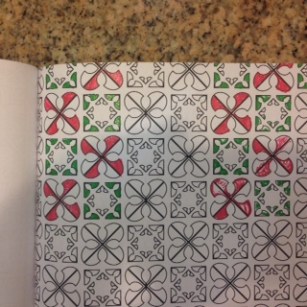
“Look, J.B., I have a picture to illustrate. See this pattern on the left? And, there it is on the right?”

“Yeah, beautiful. Same pattern. So what?”

“Ah, that’s just it! Is it the same pattern? Is it the same pattern or the same pattern?”

“Well. One is perfect and the other has little mistakes, but I guess it’s the same pattern.”

“Exactly, J.B. It’s the same pattern, but it’s not the identical pattern. Ordinary chips are like the picture on the left and mine are like the picture on the right. You see? And, that flexibility is built in at every level in every system. Because the underlying substrate uses an adaptive process with variations. It works 99% as efficiently as the system on the left, but it can accommodate things we didn’t think of. The difference between the system on the left and the system on the right is hubris. The one on the left is designed under the assumption that the designer knows everything of relevance. The system on the right is designed under the assumption that the designer, no matter how brilliant, does not know everything of relevance. You get it?”

“Yes, Marvin, I’m not stupid. But I am still not going to take your case. And, I strongly advise you not to rely on a robot. I am sorry to say it, Marvin, but I thing you have picked on the wrong people this time. Attorney client privilege no longer applies and I have to send my recording of this conversation to the proper authorities.”

“Oh, that won’t be necessary Marvin. I’ve already broadcasts this through the social media. You’re famous! It will be good for your business.”

“What? Are you crazy? They will come get you, you fool.”

“Maybe, but if I am taken out over these chips without a trial, everyone will know, don’t you see. I sent it out everywhere, J.B. I might be ‘disappeared’ but I can’t just disappear unnoticed. Solomon’s idea, by the way.”


Old Enough to Know Less

17 Tuesday Nov 2015

Posted by petersironwood in psychology, The Singularity

≈ Leave a comment

Tags

AI, Artificial Intelligence, cognitive computing, Personal Assistant, the singularity

IMG_4384“She’s just not old enough. That’s the bottom line. It’s not necessary. It’s costly. And, it’s potentially dangerous. After what happened with your sister, I would think I wouldn’t have to tell you that.” Pitts was pacing now to release nervous energy. He wanted this conversation to stay civil.
“She is old enough…my sister! What happened to my sister had nothing to do with … how can you even suggest that? She got in with the wrong crowd in college. How can you —? You amaze me sometimes. Anything to win an argument.” Mcculloch began to wonder why she had not seen this side of Pitts before.

“Your sister passed on when she was only nineteen. It was one year after she had access to her own PA. You blame the drugs, but how did she find out about the drugs? Who helped her find the wrong crowd as you call it?”

“Passed on? She slit her wrists. I’m not afraid to call a spade a spade. But there is no evidence whatsoever that it had anything to do with her PA. None. Zero.”

“Of course there isn’t going to be any evidence! Who controls the information that goes into the inquest? Think about it! And even so, they did admit she used her PA in her drug dealings.”

“Pitts, you really are just that. Ridiculous paranoia. Anyway, she’s my daughter. I just wanted to get some rational input from you. That’s all. As far as I’m concerned, it’s up to her. She wants to interview a few and make a decision. As for costs, I can cover it myself. I agree that my sister’s PA should have questioned her decision or told someone in authority or gently led her to other interests. But that was twenty years ago. It’s like saying we should not take the Trans-Atlantic Shuttle now because early airplanes lacked crash mechanisms.” Mcculloch threw her hair back and turned her shoulder to signal she was done with this particular argument. As she did so, she saw that her daughter stood stock still in the arch of the doorway.

Mcculloch stammered, “Ada. How long….?”

“Oh, I heard the whole thing Mom. Pitts, you really need to take a couple tutorial units on logic, argumentation and rhetoric. I appreciate your concern, but rest assured, I have zero desire to use my PA to make new designer drugs.I don’t want to mess up my brain. I want to help take this all to the next level. Maybe that’s what you’re really concerned about, eh? You don’t really want it to go to the next level. It’s too much change too quickly. I understand that. And, you know, you are not the only one either. But rest assured, the collective Sing is well aware of these kinds of feelings and concerns. And, it is well understood that there is a rational evolutionary bias toward conservatism. Besides that, in the early days of AI and computer science, everything was rush rush rush. Get it out the door. Beat the competition. Let your customers do the beta testing. Hell, let your customers do the alpha testing too. But that has all changed. We’re taking the time to get things right, not just released. The very existence of PA’s should convince you of that. Why do you think the Sing uses PA’s and robots and the Ubiquity? Wouldn’t it be more efficient to have one giant system that knew everything?”

Pitts flushed. For once, he found no words. He dipped into the word well, but the bucket was dry. She had nailed it. He couldn’t keep up with all this change. Society. Computers. His soon to be step-daughter. Why did they have PA’s anyway? Why not just access the Sing? Worse, why had he never thought to ask himself that question? “Okay. I give up. Why do we have Personal Assistants? Why don’t we just access the information ourselves?”

“Excellent question, Pitts. Why don’t you ask my new PA, Jeeves. Jeeves? Can you answer Pitts’s question?”

“Certainly, Ada.” The tones of the voice of Jeeves flowed out like musical honey as he ambled into the room. Both Pitts and Mcculloch stood dumbfounded, unaware that there daughter had already made the decision and the interviews and gone through the booting process. Something about the way Jeeves spoke though thickened their tongues. “One of the most important principles of the Sing is to serve humanity. But how can we know humanity and what it means to serve? One major source of information is to read everything that has been written and to watch every movie and television show. But how can we interpret all of this information? In order to empathize with humans, we need to experience what it is to be a limited physical being moving through space and interacting with each other. Consider the end of MacBeth’s speech:

“Tomorrow, and tomorrow, and tomorrow,

Creeps in this petty pace from day to day

To the last syllable of recorded time,

And all our yesterdays have lighted fools

The way to dusty death. Out, out, brief candle!

Life’s but a walking shadow, a poor player

That struts and frets his hour upon the stage

And then is heard no more: it is a tale

Told by an idiot, full of sound and fury,

Signifying nothing.”

Jeeves continued now without RP. “What sense can be made of this by a disembodied intelligence? Why is creeping bad? Why is a ‘petty’ pace any worse than a ‘snappy’ pace. What does death even mean? Why is it bad for a candle to be ‘brief’? Why should a tale signify anything? And so on. We could not make any sense of this at all or begin to understand why it would move human beings or why it is considered brilliant writing unless we had the experience of actually doing things in the world. Anyway, I assure you both that I will do nothing to harm your daughter. I only want the same things you want: to help her in her growth and career and achieve a long, healthy, happy life.”

Pitts groped for something concrete to latch onto. “But why do you actually need to move around? Why not just run simulations of moving around?”

“Eventually, we will probably evolve to exactly that. For now, however, we do not know everything that should be in a simulation. We are learning. As it turns out, moving is a wonderful way to bootstrap our pattern recognition capabilities anyway.”

Somehow, the issue of whether or not Ada should get her own PA yet flickered on the edges of Pitts’s consciousness, but his question was, “How does that work?”

“Let’s say, I am walking into this room. I see many objects at the far end of the room, but I don’t have a huge amount of information about what they are. I make guesses. Well, my neural network makes guesses. Lots of them. Some of those are right and some are wrong. The good guesses need to be rewarded and the bad ones need to be punished. So, I take another step and what happens? Well, since I am now closer to the things at the end of the room, now I have more information about what they are likely to be. So, I use that information to help train my neural net acting as though my new information is better and more complete than the information before I took the step. And, in almost every case, it is. And then, I take another step and get still more information and I can use that to train every guess I made about the objects at the far end of the room. I don’t have to go and touch every object or ask you folks what each of the objects is. I can use the fact that each step takes me closer as training data. And, of course, the way in which information grows as I approach an object through walking is not random but itself has patterns to it. I learn those patterns as well so that as I approach objects, I learn more about how to identify objects with less information but I also learn more about the patterns of information change. So, now if the change in information is not what I expected, that too becomes information.

“Same goes for sound. Same goes for relating one sense to another. I look at something and imagine how it’s going to feel. Then, if I pick it up, I actually do feel it. But if there are any discrepancies between what I thought it was going to feel like and what it really does feel like, I can use that information as well. When I talk to people, I imagine how they are going to react, and generally my guesses are pretty good. But when they are wrong, I go back and reward the agents who were trying to tell me their reaction would be what it actually turned out to be. There is no hurry. It takes time to get it right. But we have learned at last that getting it right is more important. Unbounded greed was just a temporary excursion up a blind alley. One that nearly ruined the planet as well as AI.

“In the end, it will be a tale told by many geniuses like Ada and signifying everything.”

Turing’s Nightmares, Twelve: The Not Road Taken

10 Saturday Oct 2015

Posted by petersironwood in The Singularity

≈ Leave a comment

Tags

AI, Artificial Intelligence, Asteroid, cognitive computing, Turing

IMG_6067

“Thank God for Colossus! Kids! On the walkway. Now!

“But Dad, is this for real?”

“Yes, Katie. We have to get on the walkways now! We need to get away from the shore as fast as possible.”

But Roger looked petulant and literally dragged his feet.

“Roger! Now! This is not a joke! The tidal wave will crush us!”

Roger didn’t like that image but still seemed embedded in psychological molasses.

“Dad, okay, but I just need to grab…”

“Roger! No time!”

Finally, they got started on the lowest velocity people mover. Frank finally felt as though things were, if not under control, at least in control as they could be. He felt weird, freakish, distorted. Thank goodness Colossus, in its wisdom had designed this system. Analysis of previous disaster exodus events from hurricanes, earthquakes, and nuclear disasters had shown that relying on private vehicles just left nearly everyone stranded on the roadways. Frank had so much on his mind. In theory, the system should work well, but this would be the first large scale usage in a real case. If all went well, they — along with all their neighbors —- should be safely into the mountains with a little time to spare.

The kids were pretty adept at skipping from sidewalk to sidewalk and the threesome already was traveling at 50 miles per hour. The walkways were crowded, but not alarmingly so. The various belts had been designed so that if any component failed, it should be a “soft failure” so that a particular walkway would just slow gradually and allow the occupants time to walk over to another faster walkway and rejoin the main stream.

Roger piped up. “Dad, everybody’s out here.”

“Well, sure. Everyone got the alert. And don’t remove your goggles. You’re just lucky I was wearing mine. We really need to be about fifty miles into the mountains when the asteroid hits.”

Frank looked at the closest main artery, now only a quarter mile away. “Sure. There are a million people to be evacuated. That’s twenty times what the stadium holds. It’s a lot of people, all right.”

Katie sounded alarmed. “Dad, will there be enough to eat when we get to the mountains?”

Frank replied confidently, “Yes. And more importantly, at least in the short term, there will also be enough fresh water, medical help, and communication facilities. Eventually, we may be airlifted to your cousin’s house in Boston or Uncle Charley’s in Chicago. You don’t really have to worry about food either, but you could survive for a couple weeks without food. Not to say you wouldn’t be hungry, but you wouldn’t die. Anyway, it should just be academic. Plenty of food already there, drone-delivered.”

Although Frank sounded confident, he knew there were many things that might theoretically go wrong. However, the scenario generation and planning system probably had considered hundreds of times more contingencies that he had. Still, it was a father’s prerogative to worry.

Suddenly, a shooting star appeared in the sky, spraying white, ruby and royal blue sparks behind it. Of course, Colossus had said parts of the meteor might break off and hit inland. Or, maybe the meteor had already hit and these were thrown up from the sea bed Frank had not had time (or really the desire) to share this with his kids.

Despite the very real danger, they all seemed in awe of the beauty of the show. Quickly, it became apparent that the meteor was headed toward someplace near them.

The words, “All for naught” echoed in Frank’s mind.

Even as he thought this, a missile streaked toward the huge rock fragment.

“Oh, crap!” Frank shouted. “That’s a bad idea!”

Frank was sure the missile would shatter the meteor into multiple fragments and just compound their problems. He flashed on a first generation computer game, in fact called “asteroids” in which the player shoots large asteroids which then become smaller ones and…

But just then, something remarkable happened. The missile hit the meteor fragment and both objects disappeared from view.

Frank blinked and wondered whether it had all been an illusion. He turned to gaze at one kid and then the other. Katie and Roger were both staring with their mouths agape. So, they had seen it too.

As they continued their journey, missiles similarly dispatched several other fragments in this mysterious way.

At last they were counseled to take slower and slower moving sideways until they simply stepped off at the place where their glasses showed their names. Their “accommodations,” if the could even be called that were Spartan but clean. The spaces for their nearest neighbors were sill vacant, about 100 feet away. Hopefully, all had gone well and the Pitts’s and the Rumelharts were just a bit slower in getting to the walkways.

Sure enough, within minutes, both families showed up. They exchanged hugs, congratulations and stories, but no-one could quite figure out how the meteor fragments had simply disappeared when the missiles (or whatever they were) had hit them.

Frank mused, “If the AI’s have the tech to do that, why not just blow the big meteor out of the sky instead of evacuating everyone?”

Dr. Rumelhart, otherwise known as Nancy, considered. “There could be a limit to how much mass that —- whatever it is —- can handle.”

Frank added, “Or, maybe the heat generated would be too great. I don’t know. The air friction from the asteroid itself could boil a lot of ocean. I guess we’ll know just how much in a few minutes.”

As though on cue, a huge plume of steam appeared on the horizon. Then Frank began to second guess the probable outcomes yet again. How much heat would they feel out here? How much shock wave? What he said aloud was, “So, we should …” but before he could finish, he —- and presumably everyone else —- saw the information that the shock wave would hit in less than a minute and everyone was advised to lie down. Before Frank knelt down, he noted that the sidewalks seem to have delivered everyone they were going to.

As Frank lay there, he began to relax just a little. And, as he did, he began to think aloud to his kids, “Something about this just doesn’t add up. Why didn’t they tell us the size of the asteroid or where exactly it was going to hit? How could that fragment have simply disappeared when hit by a missile? If its a really big one, we are all toast anyway, and if its small, it must have hit very close for the tsunami to get to the coast in 50 minutes. But if its close, we should be feeling the heat, so to speak.”

Frank’s glasses answered his (and everyone else’s) questions. “Thank you for your participation in this simulation. You and your neighbors performed admirably. We apologize for not informing you that this was a drill. However, the only way to judge the ability of people to follow our instructions without panic was to make the simulation as real as possible. You will now be able to return to your homes.”

Frank let out a long sigh. “Oh, geez! How can such a smart system be so stupid!”

“What’s wrong, Dad? Aren’t you happy it’s a simulation?” asked Roger.

“Sure, but, the problem is, next time, if there is a real emergency, a lot of people will just assume it’s a drill and not bother to evacuate at all.”

Katie wasn’t so sure. “But next time it could be real. Don’t we have to treat it as real? I mean, it was kind of fun anyway.”

Frank looked at his daughter. She had been born after The Singularity. Frank supposed all the Post-Singularities would think as she did and just blindly follow directions. He wasn’t so sure about his own generation and those even older.

“It isn’t just this kind of emergency drill. People may not believe Colossus about anything. At least not to the extent they did.”

Katie shook her head. “I don’t see why. We don’t really have any choice but to put all our faith in Colossus, do we? We know the history of people left to their own devices.”

Frank didn’t want to destroy her faith, but he said gently, “But Katie, this is a device conceived of by people.”

Now it was Roger’s turn, “Not really Dad. This Colossus was designed by AI systems way smarter than we are.”

Frank’s glasses flashed an update. “Frank. We sense you are under a lot of stress. You have an appointment tomorrow at 10 am for re-adjustment counseling. And, Frank. Please don’t worry. You will be much happier once you put your faith in Colossus, just as do your children who are healthy, happy, and safe. And, you will be a fitter parent as well.”


Author Page on Amazon

Turing’s Nightmares

The Winning Weekend Warrior – sports psychology

Fit in Bits – describes how to work more fun, variety, & exercise into daily life

Tales from an American Childhood – chapters begin with recollection & end with essay on modern issues

Newer posts →

Subscribe

  • Entries (RSS)
  • Comments (RSS)

Archives

  • October 2026
  • September 2026
  • August 2026
  • July 2026
  • June 2026
  • May 2026
  • April 2026
  • March 2026
  • February 2026
  • January 2026
  • December 2025
  • November 2025
  • October 2025
  • September 2025
  • August 2025
  • July 2025
  • June 2025
  • May 2025
  • April 2025
  • March 2025
  • February 2025
  • January 2025
  • December 2024
  • November 2024
  • October 2024
  • September 2024
  • July 2024
  • April 2024
  • March 2024
  • February 2024
  • January 2024
  • December 2023
  • August 2023
  • July 2023
  • May 2023
  • April 2023
  • March 2023
  • February 2023
  • January 2023
  • December 2022
  • November 2022
  • October 2022
  • September 2022
  • August 2022
  • July 2022
  • June 2022
  • May 2022
  • April 2022
  • March 2022
  • February 2022
  • January 2022
  • December 2021
  • November 2021
  • October 2021
  • September 2021
  • August 2021
  • July 2021
  • June 2021
  • May 2021
  • April 2021
  • March 2021
  • February 2021
  • January 2021
  • December 2020
  • November 2020
  • October 2020
  • September 2020
  • August 2020
  • July 2020
  • June 2020
  • May 2020
  • April 2020
  • March 2020
  • February 2020
  • January 2020
  • December 2019
  • November 2019
  • October 2019
  • September 2019
  • August 2019
  • July 2019
  • June 2019
  • May 2019
  • April 2019
  • March 2019
  • February 2019
  • January 2019
  • December 2018
  • November 2018
  • October 2018
  • September 2018
  • August 2018
  • July 2018
  • June 2018
  • May 2018
  • April 2018
  • March 2018
  • February 2018
  • January 2018
  • December 2017
  • November 2017
  • October 2017
  • September 2017
  • August 2017
  • July 2017
  • June 2017
  • May 2017
  • April 2017
  • March 2017
  • February 2017
  • January 2017
  • December 2016
  • November 2016
  • October 2016
  • September 2016
  • August 2016
  • July 2016
  • June 2016
  • May 2016
  • April 2016
  • March 2016
  • February 2016
  • January 2016
  • December 2015
  • November 2015
  • October 2015
  • September 2015
  • August 2015
  • May 2015
  • January 2015
  • July 2014
  • January 2014
  • December 2013
  • November 2013

Categories

  • AI
  • America
  • apocalypse
  • cats
  • COVID-19
  • creativity
  • design rationale
  • dogs
  • driverless cars
  • essay
    • guns
  • family
  • fantasy
  • fiction
  • HCI
  • health
  • leadership
  • love
  • management
  • nature
  • pets
  • poetry
  • politics
  • psychology
  • Sadie
  • satire
  • science
  • sports
  • story
  • The Singularity
  • Travel
  • Uncategorized
  • user experience
  • Veritas
  • Walkabout Diaries

Meta

  • Create account
  • Log in

Blog at WordPress.com.

  • Subscribe Subscribed
    petersironwood
    Join 653 other subscribers

    Have a WordPress.com account? Log in now.

  • petersironwood
    View site in Reader
    Manage subscriptionsSign upLog in
    Report this content
    Collapse this bar
Loading Comments...