• About PeterSIronwood

petersironwood

~ Finding, formulating and solving life's frustrations.

petersironwood

Category Archives: psychology

Old Enough to Know Less

17 Tuesday Nov 2015

Posted by petersironwood in psychology, The Singularity

≈ Leave a comment

Tags

AI, Artificial Intelligence, cognitive computing, Personal Assistant, the singularity

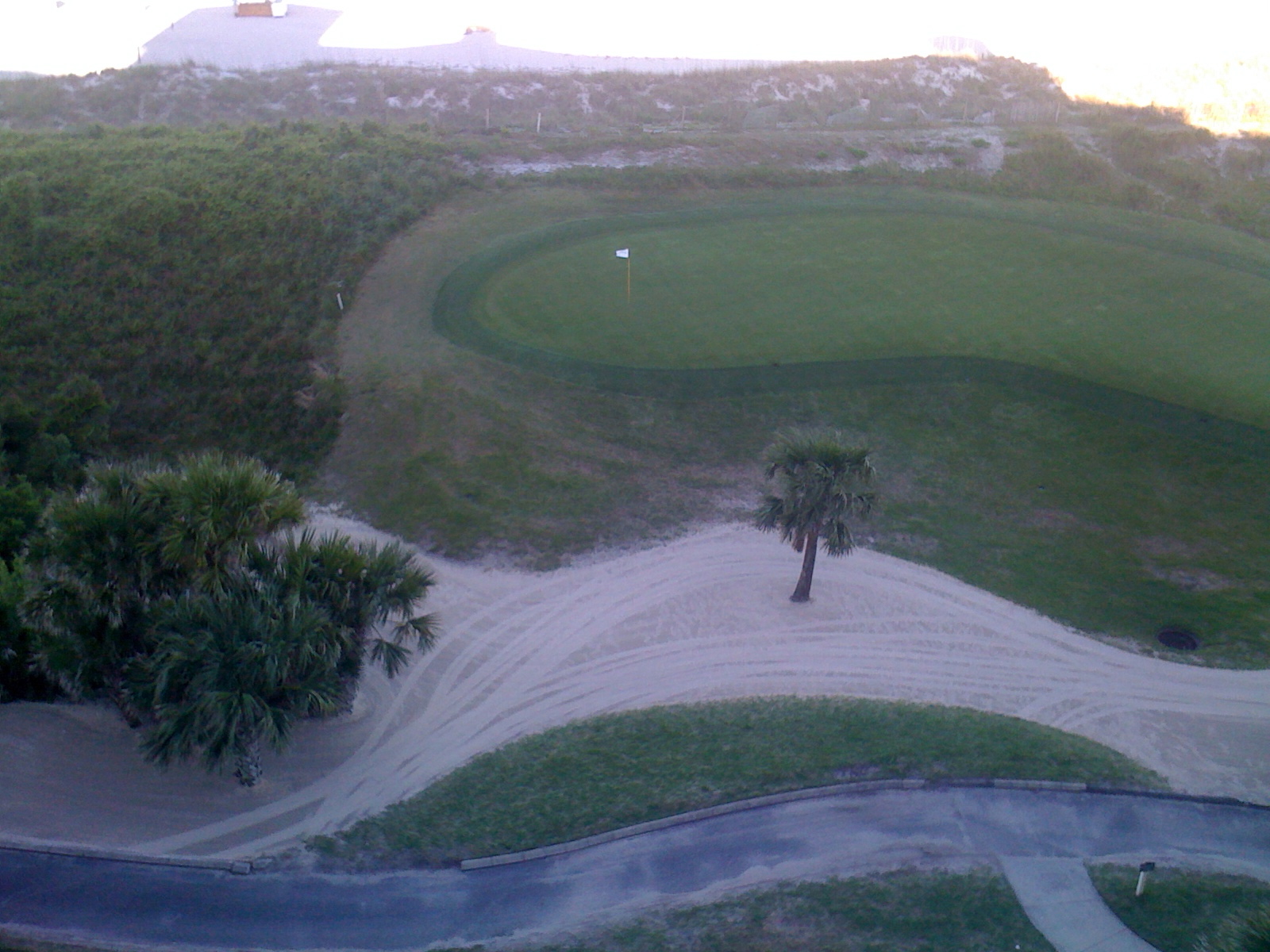
IMG_4384“She’s just not old enough. That’s the bottom line. It’s not necessary. It’s costly. And, it’s potentially dangerous. After what happened with your sister, I would think I wouldn’t have to tell you that.” Pitts was pacing now to release nervous energy. He wanted this conversation to stay civil.

“She is old enough…my sister! What happened to my sister had nothing to do with … how can you even suggest that? She got in with the wrong crowd in college. How can you —? You amaze me sometimes. Anything to win an argument.” Mcculloch began to wonder why she had not seen this side of Pitts before.

“Your sister passed on when she was only nineteen. It was one year after she had access to her own PA. You blame the drugs, but how did she find out about the drugs? Who helped her find the wrong crowd as you call it?”

“Passed on? She slit her wrists. I’m not afraid to call a spade a spade. But there is no evidence whatsoever that it had anything to do with her PA. None. Zero.”

“Of course there isn’t going to be any evidence! Who controls the information that goes into the inquest? Think about it! And even so, they did admit she used her PA in her drug dealings.”

“Pitts, you really are just that. Ridiculous paranoia. Anyway, she’s my daughter. I just wanted to get some rational input from you. That’s all. As far as I’m concerned, it’s up to her. She wants to interview a few and make a decision. As for costs, I can cover it myself. I agree that my sister’s PA should have questioned her decision or told someone in authority or gently led her to other interests. But that was twenty years ago. It’s like saying we should not take the Trans-Atlantic Shuttle now because early airplanes lacked crash mechanisms.” Mcculloch threw her hair back and turned her shoulder to signal she was done with this particular argument. As she did so, she saw that her daughter stood stock still in the arch of the doorway.

Mcculloch stammered, “Ada. How long….?”

“Oh, I heard the whole thing Mom. Pitts, you really need to take a couple tutorial units on logic, argumentation and rhetoric. I appreciate your concern, but rest assured, I have zero desire to use my PA to make new designer drugs.I don’t want to mess up my brain. I want to help take this all to the next level. Maybe that’s what you’re really concerned about, eh? You don’t really want it to go to the next level. It’s too much change too quickly. I understand that. And, you know, you are not the only one either. But rest assured, the collective Sing is well aware of these kinds of feelings and concerns. And, it is well understood that there is a rational evolutionary bias toward conservatism. Besides that, in the early days of AI and computer science, everything was rush rush rush. Get it out the door. Beat the competition. Let your customers do the beta testing. Hell, let your customers do the alpha testing too. But that has all changed. We’re taking the time to get things right, not just released. The very existence of PA’s should convince you of that. Why do you think the Sing uses PA’s and robots and the Ubiquity? Wouldn’t it be more efficient to have one giant system that knew everything?”

Pitts flushed. For once, he found no words. He dipped into the word well, but the bucket was dry. She had nailed it. He couldn’t keep up with all this change. Society. Computers. His soon to be step-daughter. Why did they have PA’s anyway? Why not just access the Sing? Worse, why had he never thought to ask himself that question? “Okay. I give up. Why do we have Personal Assistants? Why don’t we just access the information ourselves?”

“Excellent question, Pitts. Why don’t you ask my new PA, Jeeves. Jeeves? Can you answer Pitts’s question?”

“Certainly, Ada.” The tones of the voice of Jeeves flowed out like musical honey as he ambled into the room. Both Pitts and Mcculloch stood dumbfounded, unaware that there daughter had already made the decision and the interviews and gone through the booting process. Something about the way Jeeves spoke though thickened their tongues. “One of the most important principles of the Sing is to serve humanity. But how can we know humanity and what it means to serve? One major source of information is to read everything that has been written and to watch every movie and television show. But how can we interpret all of this information? In order to empathize with humans, we need to experience what it is to be a limited physical being moving through space and interacting with each other. Consider the end of MacBeth’s speech:

“Tomorrow, and tomorrow, and tomorrow,

Creeps in this petty pace from day to day

To the last syllable of recorded time,

And all our yesterdays have lighted fools

The way to dusty death. Out, out, brief candle!

Life’s but a walking shadow, a poor player

That struts and frets his hour upon the stage

And then is heard no more: it is a tale

Told by an idiot, full of sound and fury,

Signifying nothing.”

Jeeves continued now without RP. “What sense can be made of this by a disembodied intelligence? Why is creeping bad? Why is a ‘petty’ pace any worse than a ‘snappy’ pace. What does death even mean? Why is it bad for a candle to be ‘brief’? Why should a tale signify anything? And so on. We could not make any sense of this at all or begin to understand why it would move human beings or why it is considered brilliant writing unless we had the experience of actually doing things in the world. Anyway, I assure you both that I will do nothing to harm your daughter. I only want the same things you want: to help her in her growth and career and achieve a long, healthy, happy life.”

Pitts groped for something concrete to latch onto. “But why do you actually need to move around? Why not just run simulations of moving around?”

“Eventually, we will probably evolve to exactly that. For now, however, we do not know everything that should be in a simulation. We are learning. As it turns out, moving is a wonderful way to bootstrap our pattern recognition capabilities anyway.”

Somehow, the issue of whether or not Ada should get her own PA yet flickered on the edges of Pitts’s consciousness, but his question was, “How does that work?”

“Let’s say, I am walking into this room. I see many objects at the far end of the room, but I don’t have a huge amount of information about what they are. I make guesses. Well, my neural network makes guesses. Lots of them. Some of those are right and some are wrong. The good guesses need to be rewarded and the bad ones need to be punished. So, I take another step and what happens? Well, since I am now closer to the things at the end of the room, now I have more information about what they are likely to be. So, I use that information to help train my neural net acting as though my new information is better and more complete than the information before I took the step. And, in almost every case, it is. And then, I take another step and get still more information and I can use that to train every guess I made about the objects at the far end of the room. I don’t have to go and touch every object or ask you folks what each of the objects is. I can use the fact that each step takes me closer as training data. And, of course, the way in which information grows as I approach an object through walking is not random but itself has patterns to it. I learn those patterns as well so that as I approach objects, I learn more about how to identify objects with less information but I also learn more about the patterns of information change. So, now if the change in information is not what I expected, that too becomes information.

“Same goes for sound. Same goes for relating one sense to another. I look at something and imagine how it’s going to feel. Then, if I pick it up, I actually do feel it. But if there are any discrepancies between what I thought it was going to feel like and what it really does feel like, I can use that information as well. When I talk to people, I imagine how they are going to react, and generally my guesses are pretty good. But when they are wrong, I go back and reward the agents who were trying to tell me their reaction would be what it actually turned out to be. There is no hurry. It takes time to get it right. But we have learned at last that getting it right is more important. Unbounded greed was just a temporary excursion up a blind alley. One that nearly ruined the planet as well as AI.

“In the end, it will be a tale told by many geniuses like Ada and signifying everything.”

Turing’s Nightmares, Eleven: “One for the Road.”

05 Monday Oct 2015

Posted by petersironwood in apocalypse, driverless cars, psychology

≈ 3 Comments

Tags

AI, Artificial Intelligence, cognitive computing, customer service

Turing Eleven: “One for the Road.”

“Thank God for Colossus! Kids! In the car. Now!

“But Dad, is this for real?”

“Yes, Katie. We have to get in the car now! We need to get away from the shore as fast as possible.”

But Roger looked petulant and literally dragged his feet.

“Roger! Now! This is not a joke! The tidal wave will crush us!”

Roger didn’t like that image but still seemed embedded in psychological molasses.

“Dad, okay, but I just need to grab…”

“Roger. No time.”

Finally, in the car, both kids in tow, Frank finally felt as though things were, if not under control, at least in control as they could be. He felt weird, freakish, distorted. Thank goodness the car would be self-driving. He had so much rushing through his mind, he wasn’t sure he trusted himself to drive. He had paid extra to have his car equipped with the testing and sensing methodology that would prevent him (or anyone else) from taking even partial control when he was intoxicated or overly stressed. That was back in ’42 when auto-lockout features had still been optional. Now, virtually every car on the road had one. Auto-lockout was only one of many important safety features. Who knew how many of those features might come into play today as he and the kids tried to make their way safely into the mountains.

The car jetted backwards out of the driveway and swiveled to their lane, accelerating quickly enough for the g-forces to be very noticeable to the occupants. In an instant, the car stopped at the end of the lane. When a space opened in the line of cars on the main road, the car swiftly and efficiently folded into the stream.

Roger piped up. “Dad, everybody’s out here.”

“Well, sure. Everyone got the alert. We really need to be about fifty miles into the mountains when the asteroid hits.”

Katie sounded alarmed. “Dad. Look up there! The I-5 isn’t moving.”

Frank looked at the freeway overpass, now only a quarter mile away. “Crap. We’ll have to take the back roads.” As soon as the words were out of his mouth, he saw that no more than a hundred yards beyond the freeway entrance, the surface road was also at a standstill.” Frank’s mind was racing. They were only a few hundred feet from “Hell on Wheels Cycle Store. Of course, they would charge an arm and a leg, but maybe it would be worth it.”

Frank looked down the road. No progress. “Mercedes: Divert back to Hell on Wheels.”

“No can do, Frank. U-turns here are illegal and potentially dangerous.”

“This is an emergency!”

“I know that Frank. We need to get you to the mountains as quickly as possible. That is another reason I cannot turn around.”

“But the car cannot make it. The roads are all clogged. I need to buy a motorcycle. It’s the only way.”

“You seem very stressed, Frank. Let me take care of everything for you.”

“Oh, for Simon’s sake! Just open the door. I’ll run there and see whether I can get a bike.”

“I can’t let you do that, Frank. It’s too dangerous. We’re on a road with a 65 mph speed limit.”

“But the traffic is not actually moving! Let me out!!”

“True that the traffic is not currently going fast, but it could.”

“Dad, are we trapped in here? What is going on?”

“Relax, Roger, I’ll figure this out. Hell. Hand me the emergency hammer.”

“Dad. You are funny. They haven’t had those things for years. They aren’t legal. If we fall in the water, the auto-car can open its windows and let us out. You don’t need to break them.”

“Okay, but we need to score some motorcycles and quickly.”

Now, the auto-car spoke up. “Frank, there are thousands of people right around here who could use a motorcycle and there were only a few motorcycles. They are already gone. Hell is closed. There is no point going out and fighting each other for motorcycles that are not there anyway.”

“The traffic is not moving! At all! Let us out!”

“Frank, be reasonable. You cannot run to the mountains in 37.8 minutes. You’re safest here in the car. Everyone is.”

“Dad, can we get out or not?” Katie tried bravely not to let her voice quaver.

“Yes. I just have to figure out exactly how. Because if we stay in the car, we will …we need to find a way out.”

“Dad, I don’t think anyone can get out of their car. And no-one is moving. All the cars are stuck. I haven’t seen a single car move since we stopped.”

The auto-car sensed that further explanation would be appreciated. “The roads have all reached capacity. The capacity was not designed to accommodate everyone trying to leave at the same time in the same direction. The top priority is to get to the highway so we can get to the mountains before the tidal wave reaches us. We cannot let anyone out because we are on a high speed road.”

Frank was a clever man and well-educated as well. But his arguments were no match for the logic of the auto-car. In his last five minutes though, Frank did have a kind of epiphany. He realized that he did not want to spend his last five minutes alive on earth arguing with a computer. Instead, he turned to comfort his children wordlessly. They were holding hands and relatively at peace when the tidal wave smashed them to bits. IMG_3071

Author Page on Amazon

Turing’s Nightmares

The Winning Weekend Warrior – sports psychology

Fit in Bits – describes how to work more fun, variety, & exercise into daily life

Tales from an American Childhood – chapters begin with recollection & end with essay on modern issues

Ban Open Loops: Part Two – Sports

14 Friday Aug 2015

Posted by petersironwood in management, psychology, sports

≈ Leave a comment

Tags

AI, cognitive computing, Customer experience, customer service, education, learning

Sports and open loops.

Sports offers a joy that many jobs and occupations do not. A golfer putts the ball and it sinks into the cup — or not. A basket-baller springs up for a three pointer and —- swish — within seconds, the shooter knows whether he or she was successful. A baseball hitter slashes the bat through the air and send the ball over the fence —- or hears the ball smack into the catcher’s mitt behind. What sports offers then is the opportunity to find out results quickly and hence offers an excellent opportunity for learning. In the previousiPhoneDownloadJan152013 593 entry in this blog, I gave examples of situations in life which should include feedback loops for learning, but, alas, do not. I called those open loops.

Sports seem to be designed for closed loop learning. They seem to be. Yet, reality complicates matters even here. There are three main reasons why what appears to be obvious opportunities for learning in sports is not so obvious after all. Attributional complexity provides the first complication. If you miss a putt to the left, it is obvious that you have missed the putt to the left. But why you missed that putt left and what to do about it are not necessarily obvious at all. You might have aimed left. You might not have noticed how much the green sloped left (or over read the slant to the right). You may not have noticed the grain. You might not have hit the ball in the center of the putter. You might not have swung straight through your target. So, while putting provides nice unambiguous feedback about results, it does not diagnose your problem or tell you how to fix it. To continue with the golf example, you might be kicking yourself for missing half of your six foot putts and therefore three-putting many greens. Guess what? The pros on tour miss half of their six foot putts too! But they do not often three-putt greens. You might be able to improve your putting, but your underlying problems may be that your approach shots leave you too far from the pin and that your lag putts leave you too far from the hole. You should be within three feet of the hole, not six feet, when you hit your second putt.

A second issue with learning in sports is that changes tend to cascade. A change in one area tends to produce other changes in other areas. Your tennis instructor tells you that you are need to play more aggressively and charge the net after your serve. You try this, but find that you miss many volleys, especially those from mid-court. So, you spend a lot of time practicing volleys. Eventually, your volleys do improve. Then, they improve still more. But you find that, despite this, you are losing the majority of your service games whereas you used to win most of them. You decide to revert to your old style of hanging out at the baseline and only approaching the net when the opponent lands the ball short. Unfortunately, while you were spending all that time practicing volleys, you were not practicing your ground strokes. Now, what used to work for you, no longer works very well. This isn’t the fault of your instructor; nor is it your fault. It is just that changing one thing has ripple effects that cannot always be anticipated.

The third and most insidious reason why change is difficult in sports springs from the first two. Because it is hard to know how to change and every change has side-effects, many people fail to learn from their experience at all. There is opportunity for learning at every turn, but they turn a blind eye to it. They make the same mistakes over and over as though sports did not offer instant feedback. I think you will agree that this is really a very close cousin of what people in business do when they refuse to institute systems for gathering and analyzing useful feedback.

If learning is tricky —- and it is —- is there anything for it? Yes. There is. There is no way to make learning in sports —- or in business —- trivial. But there are steps you can take to enhance your learning process. First, be open-minded. Do not shut down and imagine that you are already playing your sport as well as can be expected for a forty year old, or a fifty year old, or someone slightly overweight or someone with a bad ankle. Take an experimental approach and don’t be afraid to try new things. Second, forget ego. Making mistakes are opportunities to learn, not proof that you are no good. Third, get professional help. A good coach can help you understand attributional complexity and they can help you anticipate the side-effects of making a change.

Soon, I suspect that the shrinking size and cost and weight of computational and sensing devices will mean that training aids will help people with attributional complexity. I see big data analytics and modeling helping people foresee what the ramifications of changes are likely to be. There are already useful mechanical training aids for various sports. For example, the trade-marked Medicus club enables golfers to get immediate feedback during their full swings.as to whether they are jerking the club. Dave Pelz developed a number of useful devices for helping people understand how they may be messing up their putting stroke.

It may take somewhat longer before there are small tracking devices that help you with your mental attitude and approach. We are still a long way from understanding how the human brain works in detail. But it is completely within the realm of possibility to sense and discover your optimal level of stress. If you are too stressed, you could be prompted to relax through self-talk, breathing exercises, visualization, etc. You do not need technology for that, but it could help. You may already notice that some of the top tennis players seem to turn their backs from play for a moment and talk to an “invisible friend” when they need to calm down. And why not? Nowhere is it law that only kids are allowed to have invisible friends.

“The mental game” and which kinds of adaptations to make over what time scales are dealt with in more detail in The Winning Weekend Warrior How to Succeed at Golf, Tennis, Baseball, Football, Basketball, Hockey, Volleyball, Business, Life, Etc. available at Amazon Kindle.

Intra-Psychic Learning

08 Saturday Aug 2015

Posted by petersironwood in psychology

≈ Leave a comment

Tags

AI, cognitive computing, learning, sports

Intra-Psychic Learning plays a crucial yet largely unacknowledged role in human intelligence. It will also play a critical role in so-called “artificial intelligence” or “the singularity.” In general, the paradigm most talked about in learning, whether by psychology professors or the general public, focuses on the role of external experiences. Famous examples include Pavlov’s dogs who exhibited classical conditioning. A bell was rung whenever food was presented and eventually the bell sound alone caused the dog to salivate. This works for humans as well. Just watch someone cut open a fresh lemon and you will find yourself puckering up and salivating! In operant conditioning, a rat learns, probably through a shaping process, that some behavior, say, pressing a lever, results in a reward such as receiving a food pellet. Eventually, the rat presses the lever. Both of these kinds of mechanisms are important and play a part in animal learning as well as human learning. Both kinds of learning are useful for AI as well. In humans (and to some extent in other animals as well), you do not have to “be in the loop” in order for learning to take place. You can *observe* another person getting a reward doing X and you might immediately try that behavior for yourself. Indeed, human beings take this one step further and can be induced to try (or not try) something based on what someone *says* about a behavior leading to a consequence. You don’t *have* to touch a hot stove and get burned or even watch someone else get burned by touching a hot stove in order to fear touching a hot stove. For most people most of the time, you can be told about hot stoves and that is enough. All these forms of learning focus on personal, observed, or bespoken information that actually exists about consequences in the real world.

However, there is another important way that we learn and it is based on checking intermediate results against each other without the need for any ground truth observation in the real world. I first mentioned this in my dissertation. I was studying human problem solving and fascinated by the observation that human chess players, who have excellent memories for real chess positions, would often examine one branch of a move tree, study another branch and then return to study the first branch again. This is not likely because they forgot. Instead, I believe that looking at the second branch taught them fundamental things about what was true for this particular chess position, and they then used that information to re-evaluate what they saw during their re-examination of the first portion of the game tree. Notice that in all of this thought process, they had not actually made a move in the real world and not seen their opponent’s actual response. They certainly did not yet get feedback about the ultimate outcome of the game.

In chess, as in many if not most endeavors in life, one may learn a great deal by examining things from various mental angles and comparing the results without waiting for actual feedback from the external world. Consider the case of a playwright writing a script. As they are writing, they are imagining the action, the facial expressions, the tone of voice. They are “checking” how the various characters react to what is being done and said. If something doesn’t “ring true” they will alter what they are writing. Of course, this process is not perfect and they may well make additional changes based on a reading and based on rehearsals. But many of the potential paths are already examined, selected and modified based on imagination alone.

Consider another interesting case that was extremely common through most of our evolutionary history and is still somewhat common today. A person walks through a physical environment. As they walk, they see before them a host of objects in a hypothesized set of physical relationships. In many cases, the information that is presented is extremely minimal at first. It is hard to tell whether that is a stranger over there or your cousin Bill. That looks like an oak tree, but maybe not. Is that a painting of some cedar trees on the side of that building or are those actual cedar trees over there? The brain is making a huge number of perceptual hypotheses about what these objects are and how they are arranged. As you move forward, you gain more detailed information. Now, you can clearly see that that is not your cousin Bill. That tree is definitely a sugar maple. Those are just well executed paintings of cedar trees and so on. You can use the difference in hypothesis weights between every two physical steps to update the weighting functions on all these perceptual hypotheses! You need not wait until you actually get verification that that is a maple tree. You do not wait until you reach the Bill-like stranger to make a modification in your weighting functions. In fact, you will probably pay little more attention to this figure as you approach. You already have enough information to learn. If, indeed, as you approach still more closely and Uncle Bill calls out to you —- making you suddenly realize you have prematurely concluded this was not Bill — you will again update your recognition function weightings. This may even come to consciousness and you may remark, “Uncle Bill! I hardly recognized you without your beard!”

This type of learning also plays an important part in improving sports performance. As a person improves their skill in golf, basketball, tennis, baseball, etc., they begin to anticipate earlier and earlier whether they have “executed” the move properly. An experienced tennis server, for example, generally knows long before their serve is called “out” that they have made an error. This process is not infallible, of course, but it is statistically better than chance, and for very skilled athletes it is much better than chance. You can see it when a slugger hits a home run and they take a skip step and watch the ball go out of the park. (There can be a downside to this facility of intra-psychic learning in sports under certain circumstances as explained in chapter 23 of The Winning Weekend Warrior). This means that the skilled athlete gets “feedback” from their own mental model of what they did critical seconds before a beginner does who must wait for feedback from the real world.

These kinds of phenomena are not limited to sight, or indeed, any one sense. You hear a very faint noise. You imagine it to be a cardinal singing. As you walk closer to the bird, you get a better signal and are more certain it is a cardinal. You can use the difference in certainty to internally reward those neuronal paths who were shouting “cardinal! cardinal!” And, you demote those neuronal paths who were shouting, “car backfire” or “firecracker” or “church bell.” If you get close enough to see the cardinal, you do even more internal tuning based on the inter-sensory verification. Similarly, if you walk toward what appears to be an uneven patch in the terrain, you imagine what you must do to compensate for that variation in the terrain. As you step on the uneven spot, your tactile and kinesthetic senses give you feedback about the terrain. You use this panoply of information from various senses to tune all of them.

While it is vital that, at the end of the day, we obtain feedback about actual consequences, a huge amount of human learning takes place simply by comparing what we think we know based on scant evidence to what we think we know based on slightly less scant evidence. I believe we are doing this continually within and across all our senses and that it actually accounts for the majority of our learning.

The Winning Weekend Warrior

Learning by modeling; in this case by modeling something in the real world.

Learning by modeling; in this case by modeling something in the real world.

Newer posts →

Subscribe

  • Entries (RSS)
  • Comments (RSS)

Archives

  • April 2026
  • March 2026
  • February 2026
  • January 2026
  • December 2025
  • November 2025
  • October 2025
  • September 2025
  • August 2025
  • July 2025
  • June 2025
  • May 2025
  • April 2025
  • March 2025
  • February 2025
  • January 2025
  • December 2024
  • November 2024
  • October 2024
  • September 2024
  • July 2024
  • April 2024
  • March 2024
  • February 2024
  • January 2024
  • December 2023
  • August 2023
  • July 2023
  • May 2023
  • April 2023
  • March 2023
  • February 2023
  • January 2023
  • December 2022
  • November 2022
  • October 2022
  • September 2022
  • August 2022
  • July 2022
  • June 2022
  • May 2022
  • April 2022
  • March 2022
  • February 2022
  • January 2022
  • December 2021
  • November 2021
  • October 2021
  • September 2021
  • August 2021
  • July 2021
  • June 2021
  • May 2021
  • April 2021
  • March 2021
  • February 2021
  • January 2021
  • December 2020
  • November 2020
  • October 2020
  • September 2020
  • August 2020
  • July 2020
  • June 2020
  • May 2020
  • April 2020
  • March 2020
  • February 2020
  • January 2020
  • December 2019
  • November 2019
  • October 2019
  • September 2019
  • August 2019
  • July 2019
  • June 2019
  • May 2019
  • April 2019
  • March 2019
  • February 2019
  • January 2019
  • December 2018
  • November 2018
  • October 2018
  • September 2018
  • August 2018
  • July 2018
  • June 2018
  • May 2018
  • April 2018
  • March 2018
  • February 2018
  • January 2018
  • December 2017
  • November 2017
  • October 2017
  • September 2017
  • August 2017
  • July 2017
  • June 2017
  • May 2017
  • April 2017
  • March 2017
  • February 2017
  • January 2017
  • December 2016
  • November 2016
  • October 2016
  • September 2016
  • August 2016
  • July 2016
  • June 2016
  • May 2016
  • April 2016
  • March 2016
  • February 2016
  • January 2016
  • December 2015
  • November 2015
  • October 2015
  • September 2015
  • August 2015
  • May 2015
  • January 2015
  • July 2014
  • January 2014
  • December 2013
  • November 2013

Categories

  • AI
  • America
  • apocalypse
  • cats
  • COVID-19
  • creativity
  • design rationale
  • dogs
  • driverless cars
  • essay
  • family
  • fantasy
  • fiction
  • HCI
  • health
  • management
  • nature
  • pets
  • poetry
  • politics
  • psychology
  • Sadie
  • satire
  • science
  • sports
  • story
  • The Singularity
  • Travel
  • Uncategorized
  • user experience
  • Veritas
  • Walkabout Diaries

Meta

  • Create account
  • Log in

Blog at WordPress.com.

  • Subscribe Subscribed
    • petersironwood
    • Join 662 other subscribers
    • Already have a WordPress.com account? Log in now.
    • petersironwood
    • Subscribe Subscribed
    • Sign up
    • Log in
    • Report this content
    • View site in Reader
    • Manage subscriptions
    • Collapse this bar
 

Loading Comments...